15 Stunning Green Countertops Kitchen Ideas and Color Combos

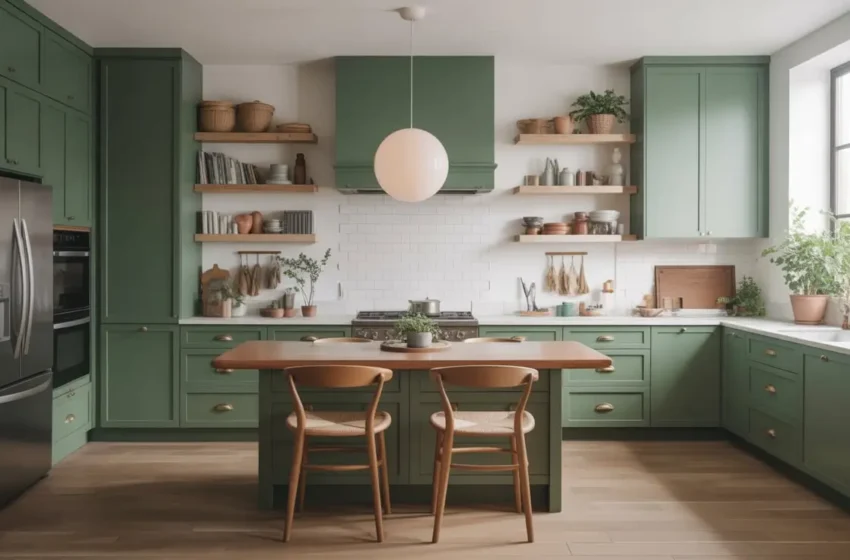
Stop doom-scrolling through Pinterest for a second. We need to talk. You are likely here because you’ve hit a wall with the “all-white kitchen” trend. You know the one—sterile, clinical, and possessing about as much personality as a dentist’s waiting room. I get it. I’ve been there. You want something that feels alive. You want character. You want a kitchen that doesn’t require sunglasses to enter in the morning.
Green is the answer.
Seriously, green is nature’s neutral. It calms you down while simultaneously making your home look expensive. Whether you are hunting for actual green stone slabs or looking to pair green cabinetry with natural elements, this color palette changes the game. And the best partner for green? Brown. Wood tones, leather, copper—earthy hues that ground the space and stop it from looking like a cartoon.
I’m going to walk you through 15 specific combos that incorporate green elements—from cabinets to stunning green countertops—paired with rich brown and wood accents. I’ll break down why they work, how to style them, and warn you about the pitfalls (looking at you, open shelving dust).
Let’s get into it.
1. Sage Green Cabinets with Warm Walnut Accents
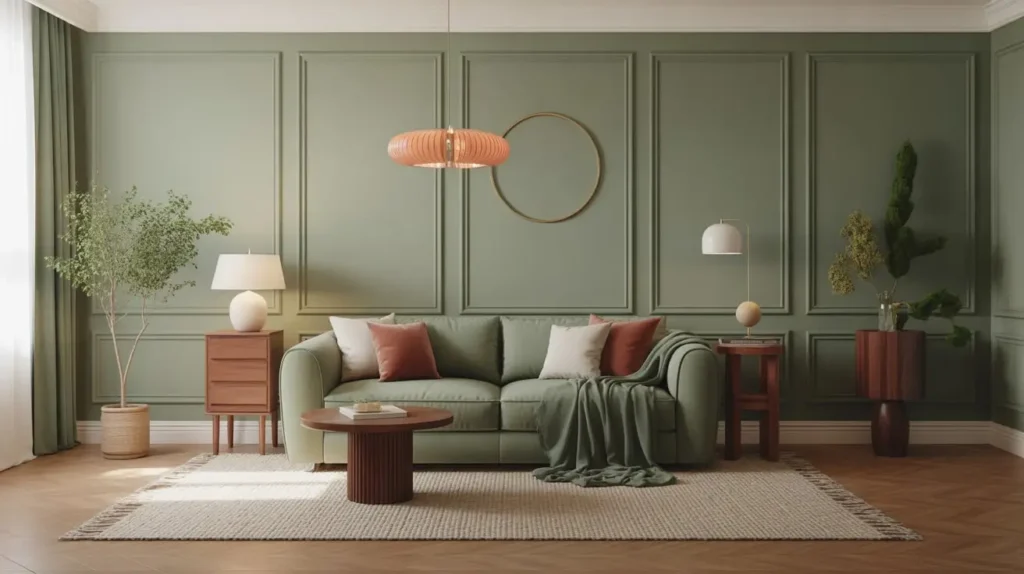
Let’s start with a classic. If you are nervous about committing to bold color, sage green is your gateway drug. It’s soft, approachable, and impossible to hate. But here is the secret sauce that stops sage from looking like a nursery room: you must pair it with warm walnut.
Why This Combo Works
Sage green inherently carries gray or silvery undertones. If you pair it with a cool-toned floor or a gray countertop, the room freezes over. It starts to feel sad and institutional. Walnut, however, brings a rich, reddish-brown warmth that instantly wakes up the green. It creates a balance that feels cozy yet incredibly sophisticated.
Styling the Look
- The Countertops: To keep the focus on the green and walnut, I usually suggest a creamy quartz or a subtle marble-look stone. However, if you want to double down on the green theme, a honed green soapstone countertop looks incredible here. The dark, matte surface of soapstone grounds the lighter sage cabinets.
- Hardware: Go with unlacquered brass. The gold tones bridge the gap between the cool green and the warm wood.
- Flooring: Keep the floors lighter than the walnut accents to avoid the “cave effect.” A light oak floor allows the walnut island or shelves to pop.
Pro Tip: Don’t skimp on the walnut. Use it for floating shelves, the island base, or even inside the drawers. Texture is everything here.
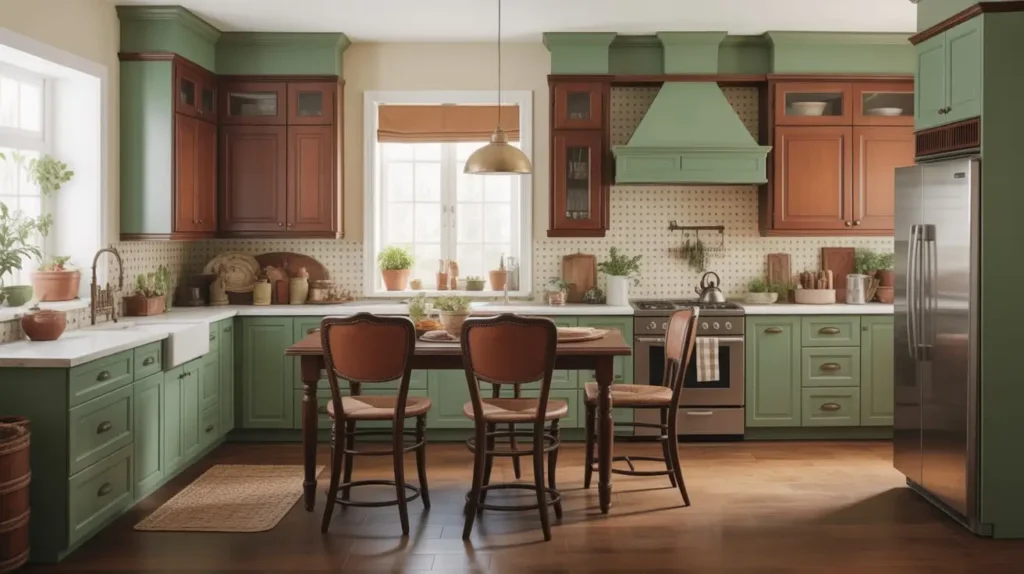
2. Olive Green Kitchen with Natural Wood Shelving
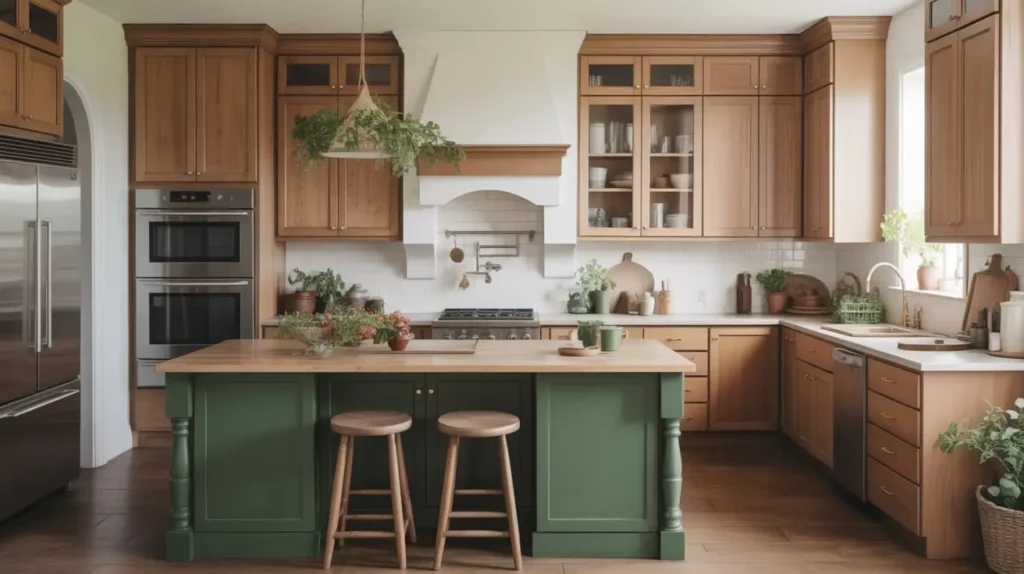
Olive green brings a savory, Mediterranean vibe to the kitchen. It’s deeper than sage but not as demanding as emerald. When you mix this with natural, unfinished-looking wood shelving, you achieve a rustic, “I bake bread from scratch” aesthetic. Even if you actually just buy your bread at the store.
The Open Shelving Debate
Okay, let’s address the elephant in the room. Open shelving looks amazing. It also collects dust like it’s getting paid to do it. But in this specific design, the wood shelving serves a structural purpose: it breaks up the heaviness of the olive paint. Without the wood breaks, olive green can feel a bit military. The wood adds airiness and warmth.
Getting the Color Right
- The Green: Look for an olive tone with distinct yellow undertones. This mimics the colors found in nature, like moss or actual olives.
- The Wood: White Oak or Ash works best here. You want a wood grain that looks raw and organic, not heavily stained or lacquered.
- The Countertop: A dark green granite (like Peacock Green) or a rich butcher block surface ties this whole earthy look together.
IMO: If you hate dusting, just use two small shelves for your “pretty” mugs and keep the rest behind closed doors. You don’t need to display your plastic Tupperware. :/
3. Forest Green Island Paired with Brown Oak Cabinets
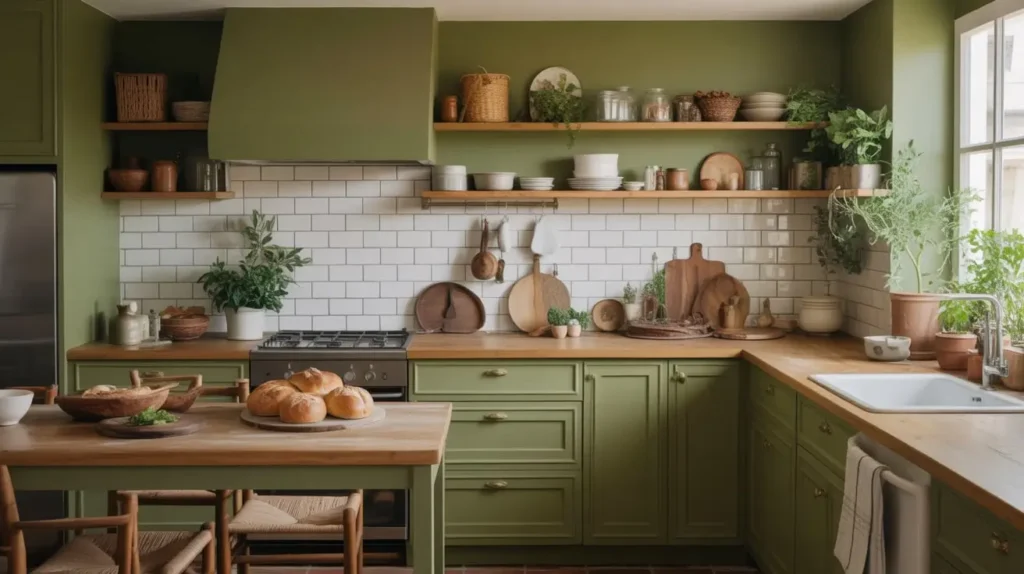
Maybe you aren’t ready to paint your entire kitchen green. That’s fine. We can compromise. Paint the island a deep forest green and keep the perimeter cabinets a natural brown oak. This is often called the “tuxedo” look, but we are making it woodsy and approachable rather than stark black and white.
The Anchoring Effect
Forest green is dark. It demands attention. By placing it on the island, you create a massive focal point in the center of the room. The brown oak perimeter cabinets then act as a neutral backdrop. This prevents the room from feeling too dark or enclosed, which is a risk when you paint all your walls dark green.
Design Elements to Consider
- Lighting: You need pendants over that island. Since the island is dark, ensure your lighting casts a wide glow to illuminate the workspace.
- Countertops: This is the perfect opportunity for green marble countertops on the island (like a Rainforest Green) while keeping the perimeter counters neutral. The Rainforest Green stone often has brown veining, which physically ties the green island to the brown cabinets.
- Flooring: Keep it light. A beige tile or light maple floor stops the room from feeling heavy.
Key Takeaway: The island is your statement piece. Treat it like a piece of furniture rather than just storage.
4. Soft Green Walls with Rich Brown Wood Cabinets
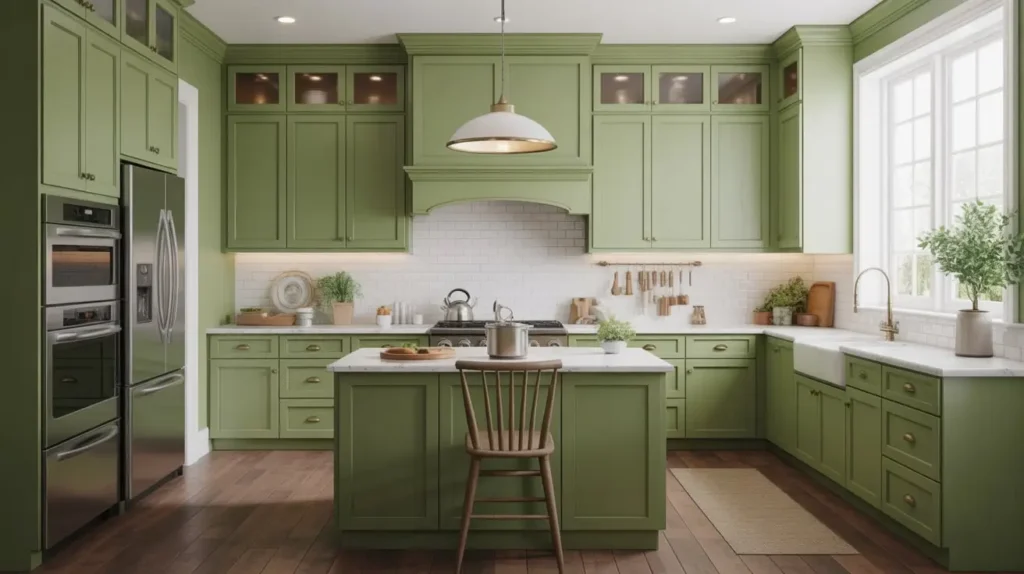
Flip the script! Instead of green cabinets, keep your expensive wood cabinetry and paint the walls green. This is the most budget-friendly option on this list. If you hate it in two years, you just repaint the walls. You don’t have to sand down 30 cabinet doors, which is a nightmare.
Choosing the Right Green
Since you are pairing this with “Rich Brown” cabinets (think mahogany, walnut, or stained cherry), you need a green that can stand up to that intensity. A pastel mint will look washed out and sickly next to dark wood.
- Go for: A medium-toned moss green or a dusty gray-green. These shades have enough weight to hold their own against the wood.
- Avoid: Neons or lime greens. Please. Just don’t.
Styling Tips
- Backsplash Strategy: Consider skipping upper cabinets on one wall and running the green paint right down to a short backsplash curb (made of the countertop material). This maximizes the color impact.
- Decor: Add terracotta pots with live herbs. The orange in the terracotta complements the green walls and brown wood beautifully.
Rhetorical Question: Why spend thousands on new cabinets when a $50 can of paint can completely change the vibe?
5. Two-Tone Green and Brown Modern Kitchen
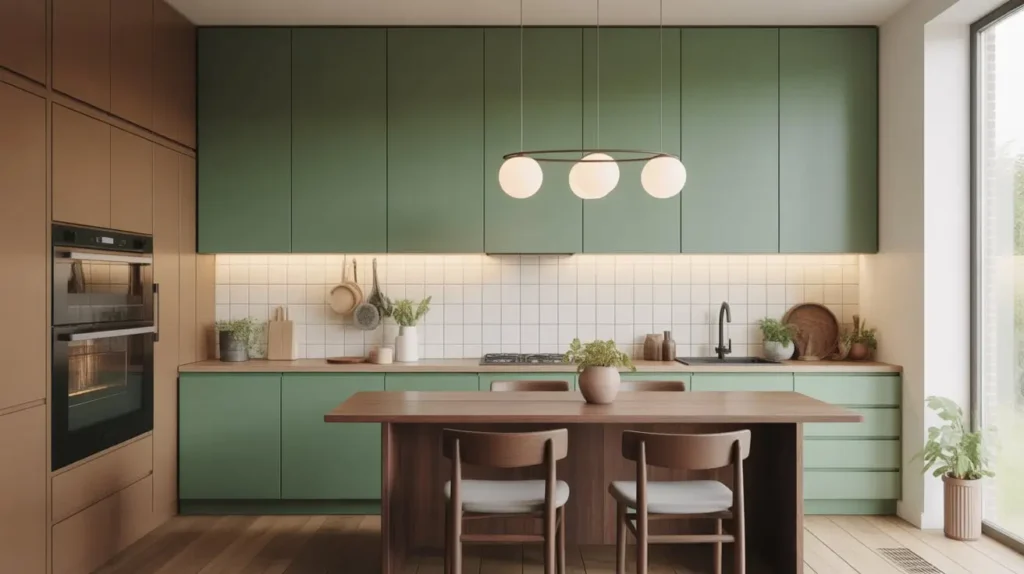
Modern design often gets a bad rap for being cold. But when you mix flat-panel (slab) cabinets in green and brown, you get “Warm Modernism.” This style is currently exploding in Europe and is finally making its way stateside.
The Layout
I love seeing the lower cabinets in a dark, matte green and the upper cabinets in a vertical grain walnut or teak. This configuration draws the eye upward and makes the ceilings feel taller. The vertical grain of the wood adds a sense of height and structure.
Material Matters
- The Finish: Go matte. High-gloss green can look a bit cheap if you aren’t careful (it gives off distinct 80s vibes). Matte green feels velvety and luxurious.
- The Countertop: A thin, sleek porcelain countertop in a dark concrete or slate green color profile fits the modern aesthetic perfectly. Thick, chunky granite ruins the clean lines of this look.
- The Hardware: Skip the knobs entirely. Use finger pulls or push-to-open mechanisms to keep the lines clean and uninterrupted.
Why this works: It merges the sleekness of modern design with the warmth of nature. It’s the best of both worlds.
6. Deep Green Cabinets with Light Brown Wood Floors
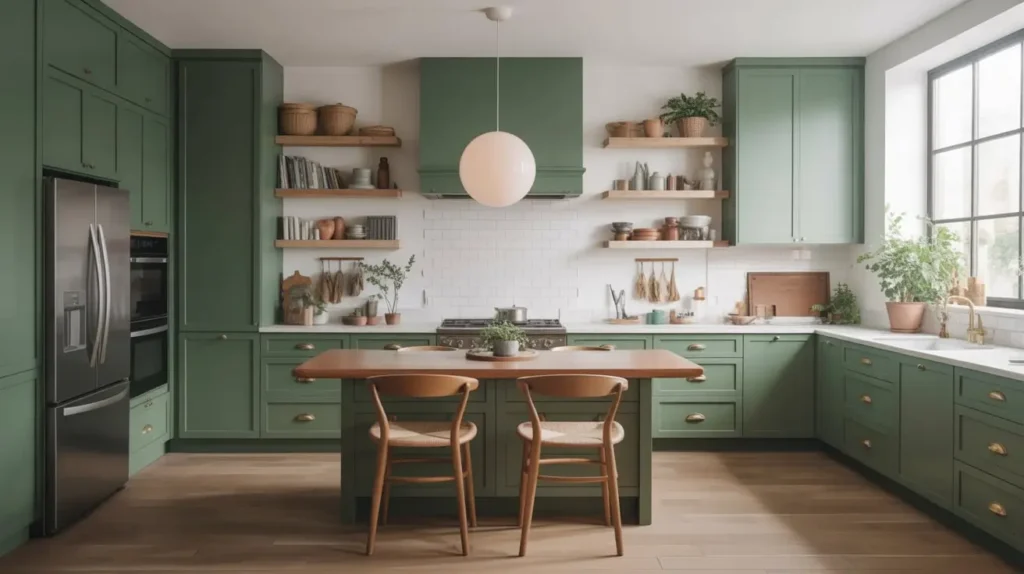
Contrast is the name of the game here. If you choose a deep, moody green (like a Hunter Green or Black Forest Green) for your cabinetry, you need to lift the room up with the floor choice. Light brown wood floors—like birch, maple, or a bleached oak—do exactly that.
Visual Weight
Dark cabinets feel heavy. They visually sink toward the floor. If your floor is also dark walnut or espresso, your kitchen turns into a black hole. Light wood floors reflect light back up onto those gorgeous green cabinets, highlighting the color rather than hiding it in the shadows.
Practical Advice
- Rug Choice: Place a vintage runner with reds and oranges between the island and the sink. It separates the green cabinets from the light floor and adds a layer of history and texture.
- Countertop Choice: A white quartz with green veining looks spectacular here. It ties the cabinet color into the work surface without darkening the room further.
FYI: Light floors hide dust and crumbs way better than dark floors. If you have a dog (or kids who eat crackers), light floors are a lifesaver.
7. Earthy Green Kitchen with Dark Wood Countertops
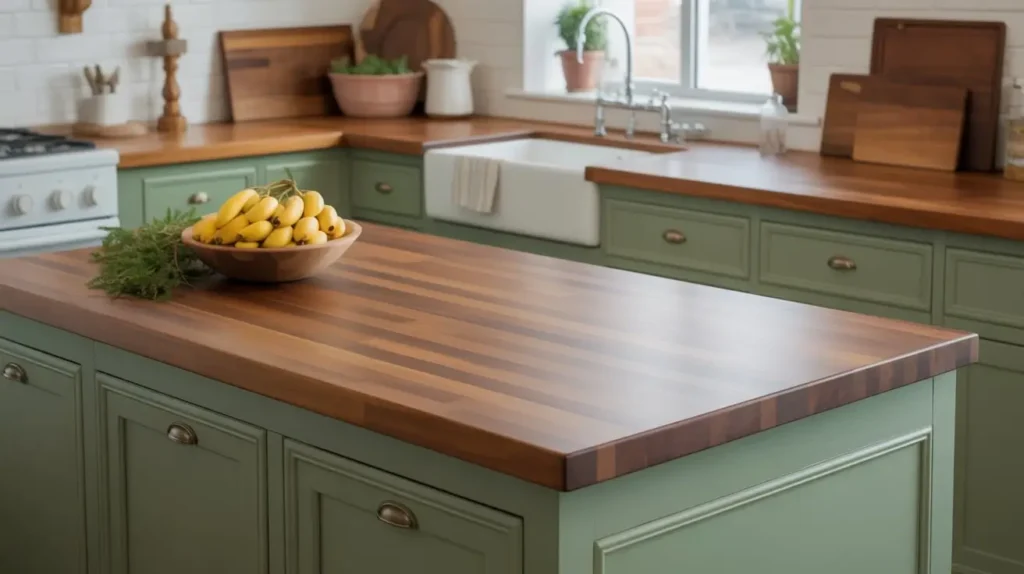
Finally, we are talking specifically about the horizontal surfaces! Butcher block countertops are back, baby. But we aren’t doing the cheap, yellowy Ikea butcher block. We are talking rich, dark-stained walnut, cherry, or acacia wood counters paired with earthy green cabinets.
The Maintenance Reality Check
I need to be real with you. Wood countertops require work. You have to oil them regularly. You cannot leave standing water on them near the sink. You absolutely cannot chop onions directly on them unless you want knife marks everywhere.
So why do it?
Because nothing feels better to lean against while drinking coffee. Stone is cold and hard. Wood is soft, warm, and quiet. It absorbs the sound of clanking dishes rather than amplifying it.
The Color Palette
- Cabinets: A muddy, swampy green (sounds gross, looks amazing). Think British countryside or “boot room” green.
- The Wood: Seal the wood with a high-quality food-safe oil (like Waterlox). Dark Tung oil can give you that rich, antique look that pairs so well with the muddy green.
Rhetorical Question: Is the maintenance worth the aesthetic? If you love a kitchen that develops a patina and tells a story over time, then yes. Absolutely.
8. Green Shaker Cabinets with Rustic Brown Beams
If you have a ceiling with exposed beams, or if you have the budget to install faux beams, do it immediately. Pairing crisp, painted green Shaker cabinets with rough-hewn brown beams creates an architectural masterpiece that feels timeless.
Balancing the Textures
- Smooth vs. Rough: The cabinets are smooth, painted, and uniform. The beams are rough, stained, and irregular. This textural contrast makes the room feel designed by a pro, not just decorated.
- Ceiling Height: Beams draw the eye up. Make sure your green cabinets go all the way to the ceiling (or the soffit) to maximize the vertical line. If you stop the cabinets short, the room will feel squat.
Color Coordination
Match the stain of the beams to your island stools or your open shelving. It creates a “sandwich” effect—wood on top, wood in the middle/bottom, with green filling the space in between.
My take: This is the ultimate “cozy” kitchen. It feels like a hug when you walk in.
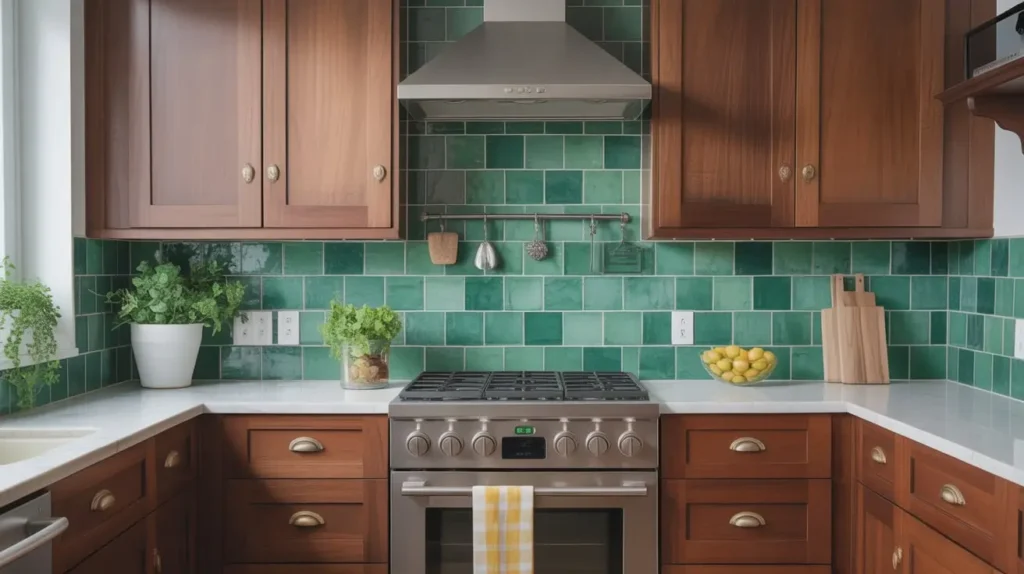
9. Muted Green Backsplash with Brown Wood Cabinets
Let’s focus on the backsplash as the primary green element. Keep the cabinets a beautiful, natural brown wood (walnut or stained oak) and bring the green in through the tile work.
Tile Selection
Don’t use standard big-box store subway tile. It’s boring. Look for Zellige tiles or handmade ceramic tiles in varying shades of muted green. The variation in the glaze reflects light differently across the wall, creating a shimmering, water-like effect that feels organic.
Countertop Pairing
Since the cabinets are wood and the backsplash is green, what do you do with the countertop?
- Option A: Green Soapstone. This blends with the backsplash for a moody, seamless look.
- Option B: Creamy Quartzite (like Taj Mahal). This creates a clean break between the wood and the green tile, lightening the space.
Pro Tip: Use a light grout color (like off-white or light gray). If you use dark grout with green tile, it can look a bit grid-heavy. Light grout highlights the handmade edges of the tile.
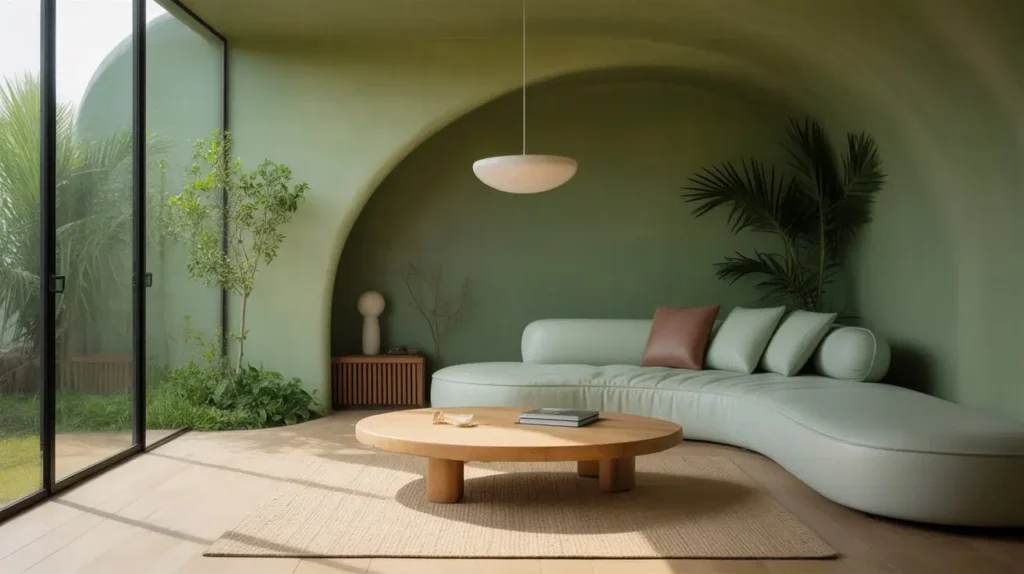
10. Green and Brown Organic Modern Kitchen
Organic Modern is all about curves, natural materials, and simplicity. It’s not stark minimalism, but it’s definitely clutter-free. It relies on the colors of the earth—green and brown—to create a sanctuary.
The Elements
- Curved Islands: Use an island with rounded edges painted in a soft, mossy green. Sharp corners are the enemy here.
- Wood Accents: Incorporate a tambour (slatted wood) detail on the back of the island or the range hood in a light brown oak. This texture adds visual interest without adding color “noise.”
- Nature: You need plants. Lots of them. A fiddle leaf fig in the corner or trailing pothos on a shelf brings the “organic” to the “modern.”
The Countertop Connection
For this style, I love a honed granite in a subtle green-gray. “Honed” means matte. Shiny surfaces feel too artificial for the Organic Modern look. You want the stone to look like it was just pulled from a riverbed and sliced open.
Why I love this: It feels spa-like. It lowers your blood pressure just walking into the room.
11. Emerald Green Cabinets with Chocolate Brown Details
Now we are getting dramatic. Emerald green is bold, jewel-toned, and fancy. Pairing it with chocolate brown details keeps it grounded so it doesn’t look like the Emerald City from the Wizard of Oz.
Where to use the Chocolate Brown?
- Interior Cabinet Color: This is a high-end detail that screams luxury. Paint the outside of the cabinets emerald, but stain the inside of glass-front cabinets a deep chocolate brown. It creates depth.
- Window Trim: Paint the window sashes chocolate brown. It frames the view like a picture and connects the window to the darker elements in the room.
Lighting is Critical
Emerald absorbs light. Chocolate brown absorbs light. If you don’t have good lighting, this kitchen will look like a cave.
- Solution: Under-cabinet lighting is non-negotiable here. Use warm-dim LEDs.
- Metals: Polished nickel or chrome pops against these dark colors better than brass, IMO. It adds sparkle and reflection.
Vibe check: This is a “cocktail hour” kitchen. It’s sexy, sophisticated, and perfect for entertaining.
12. Green Kitchen with Brown Leather Bar Stools
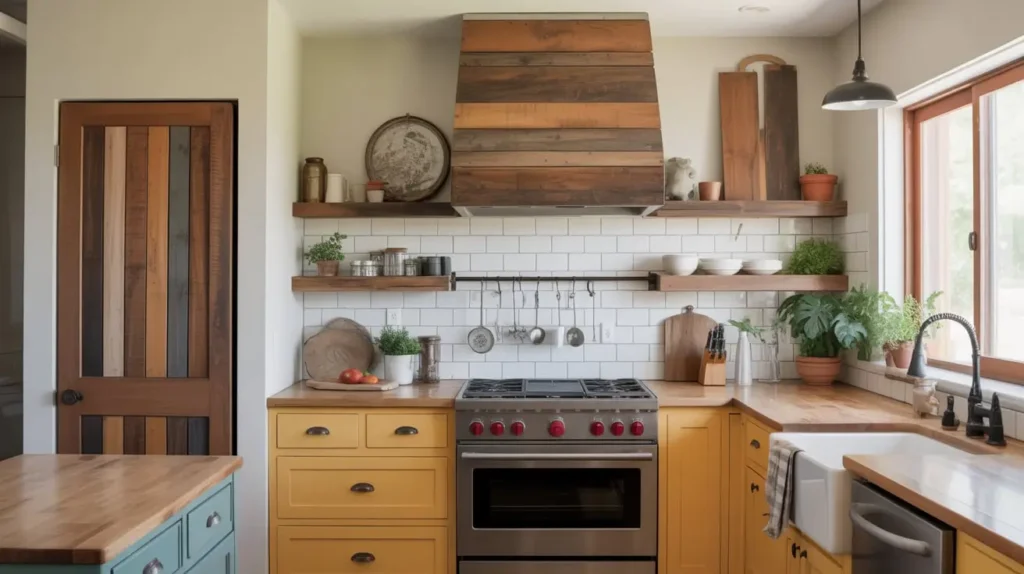
Sometimes, the “brown” in your color combo doesn’t come from wood at all. It comes from leather. This is the easiest way to add the brown/green combo to an existing kitchen without remodeling.
Texture Mixing
Imagine a matte olive green island. Now, slide three cognac-colored leather bar stools up to it. That combination of colors—green and orange-brown—is iconic. It’s classic Ralph Lauren vibes.
Why Leather?
Leather adds a softness that wood doesn’t. It introduces a third texture (fabric/skin) into a room usually full of hard surfaces (stone, wood, metal).
- Durability: Leather ages beautifully. Scratches just add character. Wipeable leather is also great if you have kids.
- Color Pop: The orange tones in cognac leather sit opposite green on the color wheel. That’s why they look so good together. It’s basic color theory in action.
Recommendation: Look for stools with backs. Backless stools are great for Instagram photos, but terrible for actually sitting and eating breakfast. Comfort first, people.
13. Green Cabinetry with Reclaimed Brown Wood Features
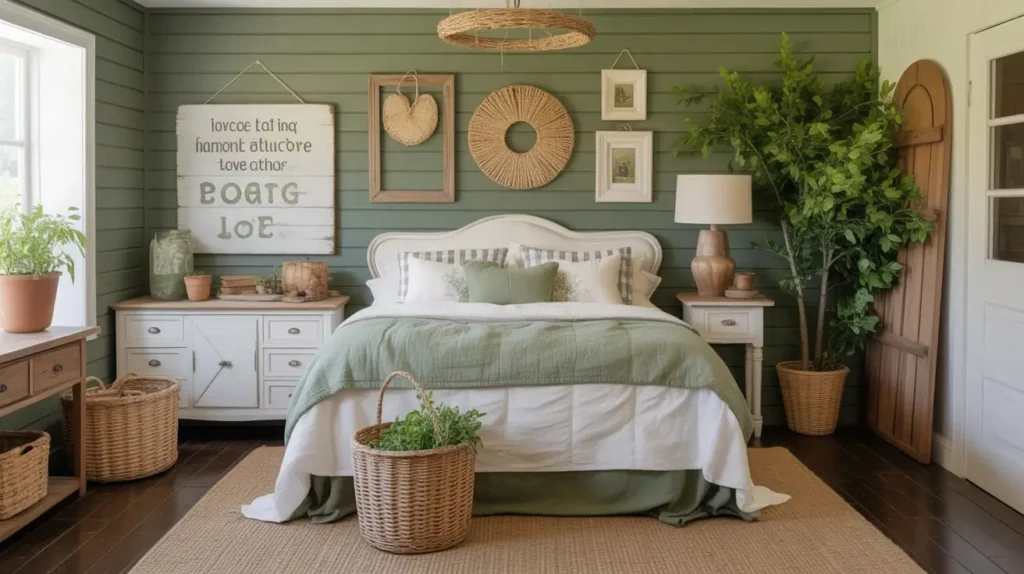
If you care about sustainability (and you should), this is your stop. Use reclaimed wood for features like the pantry door, the range hood cover, or even the countertops.
The Beauty of Imperfection
Reclaimed wood has nail holes, knots, and uneven grain. When you pair this rough material with smooth, freshly painted green cabinets, the contrast is electric. It stops the new cabinets from feeling “too new.”
Countertop Idea
This is a great place to use a recycled glass countertop that features green glass chips, or a green slate countertop. Slate is incredibly durable and has a natural, uneven texture that matches the reclaimed wood vibe perfectly.
Styling
Keep the decor vintage. An old oil painting, a vintage runner rug, copper pots hanging on a rack. Lean into the “lived-in” aesthetic.
Don’t worry about scratches. In this kitchen, a scratch just adds to the story.
14. Minimalist Green and Brown Scandinavian Kitchen
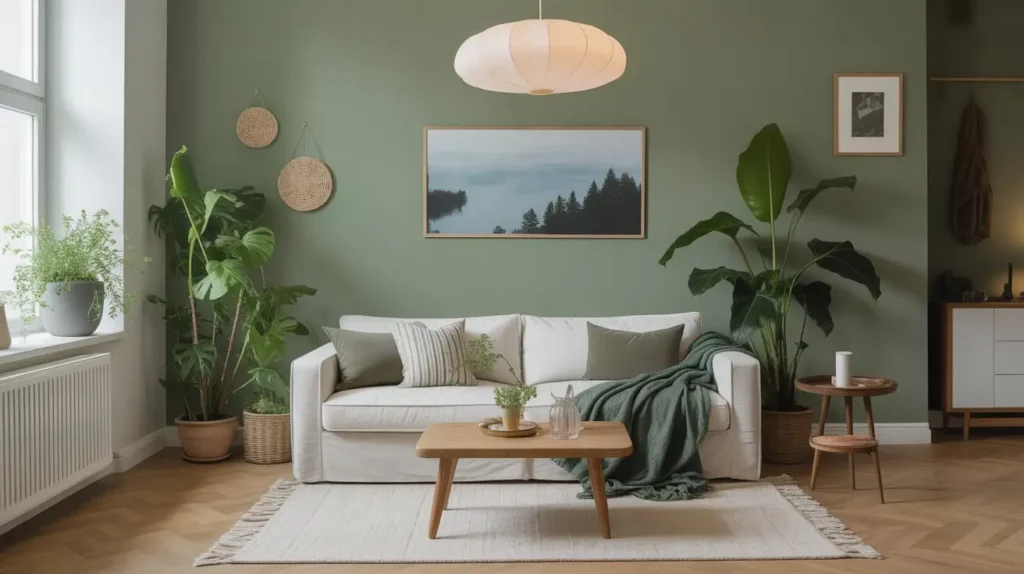
Scandi style isn’t just white and wood anymore. The Scandinavians love muted colors, especially greens that reflect their foggy, forest landscapes.
The Palette
- The Green: A very pale, gray-green (almost a neutral). It should look different depending on the time of day.
- The Brown: Blonde woods like Birch or light Ash. These keep the space feeling bright and airy, which is essential in Scandi design.
The Design Philosophy
Keep it simple. No ornate crown molding. No raised panel doors.
- Flat Front Cabinets: Keep the hardware minimal or hidden.
- Countertops: A sleek green terrazzo. Terrazzo is huge in Scandinavian design right now. It adds a playful confetti pattern without being overwhelming or cluttered.
Why it works: It’s light and airy but feels warmer than a white kitchen. It’s clean without being sterile.
15. Green and Brown Farmhouse-Style Kitchen
Forget the “Live, Laugh, Love” signs. We are talking about authentic farmhouse style. This style relies heavily on the connection to the outdoors, which is why green and brown are the essential palette.
Key Elements
- Apron Front Sink: A must-have. A fireclay white sink pops beautifully against green cabinets.
- Butcher Block Island: Use a massive chunk of end-grain brown wood for the island countertop. It serves as the primary workspace for chopping and prep.
- Cupboard Latches: Use old-school latches instead of modern handles. They add a tactile, historical feel.
The Paint
For a farmhouse look, I prefer a “dusty” green. Something that looks like it has been there for 50 years. Pair this with wide-plank brown pine floors that show a bit of wear.
Rhetorical Question: Can you really call it a farmhouse kitchen if you don’t have a big pot of soup simmering on the stove? I don’t think so.
Conclusion: It’s Time to Go Green
So, there you have it. 15 ways to ditch the sterile white box and embrace the warmth of green and brown. Whether you go for a bold green quartzite countertop, a moody emerald cabinet, or just some savvy leather accents, you are building a space that feels personal.
The kitchen is the heart of the home. It shouldn’t feel like a laboratory. It should feel like you.
Don’t be afraid to mix textures. Don’t be afraid of dark colors. And for the love of all that is holy, please put some under-cabinet lighting in.
Now, go pick up a paint sample. You’ve got this. 🙂