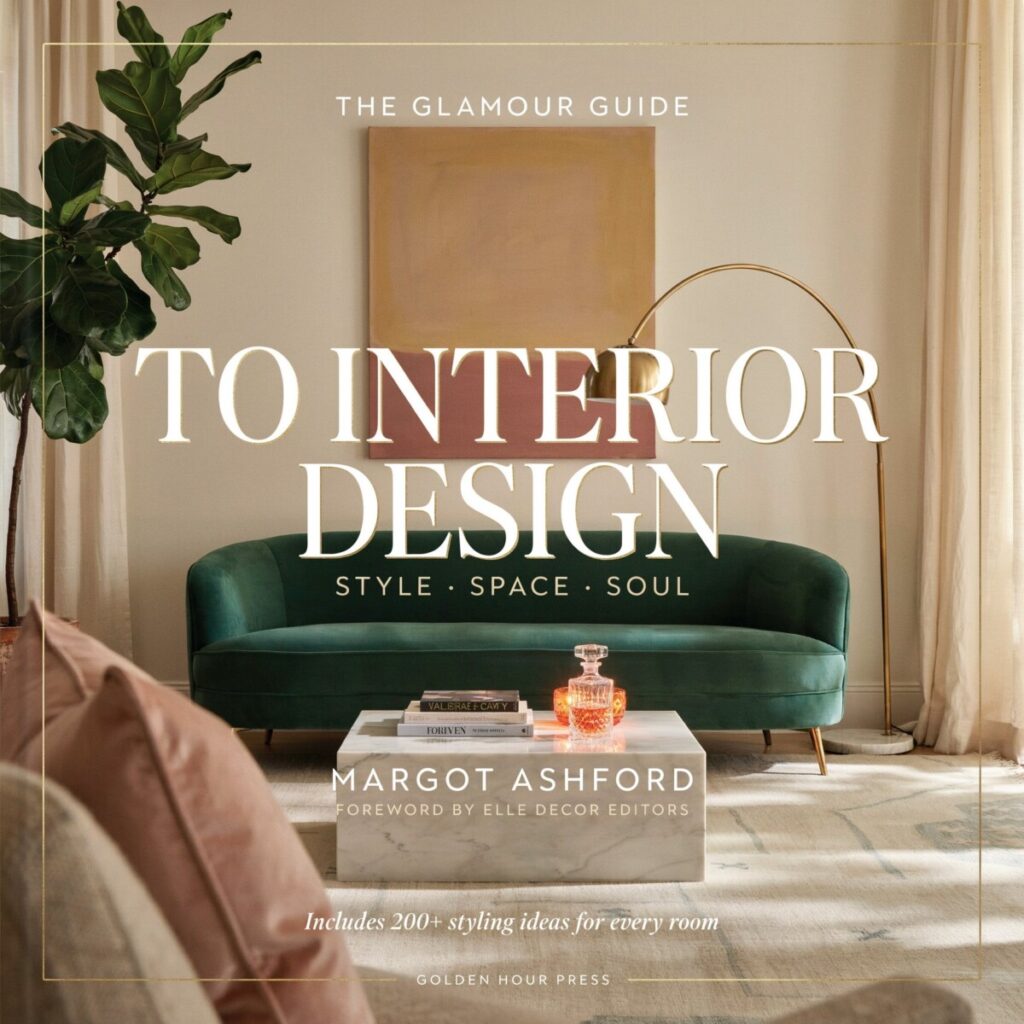
Imagine walking into a room where the light catches a polished brass sconce, a velvet sofa sinks invitingly beneath a gallery of gilded frames, and a single sculptural lamp throws a warm, amber glow across a high-gloss console. Nothing screams; everything shimmers. That quiet confidence — refined, inviting, a little cinematic — is the essence of glamour interior design, and it’s far more attainable than most people think.
Glamour isn’t about spending five figures on a chandelier or filling a room with mirrors. It’s about intention: the right contrast, the right finish, the right moment of shine. It works in a Brooklyn rental and a Beverly Hills bungalow alike. In this guide, you’ll learn what glamour actually means in design terms, how it differs from its flashier cousins, and — most importantly — how to build a glamorous room at almost any budget. We’ll walk through the core materials and lighting layers, then apply them room by room, and finish with a simple three-step action plan you can start this weekend.
Ready to make your home feel like the best version of itself? Let’s get into it.
What Is “Glamour” in Interior Design?
Glamour, as a design language, has roots in the 1930s and ’40s — think Art Deco geometry, Old Hollywood dressing rooms, and the lacquered salons of Manhattan townhouses. But modern glamour interiors have evolved. Today’s version is softer, more livable, and less themed. It borrows the sparkle without the costume.
At its core, glamour is defined by four attributes:
- Gloss and reflectivity. High-shine lacquer, polished stone, gilt frames, and mirrored surfaces bounce light and add depth.
- Contrast. Dark jewel tones against pale plaster walls. Matte velvet paired with polished brass. Glamour thrives on tension.
- Comfort. A glamorous room that isn’t comfortable is just a showroom. Deep seating, plush textiles, and warm lighting are non-negotiable.
- Curation. Every object feels chosen. Glamour rejects clutter in favor of a few well-edited pieces with presence.
How glamour differs from its neighbors
It’s easy to confuse glamour interior design with maximalism or Hollywood glam decor. They overlap, but they aren’t the same:
- Maximalism piles on — more pattern, more color, more objects. Glamour edits.
- Hollywood glam leans heavily into black-and-white palettes, lucite, and overt theatricality. Glamour is quieter and more personal.
- Modern luxury often skews minimalist and neutral. Glamour introduces richer color and more ornament, but with restraint.
Think of glamour as the cousin who shows up in a perfectly tailored velvet blazer instead of a sequined gown.
The Core Elements of Glamorous Interiors
Color palettes and high-gloss finishes
Glamour lives in contrast. Classic pairings include deep emerald with warm plaster, inky navy with antique brass, and moody aubergine with champagne gold. If you prefer lighter rooms, a greige or ivory base layered with black accents and brass hardware delivers the same effect with less drama.
High-gloss finishes are glamour’s secret weapon. A lacquered ceiling in a deep teal, a high-gloss trim on otherwise matte walls, or a glossy credenza in an entry — these moments multiply light and make small rooms feel larger.
| Tier | Strategy |
|---|---|
| Budget | High-gloss spray paint on thrifted frames, trays, or a small accent table. |
| Mid-range | A single lacquered piece — a console, bar cart, or cabinet door set. |
| Splurge | High-gloss walls or ceiling in a rich color, professionally sprayed. |
Fabrics and textures: velvet, silk, shearling
Nothing says glamour like velvet sofas and upholstery catching the light differently across their nap. Pair a velvet statement chair with linen curtains and a shearling throw for a layered, tactile look. Mohair, silk velvet, and brushed cotton add quiet luxury; avoid shiny synthetic velvets, which read cheap.
- Budget: Velvet throw pillows in a jewel tone; a faux-shearling bench cover.
- Mid-range: Performance velvet on a dining chair set; linen drapery with brass rods.
- Splurge: A custom curved sofa in silk velvet; hand-knotted wool-and-silk rug.
Layered lighting: the non-negotiable
Layered lighting is what separates a glamorous room from a flat one. Aim for three layers in every space:
- Ambient — a ceiling fixture, cove lighting, or recessed cans on a dimmer.
- Task — reading sconces, a desk lamp, under-cabinet strips.
- Accent — a picture light over art, a sculptural table lamp, or LED tape behind a console.
Statement lighting ideas don’t require a chandelier budget. A single oversized plaster pendant, a pair of vintage brass sconces, or a sculptural paper lantern can anchor a room. Always put overhead lights on dimmers — glamour hates harsh light.
Furniture silhouettes and scale
Glamour favors curves and sculptural forms: rounded sofas, kidney-shaped coffee tables, barrel-back chairs. Balance a curvy hero piece with cleaner-lined companions so the room doesn’t tip into period costume. Scale matters — low-slung seating in a tall-ceilinged room can feel lost, while oversized pieces in a small room paradoxically feel cozier and more considered.
Metallic accents and mirrors
Metallic accents in decor are the jewelry of a room. Pick one dominant metal (warm brass, polished nickel, or champagne bronze) and let one secondary metal appear as an accent. Mixing too many finishes reads chaotic. Mirrors double as art and light amplifiers — an oversized gilded floor mirror leaning against a wall is one of the most effective affordable glam decor moves you can make.
Patterns and layering
Use pattern sparingly and with confidence: a single bold animal print, a large-scale damask, or a graphic Greek key trim. Layer textiles from rough to smooth — raw linen, nubby bouclé, sleek velvet — to create visual depth without relying on loud prints.
Room-by-Room: Putting Glamour Into Practice
1. Glamorous living room design
The living room is glamour’s main stage. Start with a focal point — a fireplace flanked by matching sconces, a large-scale art piece over the sofa, or a statement wall in high-gloss paint.
Mini case study: A 12×14 NYC apartment living room transformed for ~$800. The designer kept the existing gray sofa, added two velvet lumbar pillows ($60), a vintage brass floor lamp ($180 from an online estate sale), a high-gloss black side table from a big-box store sprayed with lacquer ($40 in paint), and an oversized thrifted mirror resprayed in warm brass ($120). New linen curtains on a brass rod ($180) and a single sculptural coffee-table book completed the look.
Key moves:
- Float the sofa away from the wall when possible; it reads more intentional.
- Pair a curvy sofa with a sculptural glass or stone coffee table.
- Use a large, low-pile rug to anchor everything — 8×10 minimum.
2. Luxe bedroom ideas
Bedrooms should feel like a boutique hotel suite without the sterility. Invest in the headboard — an upholstered, channel-tufted, or plaster-wrapped headboard instantly elevates the room. Layer bedding: crisp percale sheets, a lightweight duvet, a velvet or cashmere throw folded at the foot.
Flank the bed with matching lamps or sconces, add a small bench or accent chair if space allows, and hang one oversized piece of art rather than a busy gallery wall. Blackout drapery in a luxe fabric is both practical and atmospheric.
3. Dining rooms that feel like destination restaurants
Dining rooms reward drama. A slightly moody wall color (deep green, oxblood, warm charcoal) paired with warm metallics and a single sculptural chandelier delivers immediate impact. If you’re hesitant about dark walls, try high-gloss finishes on the ceiling in a soft tone — the reflection adds height and polish.
Upholstered dining chairs (search: “channel-back velvet dining chairs”) feel more elevated than wood or metal. Add a bar cart or a credenza styled with a tray, a pair of candles, and one sculptural object.
4. Bathrooms with boutique-hotel energy
Even a small bathroom can feel glamorous. Swap builder-grade hardware for unlacquered brass or polished nickel — search “solid brass bath faucet” for timeless options. A framed mirror (not a frameless sheet) and a pair of sconces beside it, rather than a single strip above, instantly upgrade the space. Add a marble tray, a single orchid, and plush cotton towels in a tonal palette.
Mixing Vintage and Modern — And Renter-Friendly Glam
The vintage modern mix is where glamour feels lived-in rather than staged. One or two vintage pieces — a 1970s travertine lamp, a Hollywood Regency mirror, a mid-century brass bar cart — give a room soul. Source them from estate sales, online marketplaces (search: “vintage brass floor lamp”, “1970s travertine table lamp”), or architectural salvage shops.
Renter-friendly glam that actually works
Renter-friendly glam relies on reversible upgrades:
- Peel-and-stick high-gloss panels on a powder room ceiling or behind shelves.
- Swappable hardware — brass knobs on dresser drawers or kitchen cabinets, returned to stock at move-out.
- Plug-in sconces where hardwired fixtures aren’t allowed.
- Leaning oversized art and mirrors instead of heavy-mounting.
- Removable wallpaper in a moody, tonal print on a single accent wall.
- Statement textiles — curtains, rugs, and throws you take with you.
These moves deliver 90% of the impact with zero damage to drywall or deposit.
Vintage sourcing quick tips (click to expand)
- Go early to estate sales; go late for discounts.
- Search marketplace keywords like “brutalist brass,” “Hollywood Regency mirror,” “travertine table lamp.”
- Don’t fear worn patina on metals — it’s often more desirable than polished new brass.
- Reupholster small vintage chairs yourself with velvet remnants for a fraction of custom work.
Quick Shopping Checklist & Styling Rules
Here’s a compact art and accessories styling checklist to keep on hand:
The essentials
- One oversized mirror (floor or wall)
- Two matching table or sconce lights, dimmable
- Three velvet or mohair pillows in a tonal range
- One sculptural coffee-table object (stone, brass, or plaster)
- One piece of art you genuinely love — not a trend placeholder
- One high-gloss or lacquered accent piece
Styling rules that never fail
- Rule of three: Group accessories in odd numbers.
- Height variation: Every surface vignette should have a tall, medium, and low object.
- Do leave negative space — glamour needs breathing room.
- Don’t match every metal or every wood tone.
- Do scale art large; small art over a wide sofa reads like an afterthought.
- Don’t over-decorate the mantel — three considered pieces beat twelve small ones.
Your 3-Step Glamour Action Plan
- This weekend: Pick one room and add a single glossy or reflective element — a lacquered tray, a brass lamp, or an oversized mirror. Notice how the light changes.
- Within two weeks: Upgrade your lighting layers. Add a dimmer switch (~$15 and 20 minutes of work) and one accent light.
- Within a month: Introduce one vintage or sculptural piece, and edit out three items that no longer earn their place.
Glamour isn’t a renovation — it’s a series of deliberate, cumulative choices. Save this article, pin the room ideas that resonate, and try the first step this weekend. Your home already has the bones. You’re just about to give it the finish it deserves.