
Why Biophilic Design Matters in 2026
Picture a typical day: a morning scroll in bed, a commute inside a car, hours under office lighting, and an evening on the couch. Most Americans spend the overwhelming majority of their time indoors, and that distance from daylight and greenery is pushing more households to rethink their living spaces.
Biophilic design offers a practical answer. More than decorating with houseplants, biophilic home design weaves natural light, greenery, fresh air, organic textures, and outdoor views into the way a home actually functions — a big reason it anchors so many wellness home design conversations this year.
In this guide, you’ll learn what biophilic design means, why it shapes biophilic design trends 2026, and how to bring the outdoors in to a house, condo, townhouse, or rental apartment without a major renovation or an unlimited budget.
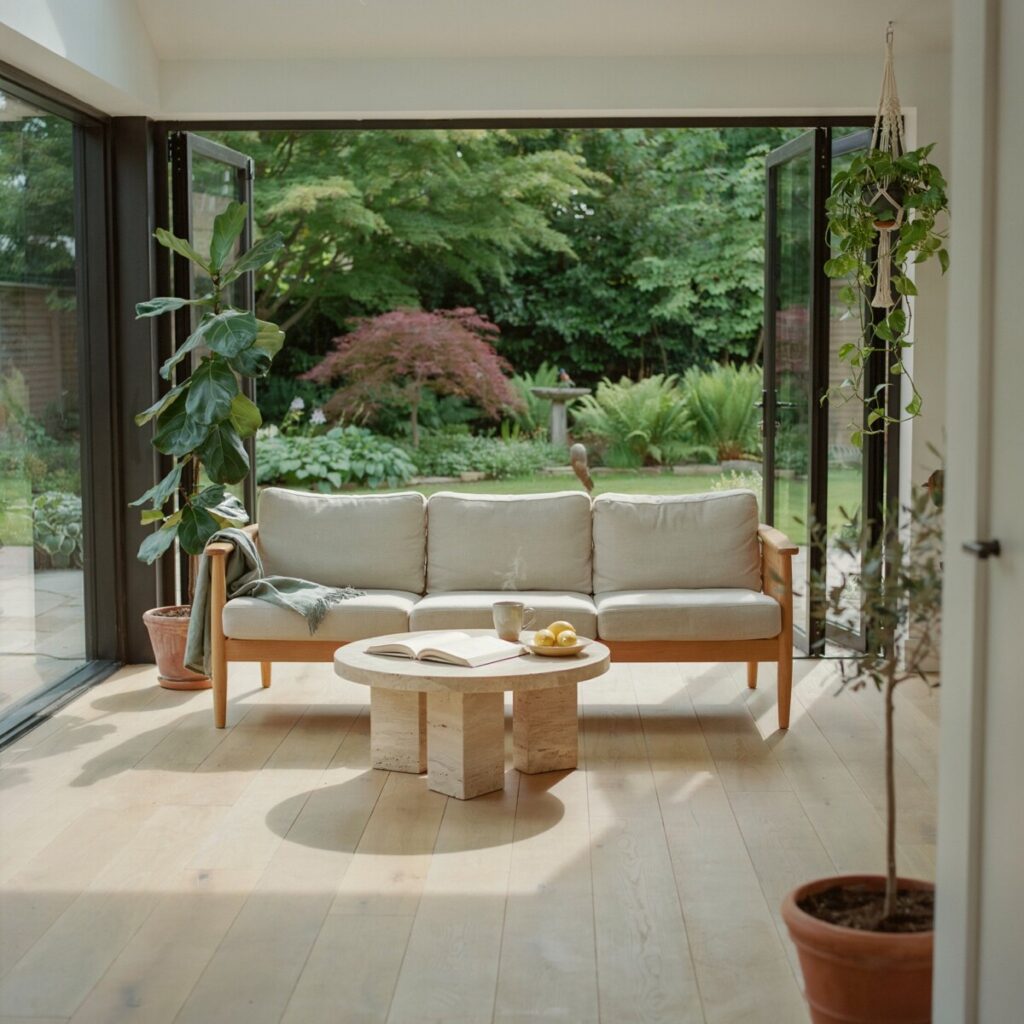
What Is Biophilic Design?
In simple terms, biophilic design is an approach to the built environment that strengthens the connection between people and nature. It layers natural elements in interior design — daylight, plants, water, wood, stone, nature-inspired patterns, and thoughtful layouts — into everyday living spaces.
It helps to distinguish related ideas:
- Basic plant decoration: adding a few pots to a room. Lovely, but limited.
- Nature-inspired decorating: botanical prints, leaf motifs, and earthy palettes that reference nature indirectly.
- Sustainable interior design: choices guided primarily by environmental impact, like reclaimed materials and energy efficiency.
- Full biophilic interior design: a complete approach combining greenery, daylight, ventilation, natural materials, organic shapes, and views.
Plants are only one piece of the picture. A truly biophilic room may also include unobstructed windows, wood flooring, stone surfaces, linen textiles, curved furniture, natural colors, gentle water sounds, and a layout that encourages movement and visual rest.
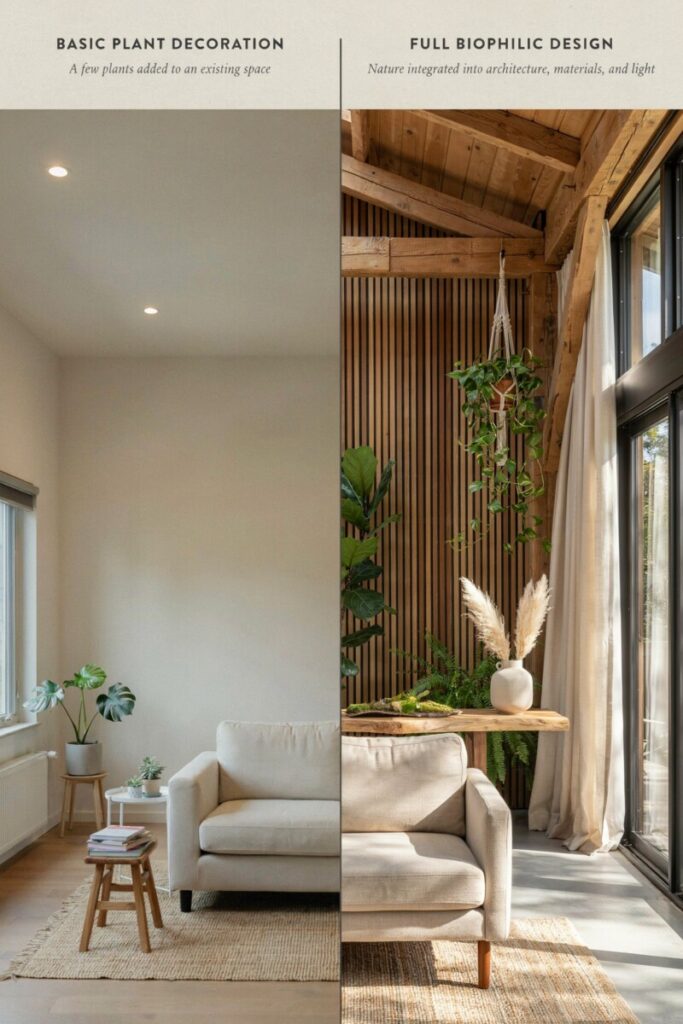
Why Biophilic Design Is a Major 2026 Interior Trend
Biophilic design isn’t a brand-new invention. It has roots in architecture, environmental psychology, landscape design, and wellness-oriented spaces. What’s changed is how easily its principles now apply to everyday American homes. Several forces are pushing nature-connected design to the forefront in 2026:
- Wellness-focused homes: many homeowners find that nature-connected rooms can support relaxation and a sense of calm.
- Calmer, less artificial spaces: preference is shifting from glossy synthetic finishes to natural textures.
- Sustainable, low-waste decorating: eco-friendly home decor pairs naturally with wood and stone interiors.
- Remote work: restorative workspaces are in demand, and home office biophilic design may help long workdays feel more comfortable.
- Indoor-outdoor living: patios, balconies, and garden views are treated as extensions of the home.
- Small-space flexibility: biophilic design for small spaces proves impact doesn’t require square footage.
- Natural over synthetic: renters and owners alike favor rattan and jute decor over plastic-looking finishes.
- Energy-conscious lighting: daylight-first planning complements energy-efficient home improvements.
Current 2026 examples frequently combine greenery, daylight, organic materials, warm lighting, earthy colors, and seamless indoor-outdoor transitions.
The Core Elements of Biophilic Interior Design
The strongest biophilic rooms layer several natural elements at once.
1. Natural Light
Natural light in home design is the foundation of the biophilic approach, and one of the easiest elements to improve.
- Keep windows as unobstructed as possible.
- Choose sheer curtains or light-filtering shades.
- Position mirrors to bounce daylight deeper into rooms.
- Prefer lighter wall colors that reflect light.
- Arrange seating near windows and avoid bulky furniture that blocks them.
- During renovations, consider skylights or solar tubes where practical.
Renters can boost daylight without construction: rearrange furniture, clean windows, swap heavy drapes for lightweight treatments, and place reflective surfaces opposite a window.
2. Indoor Plants and Greenery
Indoor plants for home decor work best when treated as design elements rather than random pots. Layer greenery at floor, tabletop, shelf, and hanging heights, group plants in odd-numbered clusters, and match species to your light and humidity. Plant stands, vertical shelving, and kitchen herbs stretch greenery into small footprints.
Beginner-friendly, low-maintenance indoor plants include pothos, snake plants, spider plants, ZZ plants, parlor palms, and Boston ferns. If you share your home with cats or dogs, always verify pet safety first.
Living walls and vertical gardens can work well in compact homes, but preserved moss walls, realistic faux plants, and botanical artwork are practical alternatives when live greenery isn’t feasible.
3. Natural Materials
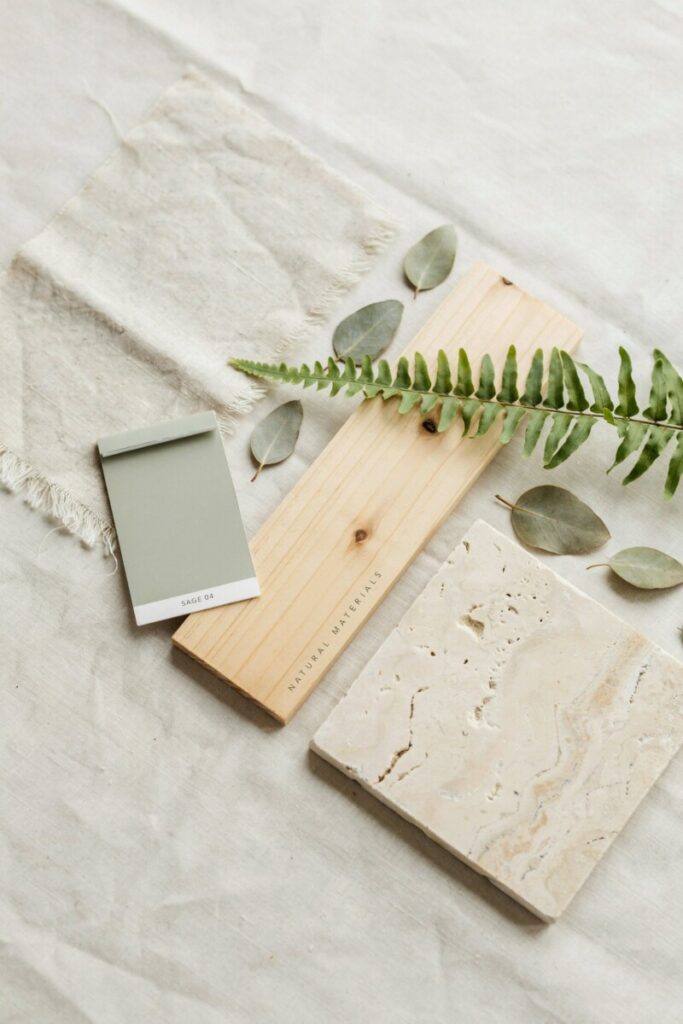
Natural materials for home interiors create a tactile connection to nature that synthetic surfaces can’t mimic. Look for responsibly sourced wood, bamboo, cork, rattan, wicker, jute, wool, linen, cotton, clay, terracotta, and natural stone like marble, slate, or travertine.
Use them in furniture, flooring, baskets, rugs, countertops, lighting, and accessories — a woven pendant or jute rug adds instant texture. Remember that “natural” doesn’t automatically mean sustainable, so weigh durability, maintenance, certifications, budget, and responsible sourcing.
4. Nature-Inspired Colors
Nature-inspired color palettes borrow directly from the landscape: forest, sage, olive, and moss greens; terracotta, clay, sand, and beige; warm white, soft brown, charcoal, stone gray, and muted sky blue.
A biophilic room doesn’t need to be entirely green. Balance deeper shades with warm neutrals, and introduce earthy home color schemes gradually through paint, upholstery, rugs, artwork, and ceramics — a signature move of nature-inspired interior design.
5. Organic Shapes and Natural Patterns
Organic shapes soften rooms dominated by sharp lines. Rounded coffee tables, arched doorways, curved sofas, oval mirrors, sculptural lighting, wavy shelves, and pebble-inspired accessories all echo forms found outside.
Natural patterns matter too: botanical prints, leaf motifs, wood grain, stone veining, and fractal-inspired designs reference nature indirectly. Use them in moderation so rooms stay balanced — a hallmark of organic modern interior design.
6. Fresh Air, Water, and Natural Sounds
When weather and local conditions allow, open windows, run ceiling fans, and use operable doors to encourage fresh-air flow and indoor-outdoor living. Small water features — tabletop fountains, aquariums, or sound machines imitating rain, birds, or streams — add a soothing sensory layer; just plan for cleaning, humidity, leaks, mosquitoes, and electrical safety.
Healthy home design also goes beyond greenery. Indoor air quality depends on regular HVAC filter replacement, proper ventilation, moisture control, and appropriate filtration. Houseplants are a wonderful visual addition, but they’re not a substitute for these fundamentals.
Biophilic Design Ideas for Every Room
Living Room
- A large indoor tree near a bright window
- Linen or cotton upholstery and a jute or wool rug
- Wood furniture with stone or ceramic accessories
- Botanical artwork and warm, layered lighting
- Seating arranged toward a window, balcony, or garden view
Bedroom
Focus on calm and simplicity: soft natural bedding, warm neutral colors, wood nightstands, and one or two low-maintenance plants. Pair blackout shades with natural-texture curtains, choose warm dimmable lighting, and reduce clutter. The goal is a comfortable, low-stimulation environment many people find relaxing — not a medical sleep fix.
Kitchen and Dining Area
Grow a herb garden on a sunny sill, display wooden boards and ceramics on open shelving, and choose stone countertops with rattan pendants. Add a natural-fiber runner, keep plants away from heat sources, and prioritize hygiene, durability, heat resistance, and easy cleaning.
Bathroom
Pebble-inspired tiles, natural stone accents, and teak or bamboo accessories suit damp spaces, while humidity-tolerant plants like Boston ferns can thrive here. Favor soft green or sand finishes, daylight where possible, spa-like textures, and a working exhaust fan to control moisture.
Home Office
Home office biophilic design can make workdays feel more comfortable and visually restorative. Position the desk near daylight without creating screen glare, add a small plant or vertical garden, and use wood, cork, or woven accessories. A nature-inspired backdrop flatters video calls, and adjustable, circadian-friendly lighting supports different times of day.
Entryway
A natural wood bench, woven baskets, a hardy plant, and a stone or ceramic tray set a welcoming tone. Add a mirror to reflect light, stick to an earthy palette, and choose durable materials that handle heavy daily use.
Biophilic Design for Small Spaces and Apartments
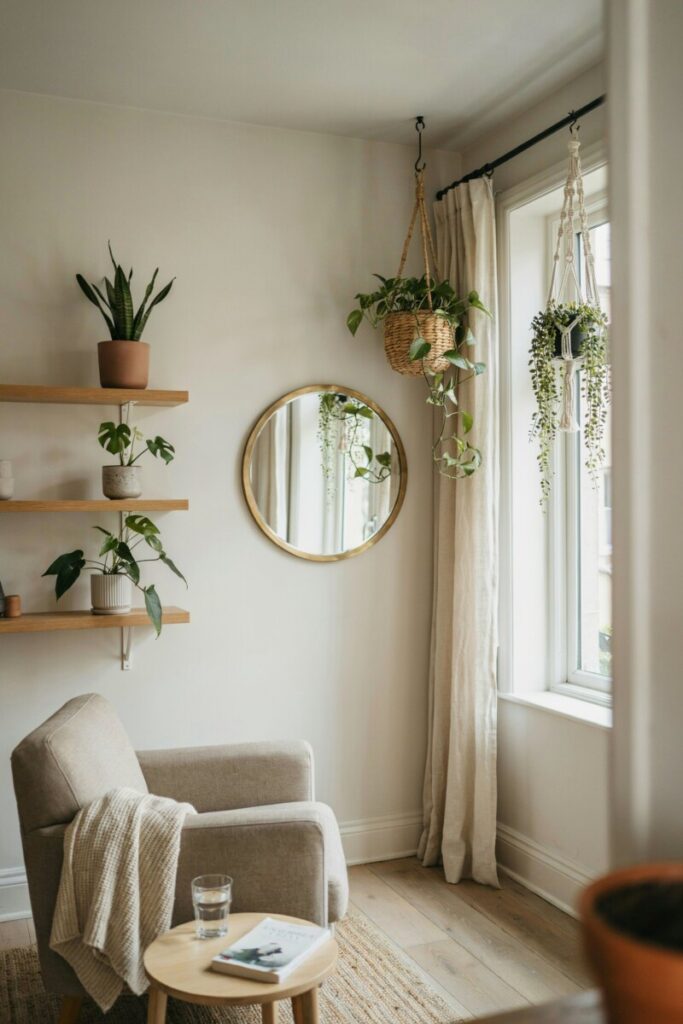
Limited square footage doesn’t rule out nature-connected design. Apartment biophilic design leans on vertical and portable solutions: hanging planters, wall-mounted plant shelves, narrow plant stands, window boxes where allowed, botanical prints, nature-inspired wallpaper, and mirrors that reflect outdoor views.
Renters have excellent options: removable hooks, peel-and-stick wallpaper, freestanding shelving, temporary window treatments, foldable furniture in natural materials, rattan storage baskets, small herb gardens, and portable lamps with warm, adjustable light. Potted plants — not permanent landscaping — keep deposits safe while delivering the joy of bringing the outdoors in.
Affordable Ways to Bring the Outdoors In
You don’t need a renovation budget to begin. Nature-inspired home decor scales to almost any wallet.
Under $50
- Add one or two low-maintenance plants.
- Swap synthetic cushion covers for cotton or linen.
- Style a wooden tray on a table or dresser.
- Hang nature photography or botanical prints.
- Rearrange furniture to improve daylight — completely free.
$50 to $250
- Invest in a larger statement plant.
- Add a jute rug or woven baskets.
- Install a floating plant shelf.
- Replace harsh bulbs with dimmable warm LEDs.
- Add a small natural wood side table or linen-blend curtains.
Larger investments
- Replace flooring with responsibly sourced wood or cork.
- Install energy-efficient windows, patio doors, or a skylight.
- Add a living wall.
- Choose low-VOC paints and finishes.
- Remodel with natural stone or reclaimed materials.
| Update level | Example projects | Typical impact |
|---|---|---|
| Under $50 | Pothos, linen pillow covers, botanical prints, furniture rearrangement | Quick softness and better daylight |
| $50–$250 | Jute rug, statement plant, warm dimmable LEDs, plant shelf, linen curtains | Noticeable texture, warmth, and greenery |
| $250+ | Wood or cork flooring, efficient windows, skylight, living wall, stone surfaces | Lasting structural connection to nature |
You don’t need to redesign the whole house at once. Start with one room, see what works, and expand gradually — a pace that also supports sustainable home improvement.
Common Biophilic Design Mistakes
- Too many plants, no maintenance plan — start with a few low-maintenance indoor plants and grow slowly.
- Blocking windows with oversized greenery or furniture — keep sightlines clear; views are core to nature-connected design.
- Faux plants everywhere — mix real greenery where light allows and reserve faux stems for dark corners.
- Ignoring humidity and mold — monitor moisture, run exhaust fans, and match plants to conditions.
- Choosing materials for looks alone — weigh durability, care, and sourcing before buying.
- A cluttered “indoor jungle” — edit regularly; calming interior design ideas depend on balance.
- Cool, bright lighting at night — switch to dimmable warm bulbs to support circadian lighting.
- Forgetting pet safety — check every plant against a reliable toxicity list.
- Water features without a cleaning plan — budget time for upkeep or choose sound-only alternatives.
- Assuming natural materials are maintenance-free — seal, oil, or treat wood and stone as directed.
- A “themed” jungle look — aim for subtle connection, not costume.
How to Create a Biophilic Design Plan
- Assess the room’s natural light throughout the day.
- Identify existing views of trees, gardens, balconies, or the sky.
- Choose a simple nature-inspired color palette.
- Select one main natural material, like oak or linen.
- Add plants suited to the room’s light and humidity.
- Improve lighting with layered, adjustable fixtures.
- Introduce natural textures through rugs, throws, and baskets.
- Check ventilation and moisture levels.
- Consider maintenance, household, and pet safety.
- Review the space and remove anything that creates unnecessary clutter.
Biophilic Design FAQs
What is biophilic design in simple terms?
Biophilic design is an approach to interior design that strengthens your connection to nature at home using daylight, plants, natural materials, organic shapes, and views of the outdoors.
Is biophilic design only about plants?
No. Plants are one important category, but full biophilic interior design also includes natural light, ventilation, wood and stone interiors, nature-inspired colors, organic forms, and sensory elements like water sounds.
How can I use biophilic design in an apartment?
Use potted plants, natural fabrics, daylight-maximizing layouts, portable wood or rattan furniture, nature-inspired colors, and removable decor like peel-and-stick wallpaper and adhesive hooks.
What are the best low-maintenance plants for beginners?
Pothos, snake plants, ZZ plants, spider plants, and parlor palms are commonly available and forgiving. Always confirm light requirements and pet safety before purchasing.
Is biophilic design expensive?
It can be as affordable as rearranging furniture and opening curtains, or as involved as adding a skylight or living wall. Most people start small and expand over time.
What colors are used in biophilic interiors?
Greens like sage and forest, warm neutrals such as sand and beige, soft browns, terracotta, clay, muted blues, and stone grays.
How is biophilic design different from sustainable design?
Sustainable design focuses primarily on environmental impact, while biophilic design focuses on strengthening the human connection to nature. The two overlap beautifully — reclaimed wood, for example, is both eco-friendly and nature-connected.
Conclusion: Start Bringing the Outdoors In Today
Biophilic design isn’t about copying a forest or filling every shelf with pots. It’s about creating a home that feels more connected, comfortable, sensory-rich, and supportive of everyday life — whether that’s a studio apartment in Chicago or a ranch house in Tucson.
Start with one simple change this week: open up a window view, add a suitable plant, switch to natural textiles, warm up your lighting, or paint a wall in a nature-inspired shade. Small steps add up, and in 2026 the move toward nature-connected design shows no signs of slowing. Your home — and your daily routine — may feel all the better for it.