15 Stunning Black and White Kitchen Cabinets Ideas for Inspiration
- Kitchen Decor Idea
Admin
- 0
- 46 minutes read
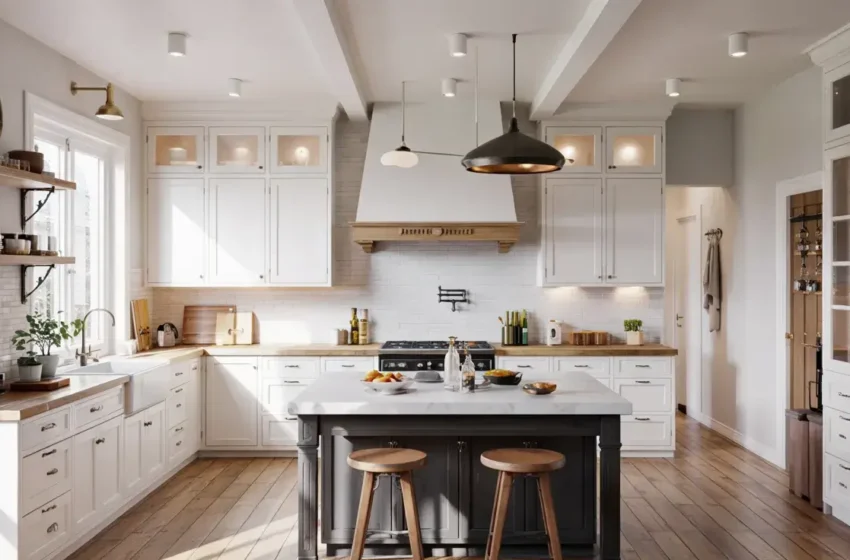
Black and white kitchens have this magical ability to look effortlessly chic without trying too hard. I realized this when I walked into my neighbor’s newly renovated kitchen last spring—she had gone full black and white with her cabinets, and honestly, I stood there slack-jawed for a solid minute. The combination felt timeless yet completely modern, like it would never go out of style no matter what design trends came and went.
Here’s the thing about black and white kitchen cabinets—they give you the best of both worlds. You get the drama and depth of black paired with the brightness and airiness of white. It’s a contrast that interior designers have relied on for decades, and for good reason. This color combo works in virtually every kitchen size, style, and layout imaginable.
Whether you’re planning a complete kitchen overhaul or just dreaming about future possibilities, I’ve gathered 15 stunning black and white kitchen cabinet ideas that’ll spark your creativity. Let’s explore what makes each of these combinations so irresistible!
1. Classic Split Black and White Cabinet Kitchen
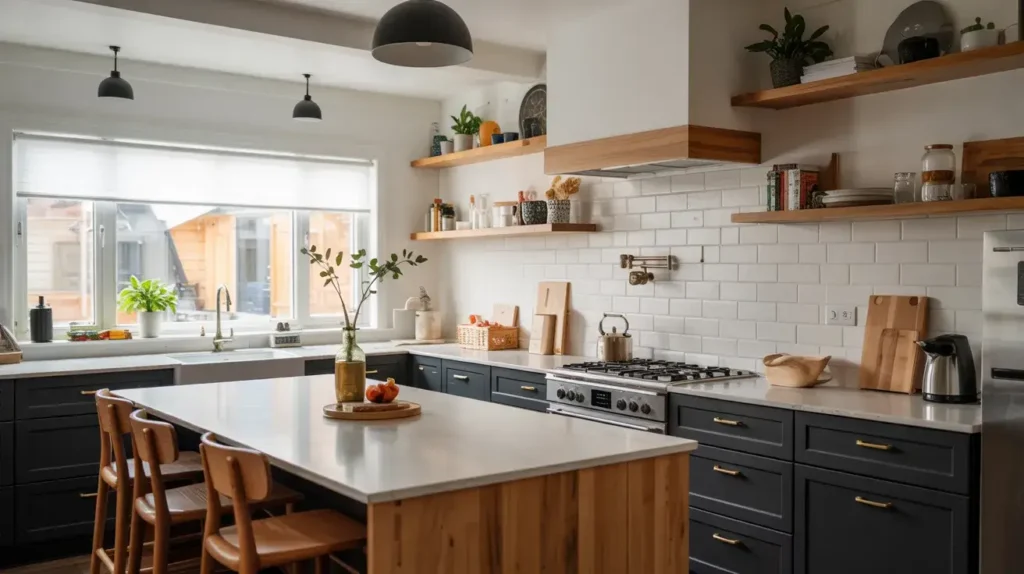
The classic split approach divides your kitchen horizontally—black on the bottom, white on top (or vice versa). This timeless configuration creates visual balance and gives your kitchen a sophisticated, intentional look that never feels accidental.
Why does this work so beautifully? The heavier visual weight of darker cabinets naturally grounds the space when placed at the base. Meanwhile, white upper cabinets keep the room feeling open and prevent that “cave” effect that sometimes happens with too much dark cabinetry.
Making the Classic Split Work
Here’s what you need to nail this look:
- Consistent hardware finish across both cabinet colors
- A clear horizontal dividing line—typically at countertop height
- Complementary countertops that bridge both colors (think white marble with gray veining)
- Matching cabinet door styles for cohesion
- Strategic lighting to highlight both zones equally
I helped my cousin design her kitchen using this exact approach, and we chose black shaker-style base cabinets with matching white shakers up top. The result looked custom and expensive, but her budget was decidedly middle-of-the-road. Sometimes the classics become classics because they just plain work.
Pro tip: Keep your backsplash neutral to avoid competing with the strong cabinet contrast. White subway tile or light gray herringbone patterns work wonderfully here.
2. Black Base Cabinets with White Uppers Kitchen
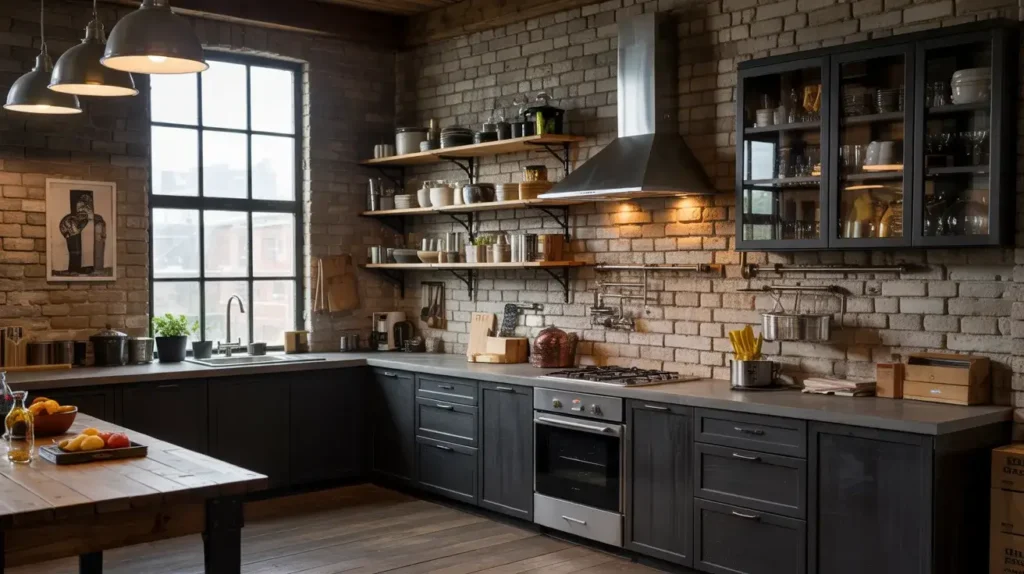
This variation of the split approach deserves its own spotlight because black base cabinets with white uppers creates such a distinct aesthetic. The dark foundation literally anchors your kitchen while the white uppers seem to float above.
The psychological effect here matters more than you might think. Black bases feel solid and substantial—like the kitchen has good bones. White uppers maintain brightness and reflect light around the room, keeping everything feeling spacious.
Why This Configuration Dominates
Consider these advantages:
- Hides scuffs and marks on lower cabinets where most wear happens
- Creates natural visual hierarchy
- Works with any countertop color since you’re bridging black and white
- Makes ceilings appear higher
- Easier to keep looking clean where it matters most
The practical benefits sealed the deal for me personally. Lower cabinets take a beating—kids, pets, dropped groceries, random kicks while cooking. Having black down below means you’re not constantly fretting over every little mark. Meanwhile, upper cabinets stay cleaner naturally since hands touch them less frequently.
If your kitchen gets abundant natural light, this configuration maximizes that brightness while still delivering major design impact.
3. White Base Cabinets with Black Uppers Kitchen
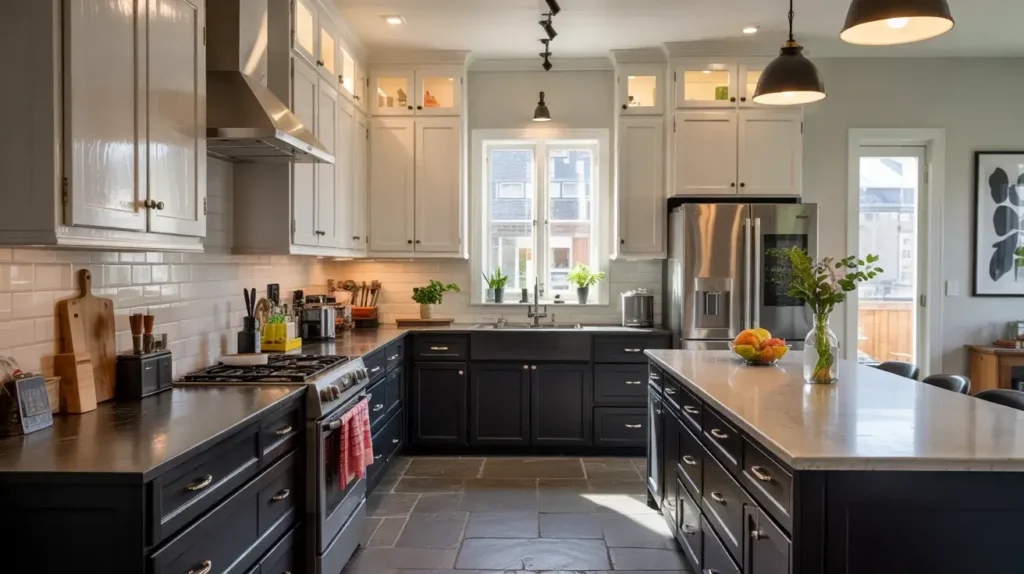
Okay, I’ll admit this one initially made me nervous when I first saw it. Black upper cabinets felt counterintuitive—wouldn’t they make the kitchen feel dark and cramped? But then I saw it executed properly, and my mind completely changed.
Flipping the traditional script creates an unexpectedly modern, almost gallery-like atmosphere. The black uppers draw your eyes upward and add architectural drama that white uppers simply can’t match.
When to Consider This Bold Move
This configuration works best when you have:
- High ceilings that can handle the visual weight
- Excellent natural and artificial lighting
- Open floor plans where the kitchen connects to lighter spaces
- Modern or contemporary home architecture
- Willingness to embrace bold design choices
I’ve noticed this approach popping up more frequently in designer kitchens featured in architectural magazines. There’s something undeniably artistic about it—like the black uppers frame your kitchen activities beneath them.
Word of caution: This isn’t the best choice for small, enclosed kitchens with limited windows. Without adequate light, black uppers can feel oppressive. Know your space before committing.
4. Black Island with White Cabinet Kitchen
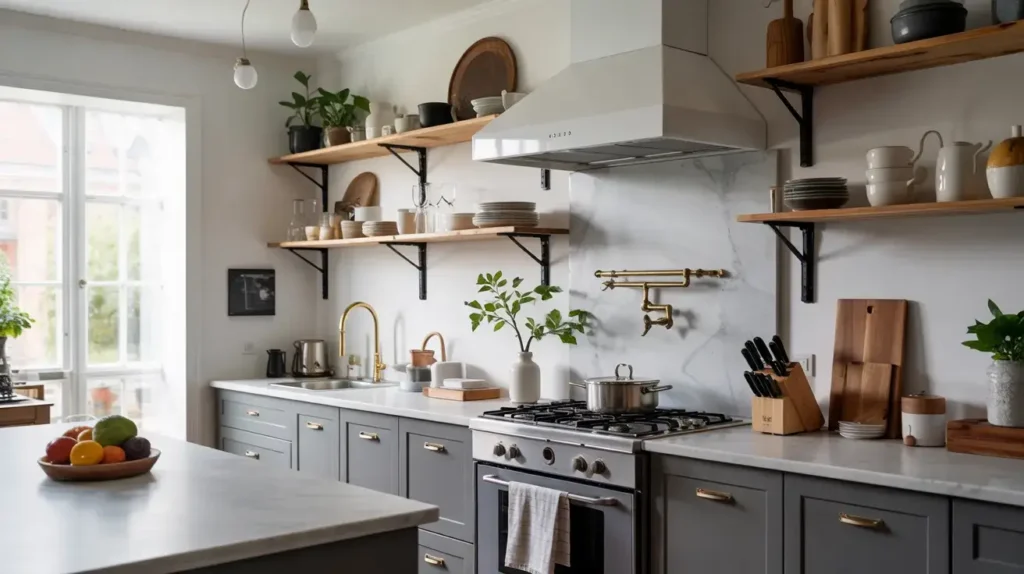
If going fifty-fifty on your cabinets feels too risky, a black island paired with white perimeter cabinets offers the perfect compromise. You get that striking contrast without overwhelming the space, plus the island becomes an instant focal point.
This approach works brilliantly because islands naturally serve as the kitchen’s centerpiece anyway. Why not dress them appropriately? The black island commands attention while white cabinets keep everything else bright and airy.
Creating the Perfect Black Island Moment
Consider these elements:
- Contrasting countertop on the island—white marble looks stunning against black cabinetry
- Statement pendant lighting above to highlight your island
- Matching hardware across all cabinets for cohesion
- Consider open shelving on the island ends for visual interest
- Bar seating with complementary colors ties everything together
My friend recently went this route in her 1990s colonial kitchen renovation. She kept all perimeter cabinets white to maintain the home’s traditional feel but added a black shaker-style island that brought instant modernity. The transformation cost less than you’d expect because she only painted one element black rather than half her cabinets.
IMO, this might be the most universally flattering approach if you’re nervous about the black and white combination.
5. Two-Tone Modern Black and White Kitchen
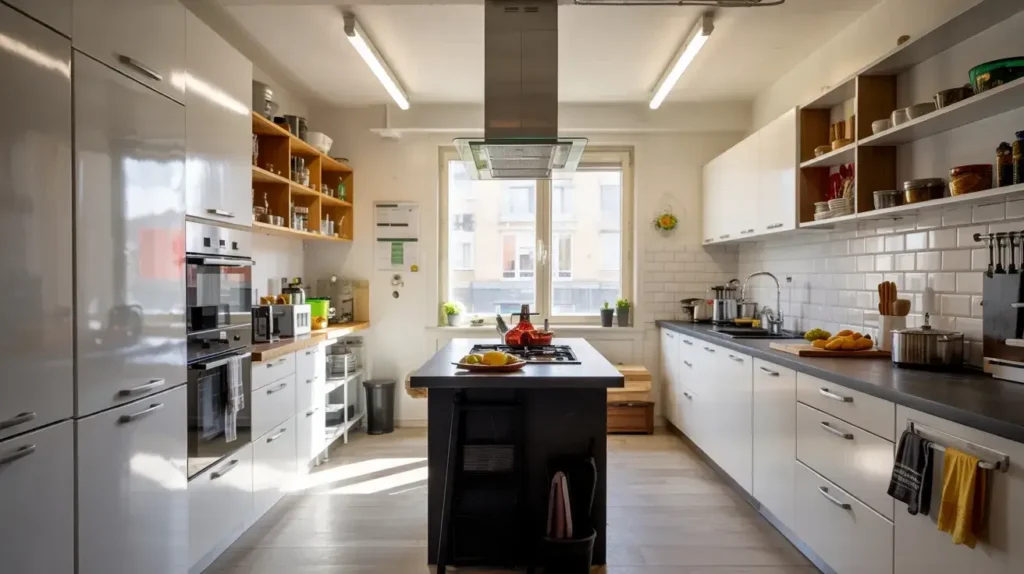
Modern two-tone kitchens push beyond simple splits to create dynamic visual compositions using black and white in unexpected ways. Think geometric patterns, alternating cabinet runs, or color-blocked zones that feel intentionally artistic.
The key difference from classic splits? Modern two-tone kitchens break rules and create asymmetry. One wall might be entirely black while another is entirely white, or black and white cabinets might alternate in patterns that demand attention.
Elements of Modern Two-Tone Design
- Flat-panel or slab-front cabinet doors for clean lines
- Handleless mechanisms that maintain smooth surfaces
- Bold geometric patterns in backsplash or flooring
- Statement lighting as functional art
- Minimal countertop clutter—let the cabinets speak
- Strategic placement of each color for maximum impact
This style particularly suits contemporary homes with open floor plans and architectural details worth highlighting. If your kitchen features interesting angles, unusual ceiling lines, or dramatic windows, modern two-tone cabinets can emphasize these features beautifully.
The risk here involves achieving balance without falling into chaos. Work with a designer or spend serious time with design software before committing. What looks fantastic in your head might feel overwhelming in reality.
6. Minimalist Flat Panel Black and White Kitchen
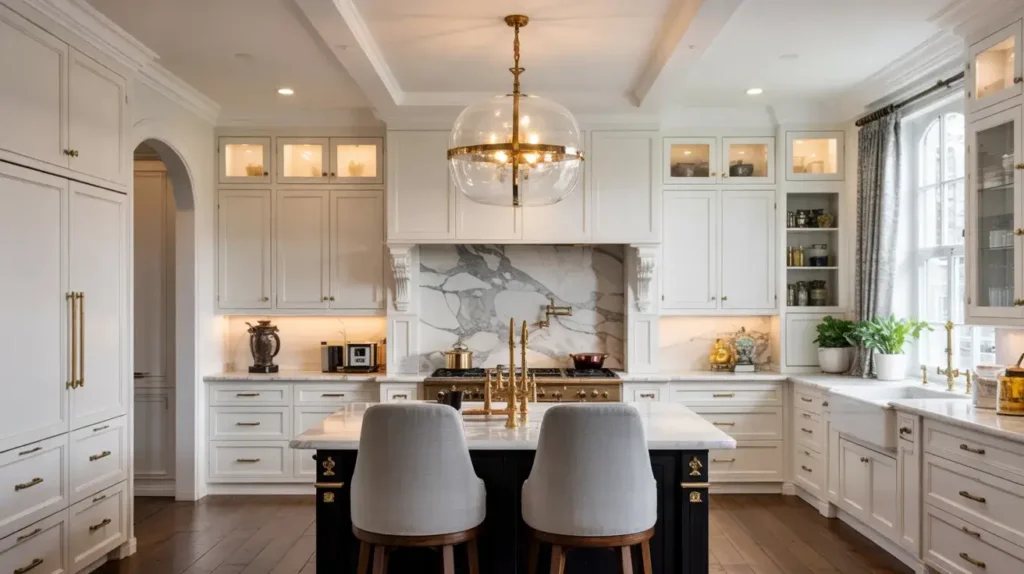
Minimalism and black-and-white palettes share the same DNA—both celebrate restraint, intentionality, and letting quality speak louder than quantity. Flat panel cabinets in black and white create the ultimate minimalist kitchen where clean lines reign supreme.
The absence of ornamentation puts all focus on the interplay between colors. Every handle choice, every countertop seam, every outlet placement matters because nothing distracts from the fundamentals.
Achieving Minimalist Perfection
Success requires attention to:
- Flush-fit cabinet installation with minimal reveals
- Hidden hinges and integrated handles or push-to-open mechanisms
- Seamless countertops without visible edges where possible
- Recessed or concealed appliances
- Under-cabinet and in-cabinet lighting that illuminates without visible fixtures
- Strategic storage solutions that eliminate countertop clutter
I toured a home recently featuring this exact kitchen style, and the effect bordered on meditative. Everything had its place, surfaces stayed clear, and the black-and-white palette created this almost zen-like atmosphere. Of course, achieving this requires serious commitment to organization. If you’re not naturally tidy, minimalism might be more aspirational than practical.
Reality check: Fingerprints show prominently on both glossy black and glossy white surfaces. Matte finishes forgive more.
7. Farmhouse Style Black and White Cabinet Kitchen
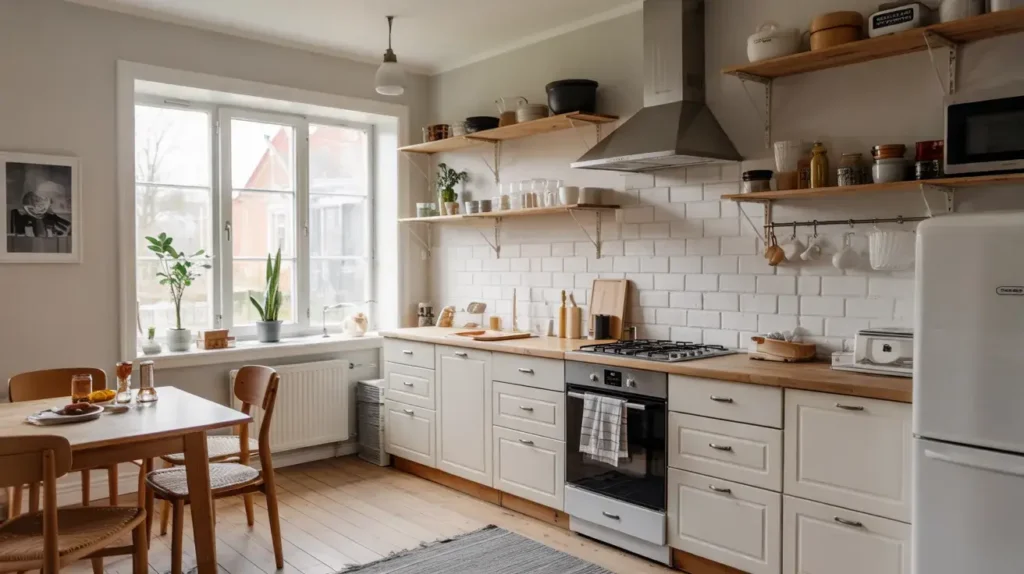
Who says farmhouse kitchens need to be all white with distressed wood? Black and white farmhouse cabinets bring edge to this beloved style while maintaining that welcoming, lived-in feel everyone loves about farmhouse design.
The combination works because black grounds the sometimes-too-precious farmhouse aesthetic. Think black lower cabinets with white uppers, or a black hutch against white shaker cabinetry. Either way, the contrast adds sophistication without sacrificing warmth.
Farmhouse Elements That Shine in Black and White
- Apron-front farmhouse sinks in white or black
- Open shelving with black brackets against white walls
- Shaker-style cabinet doors—the farmhouse classic
- Butcher block countertops for warmth
- Vintage-inspired hardware in brass, bronze, or black iron
- Subway tile backsplashes in classic white
- Barn-style pendant lighting in matte black
My aunt transformed her dated 1980s kitchen into a stunning black and white farmhouse haven without gutting the entire space. She painted existing oak cabinets—black on bottom, white on top—added new brass hardware, and installed a white farmhouse sink. The total investment stayed under $3,000, and the transformation looks like it cost ten times that.
This proves you don’t need unlimited budgets to achieve magazine-worthy results. Sometimes smart choices beat expensive ones.
8. High-Contrast Contemporary Cabinet Kitchen
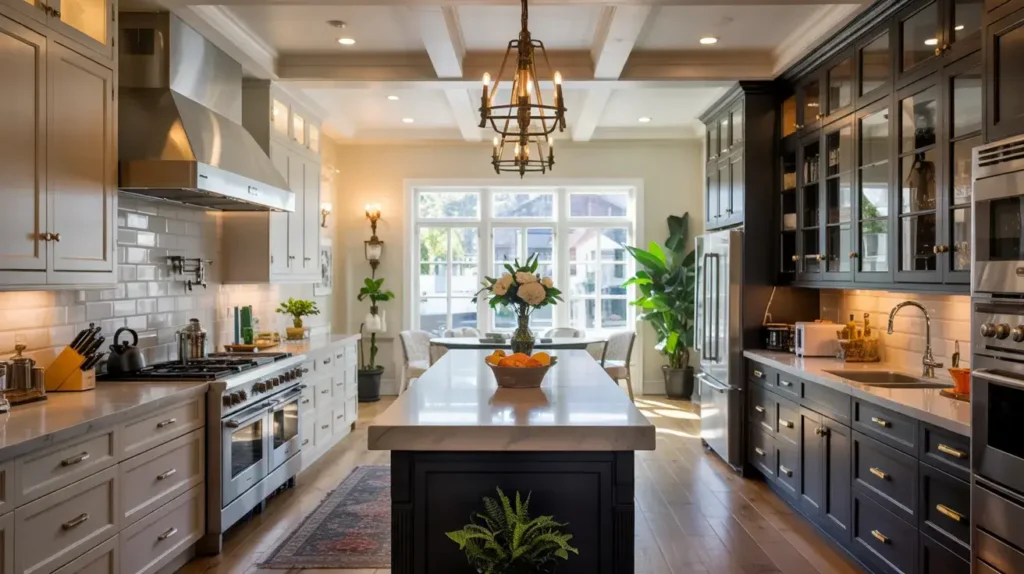
High-contrast kitchens embrace the drama. Pure black against bright white creates maximum visual impact, and contemporary styling ensures this drama reads as sophisticated rather than jarring.
The key word here is “contemporary”—clean lines, quality materials, and thoughtful lighting separate high-contrast kitchens that wow from ones that overwhelm.
Creating Successful High Contrast
Balance is everything:
- Crisp, clean cabinet lines without ornate details
- High-quality finishes that photograph beautifully
- Strategic ratios—not necessarily 50/50
- Excellent task and ambient lighting
- Neutral transitional elements like stainless appliances or gray countertops
- Consider one accent color sparingly—maybe gold hardware or greenery
FYI, high-contrast kitchens photograph incredibly well, which matters if you’re planning to sell your home eventually. Real estate photographers love bold, clean contrasts that pop in listing photos. 🙂
The emotional impact of walking into a well-executed high-contrast kitchen can’t be overstated. It feels intentional, confident, and decidedly grown-up. This isn’t a kitchen that happened by accident—it’s a kitchen that makes a statement.
9. Scandinavian Black and White Kitchen Cabinets
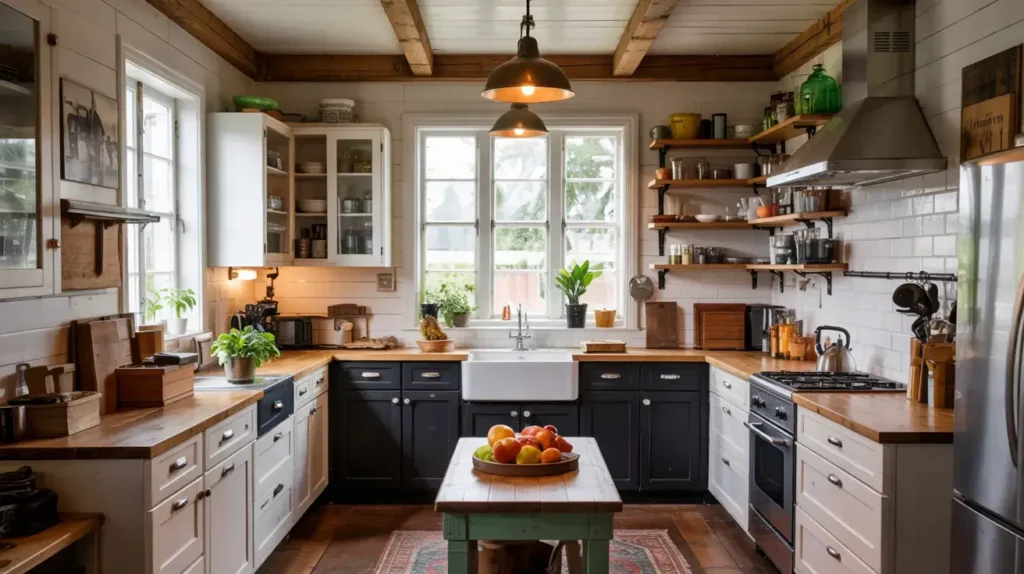
Scandinavian design brings warmth to the black and white palette in ways other styles simply can’t match. Scandi kitchens combine black and white cabinets with natural wood, plants, and organic textures for spaces that feel cozy despite the stark color scheme.
The Scandinavian approach emphasizes functionality, natural light, and that untranslatable concept of “hygge”—coziness that makes you want to linger. Black and white cabinets provide the backdrop while warmer elements do the heavy lifting on comfort.
Essential Scandinavian Elements
Incorporate these for authenticity:
- Light wood accents—oak, birch, or ash
- Plenty of greenery and plants
- Matte cabinet finishes rather than glossy
- Natural fiber textiles like linen or cotton
- Simple, functional hardware in matte black or brushed nickel
- Open shelving displaying everyday items beautifully
- Abundant natural light with minimal window treatments
What I appreciate most about Scandinavian black and white kitchens is their livability. These spaces don’t feel precious or intimidating. They invite you to actually cook, gather, and enjoy the room rather than just admire it from afar.
If you want black and white cabinets that feel warm rather than cold, the Scandinavian approach offers your clearest path there.
10. Luxury Marble Accent Black and White Kitchen
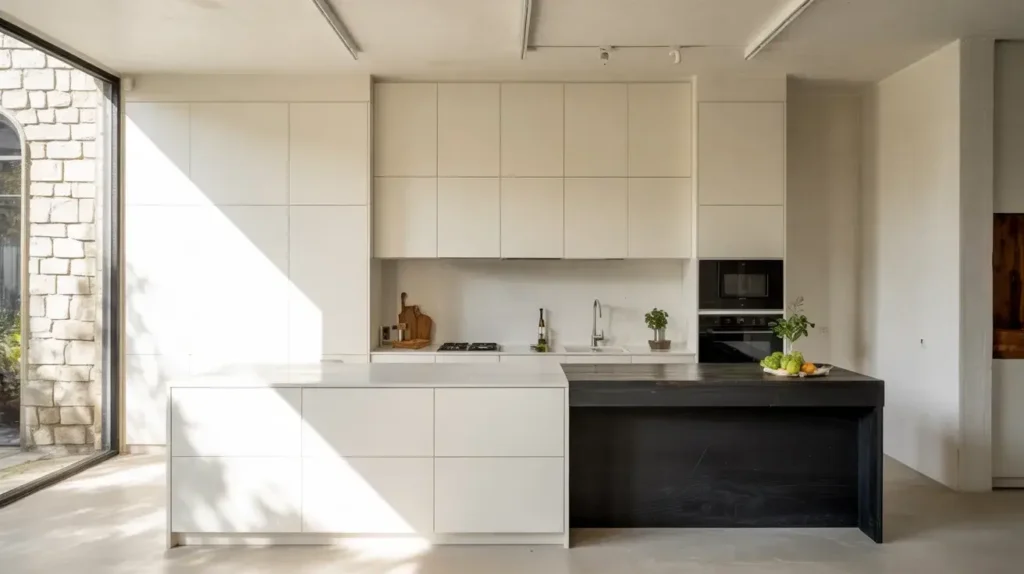
Ready to elevate your black and white kitchen to straight-up luxurious? Adding marble accents transforms this classic combination into something genuinely special. The natural veining in marble bridges black and white beautifully while adding depth and movement.
Marble works in black and white kitchens because its natural patterning echoes the same tonal range. White marble with gray veining, black marble with white veining, or even bookmatched slabs create showstopping focal points.
Where to Add Marble
Strategic placement maximizes impact:
- Countertops—the most common and impactful choice
- Full-height backsplashes that run floor to ceiling
- Waterfall islands where marble cascades down sides
- Floating marble shelves
- Marble-look porcelain floors for the look without the maintenance
- Statement range hood surrounds
The honest truth about marble? It requires commitment. Real marble stains, etches from acidic substances, and demands regular sealing. If you love the look but not the maintenance, high-quality quartz or porcelain alternatives now mimic marble remarkably well.
I’ve seen side-by-side comparisons where even design professionals struggled to distinguish real marble from quality alternatives. Don’t let maintenance concerns stop you from achieving this luxurious look.
11. Small Space Black and White Cabinet Kitchen
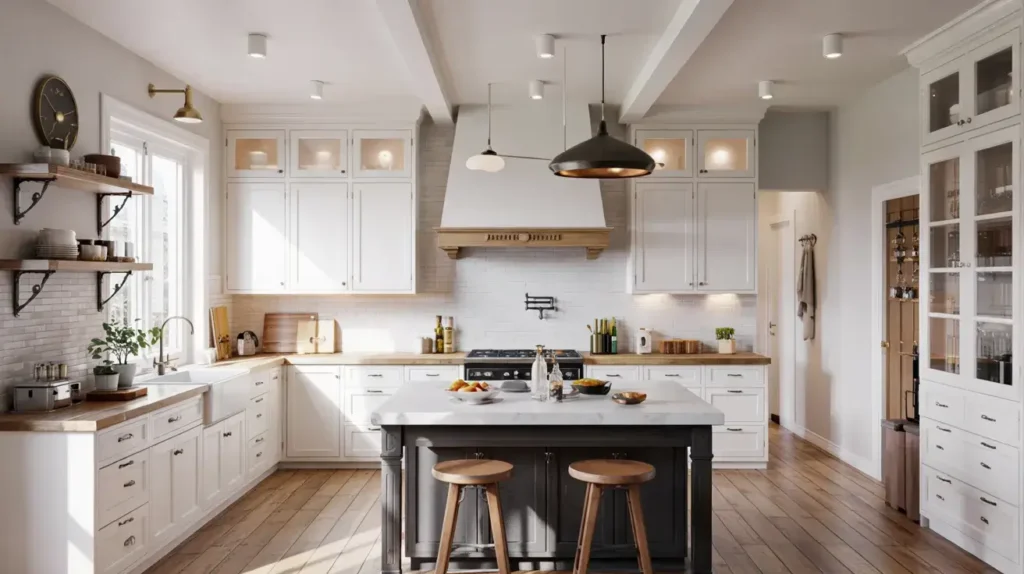
Here’s something people get wrong constantly—dark colors don’t automatically make small kitchens feel smaller. Strategic use of black and white in compact kitchens can actually create depth, interest, and even the illusion of more space.
The trick involves understanding how contrast works. Black can make walls seem to recede, while white advances toward you. Used thoughtfully, this creates dimensional interest that single-color kitchens lack.
Making Black and White Work in Small Kitchens
Follow these guidelines:
- Keep black to lower cabinets or a single accent to ground without overwhelming
- Use reflective surfaces—glossy white cabinets bounce light
- Maximize natural light with minimal window treatments
- Consider open shelving instead of some uppers to reduce visual weight
- Light-colored flooring expands perceived space
- Under-cabinet lighting eliminates shadows
- Mirror or glass backsplashes amplify light
I’ve seen galley kitchens transformed by black and white combinations. One particularly memorable example featured black lower cabinets, no uppers at all, and open shelving against white walls. The kitchen measured maybe 80 square feet total, yet felt airy and sophisticated.
Don’t let square footage dictate your design ambitions. Smart choices matter more than size.
12. Open Shelving Black and White Kitchen
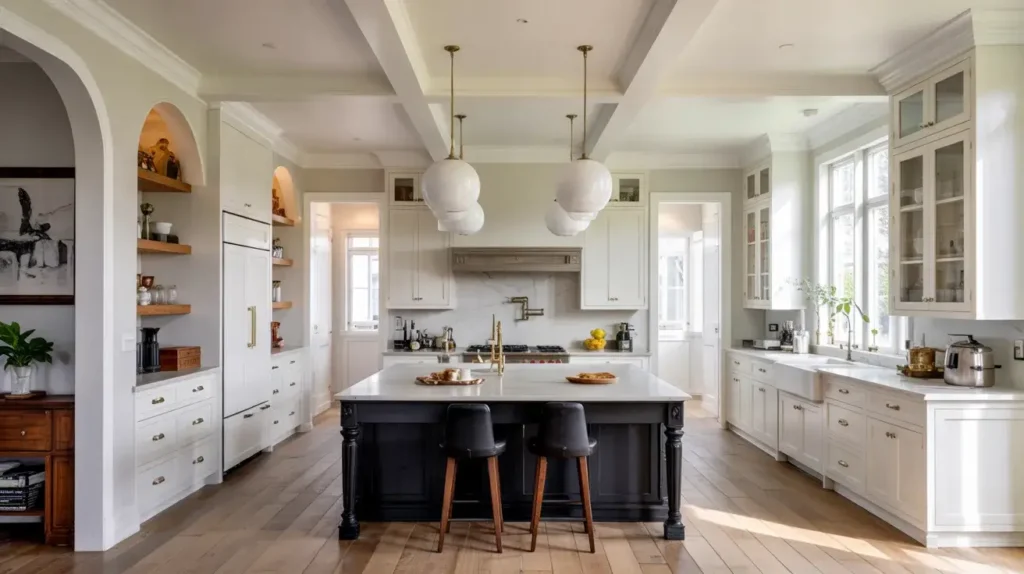
Open shelving replaces some or all upper cabinets with exposed shelves, and this approach shines brilliantly in black and white kitchens. The negative space created by open shelving prevents the black and white contrast from feeling too intense.
Plus—let’s be honest—open shelving displays your beautiful dishes, glassware, and kitchen accessories like the art pieces they deserve to be.
Succeeding with Open Shelving
The key considerations include:
- Curate what you display—no chipped mugs or mismatched Tupperware
- Choose a cohesive color palette for displayed items
- Leave breathing room between objects
- Consider floating black shelves against white walls or vice versa
- Proper lighting makes shelves look intentional rather than cheap
- Accept that you’ll dust more often
Open shelving demands a certain lifestyle commitment. If you’re naturally organized and enjoy arranging things attractively, this approach will bring you joy. If you tend toward cluttered countertops and overflowing cabinets, open shelving might create stress rather than beauty.
Hybrid approach: Replace only some upper cabinets with open shelving. Keep frequently used items behind closed doors and reserve open shelves for attractive display pieces.
13. Matte Black and Glossy White Cabinet Kitchen
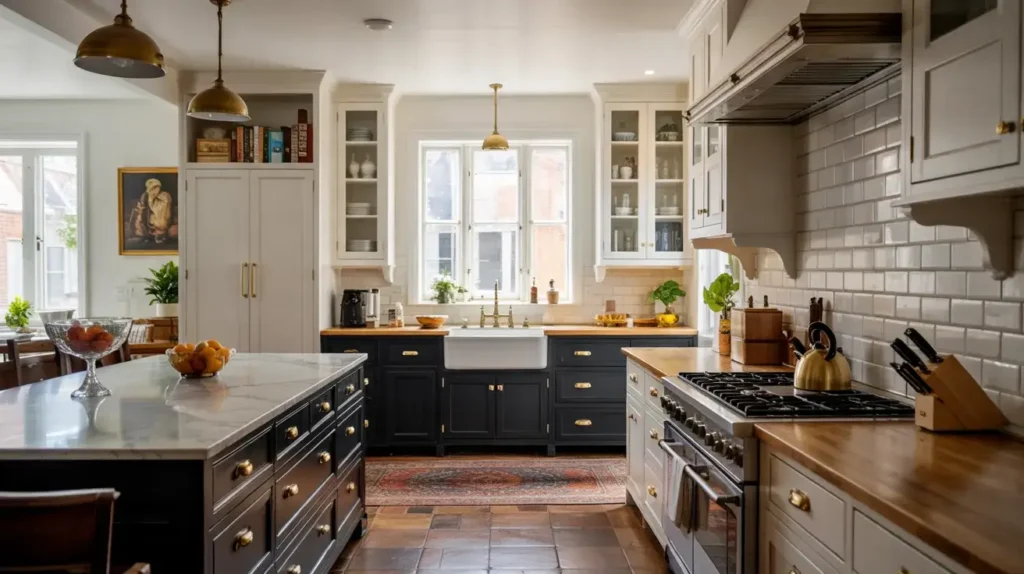
Texture contrast adds another dimension to your black and white kitchen. Pairing matte black cabinets with glossy white creates visual interest through surface variation rather than relying solely on color contrast.
The interplay between light-absorbing matte surfaces and light-reflecting glossy ones creates depth that photographs beautifully and feels dynamic in person.
Understanding the Matte-Gloss Dynamic
Here’s what each finish brings:
Matte Black Advantages:
- Hides fingerprints and smudges better
- Creates sophisticated, velvety appearance
- Absorbs light for a grounding effect
- Feels modern and current
Glossy White Advantages:
- Reflects light throughout the space
- Easier to clean (wipe-down simple)
- Creates perceived brightness
- Adds glamorous, high-end feel
The combination works because each finish does what it does best. Matte black grounds and adds weight where you want stability. Glossy white brightens and adds energy where you want lift.
I particularly love this combination on islands—matte black island cabinets with glossy white perimeter cabinets. The textural variation adds interest without introducing additional colors or patterns.
14. Industrial Black and White Cabinet Kitchen
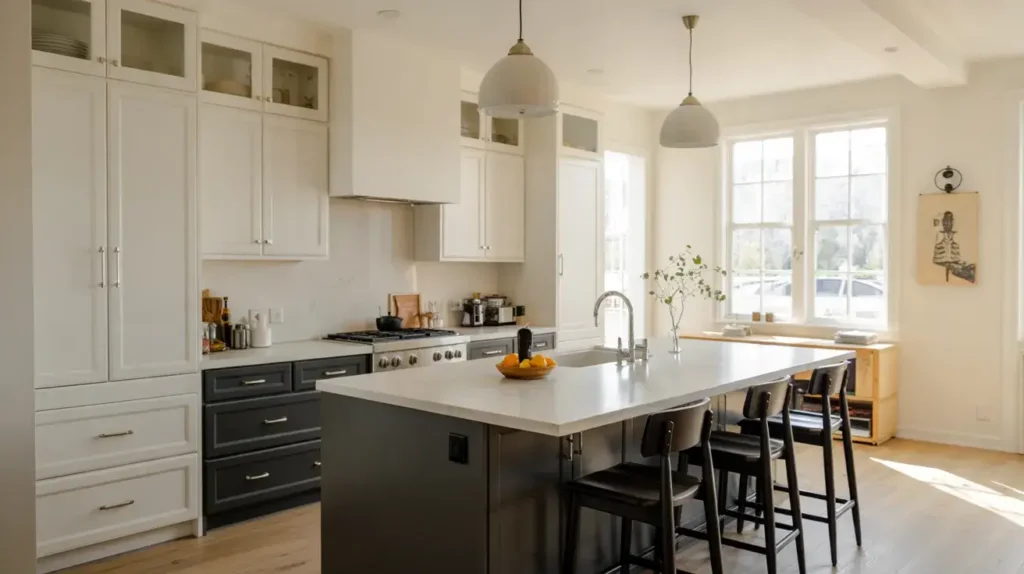
Industrial kitchens embrace raw materials, exposed architecture, and utilitarian aesthetics. Black and white cabinets fit perfectly within this framework, complementing metal fixtures, concrete surfaces, and exposed elements.
The color scheme’s simplicity allows industrial features like steel shelving, pipe lighting, and brick walls to take center stage without competing with busy cabinet colors.
Industrial Elements That Pop
Consider incorporating:
- Black metal-framed glass cabinet doors
- Stainless steel countertops or appliances
- Exposed pendant lighting with Edison bulbs
- Concrete or cement countertops
- Open pipe shelving in black iron
- Subway tile or exposed brick backsplashes
- Factory-style windows or pass-throughs
Industrial kitchens risk feeling cold if you’re not careful. Balance raw materials with warmth through wood cutting boards, leather bar stool seats, or woven baskets. Plants work wonders in industrial spaces too, softening all those hard edges.
If you live in a converted loft, warehouse, or modern build with exposed architectural elements, industrial black and white cabinets will feel perfectly at home.
15. Warm Wood Accent Black and White Kitchen
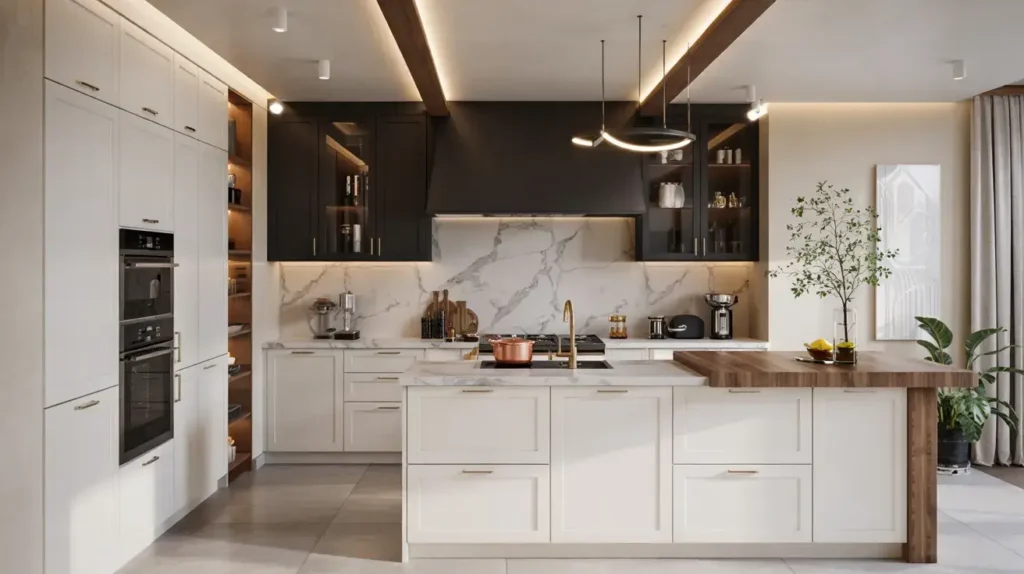
Our final idea brings together everything we’ve discussed by adding the ultimate softening agent: warm wood accents. The introduction of natural wood tones to black and white kitchens creates spaces that feel sophisticated yet approachable.
Wood’s organic texture and warm undertones prevent black and white from ever feeling sterile. Whether through open shelving, countertops, flooring, or accent pieces, wood transforms the palette from stark to welcoming.
Incorporating Wood Successfully
Try these applications:
- Floating wood shelves against black or white walls
- Butcher block countertops or cutting boards
- Natural wood bar stools at islands
- Wood ceiling beams or planking
- Hardwood flooring in warm oak or walnut tones
- Wood-wrapped range hoods
- Reclaimed wood accent walls
I’m personally obsessed with kitchens featuring black and white cabinets paired with open oak shelving. The combination feels effortlessly stylish—modern enough for contemporary homes yet warm enough for traditional ones.
The versatility here makes this approach nearly foolproof. Not sure which black and white configuration to choose? Add generous wood accents, and virtually any combination will feel cohesive and inviting.
Making Your Black and White Kitchen Dreams Reality
After exploring these 15 stunning approaches, you probably have a clearer sense of what speaks to your personal style. Black and white kitchen cabinets offer endless possibilities precisely because the color combination provides such a strong foundation for virtually any design direction.
Before committing to your chosen style, keep these final considerations in mind:
Test your colors in person: Black has many undertones—warm, cool, charcoal, true black. Same with white. Get samples and observe them in your actual kitchen at different times of day.
Consider your lifestyle honestly: Glossy surfaces show everything, matte shows less. Choose finishes that match your cleaning habits and household reality.
Don’t forget the details: Hardware, lighting, and countertops can make or break your black and white kitchen. Budget for quality in these areas.
Start with what you love: Trends come and go, but well-executed black and white cabinets remain consistently beautiful. Trust your instincts about what feels right for your home and your life.
Balance is personal: Some people love dramatic high contrast while others prefer softer interpretations. Neither is wrong—find your comfortable ratio and own it confidently.
The beauty of black and white kitchen cabinets lies in their timeless appeal. Unlike trendy colors that date quickly, this classic combination has proven staying power. Your kitchen will look as sophisticated in twenty years as it does the day you finish the renovation.
So whether you’re drawn to the clean lines of minimalism, the cozy embrace of Scandinavian style, or the raw edge of industrial design, black and white cabinets can take you there. Trust the process, do your homework, and don’t be afraid to commit to bold contrast.
Your dream kitchen awaits—and it looks amazing in black and white. 🖤🤍