15 Stunning Japanese Bedroom Aesthetic Ideas for Calm Vibes
- Aesthetic Bedroom
Admin
- 0
- 39 minutes read
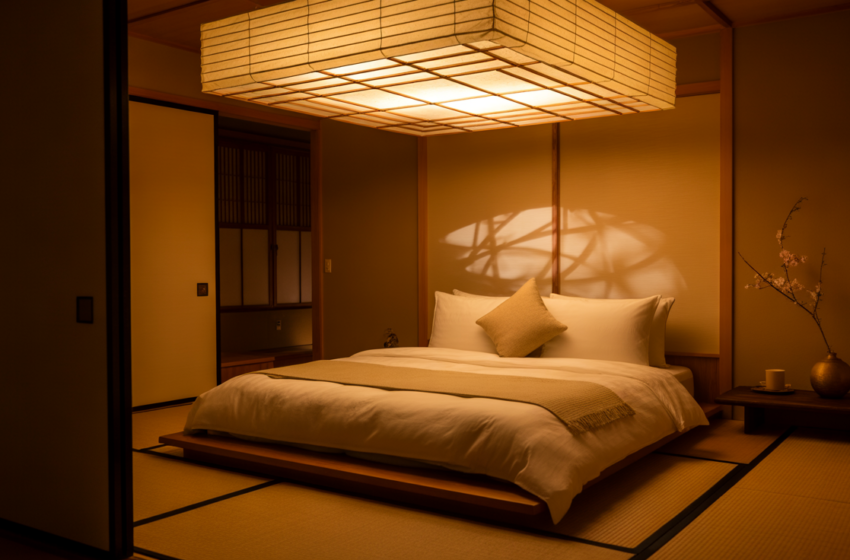
Your bedroom feels chaotic, doesn’t it? You walk in after a long day, and instead of feeling that wave of relaxation, you’re greeted by visual noise, clutter, and a vibe that’s more “storage unit” than “peaceful sanctuary.” Yeah, I’ve been there too. That’s exactly why I fell head-over-heels for Japanese bedroom aesthetics—they’re like a masterclass in creating calm, intentional spaces that actually help you breathe easier.
Japanese design isn’t just about throwing some bamboo plants around and calling it a day (though plants definitely help). It’s a whole philosophy centered on simplicity, natural materials, and this beautiful concept called “ma”—the intentional use of empty space. I’m going to walk you through 15 stunning ways to bring that serene, meditative vibe into your own bedroom. Trust me, your stress levels will thank you.
1. Minimal Zen Japanese Bedroom Setup
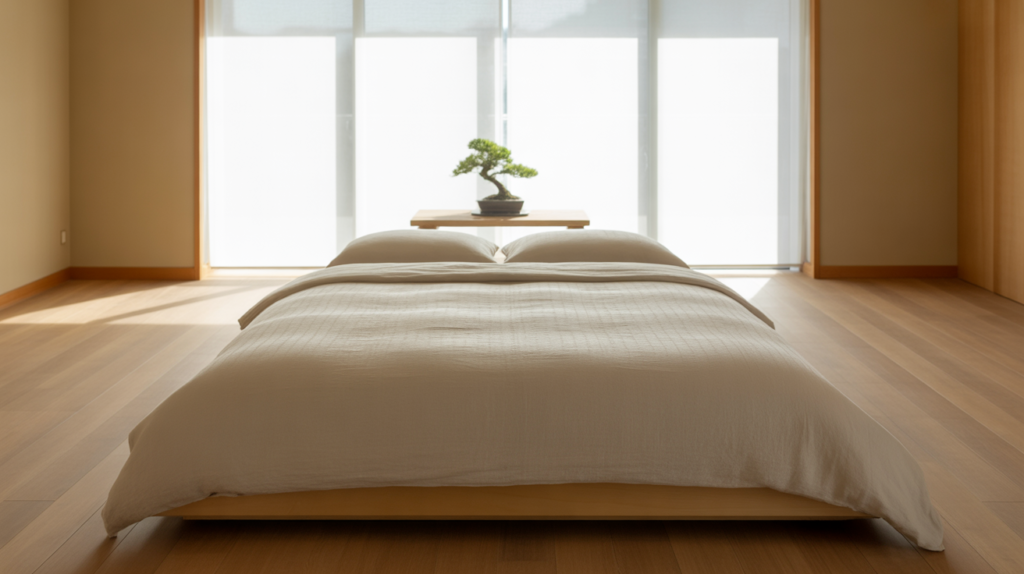
Let’s start with the foundation of Japanese bedroom design: minimalism taken to its most zen level. We’re talking about stripping away everything that doesn’t serve a purpose or bring you genuine joy (Marie Kondo has entered the chat).
A minimal zen setup means choosing only essential furniture pieces—usually a low bed, maybe a small side table, and storage that disappears into the background. The goal is to create visual emptiness that actually fills you with peace rather than anxiety about what to buy next.
I totally get that “minimal” can feel intimidating, like you’re supposed to live in some stark, uncomfortable showroom. But here’s the thing: Japanese minimalism is warm and inviting, not cold and sterile. You achieve this through natural materials, soft textures, and intentional placement of a few meaningful objects.
Start by removing 50% of what’s currently in your bedroom. Seriously, just try it. Put things in storage for a month and see what you actually miss. Chances are, you’ll discover that less really is more, and your bedroom transforms from cluttered chaos to a space where your mind can actually quiet down at the end of the day.
2. Cozy Tatami Floor Bedroom Design
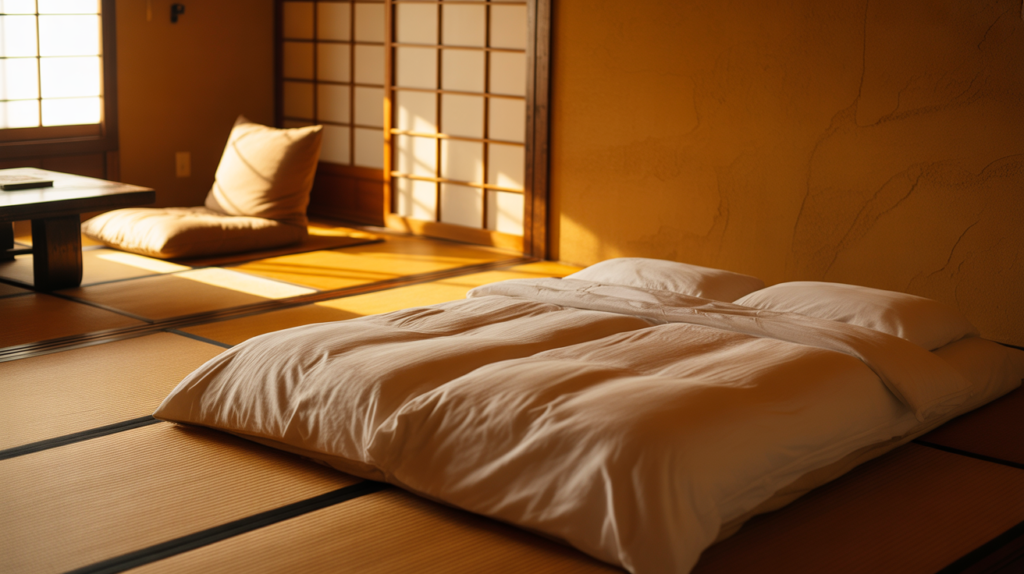
Tatami mats are these traditional Japanese floor coverings made from woven rush grass, and they bring an earthy, natural element that instantly grounds a space. The texture, the subtle scent, the way they feel underfoot—it’s all part of creating a sensory experience that’s uniquely Japanese.
Authentic tatami mats require some maintenance (they’re natural materials, after all), but you can find tatami-style mats or platforms that give you the aesthetic without the high-maintenance commitment. I’ve seen people create beautiful “tatami zones” in their bedrooms using these alternatives, and honestly? The vibe is spot-on.
The traditional approach is covering your entire floor with tatami, but you can also use them strategically—maybe as a meditation area beside your bed, or under a low table where you do your morning journaling. The raised, slightly cushioned surface creates this subtle definition between spaces without needing walls or dividers.
One practical note: tatami works best in low-humidity environments. If you live somewhere super humid, you might want to opt for tatami-inspired alternatives that won’t develop mold issues. Because a moldy bedroom is definitely not giving zen vibes :/
3. Low Platform Bed Japanese Style Room
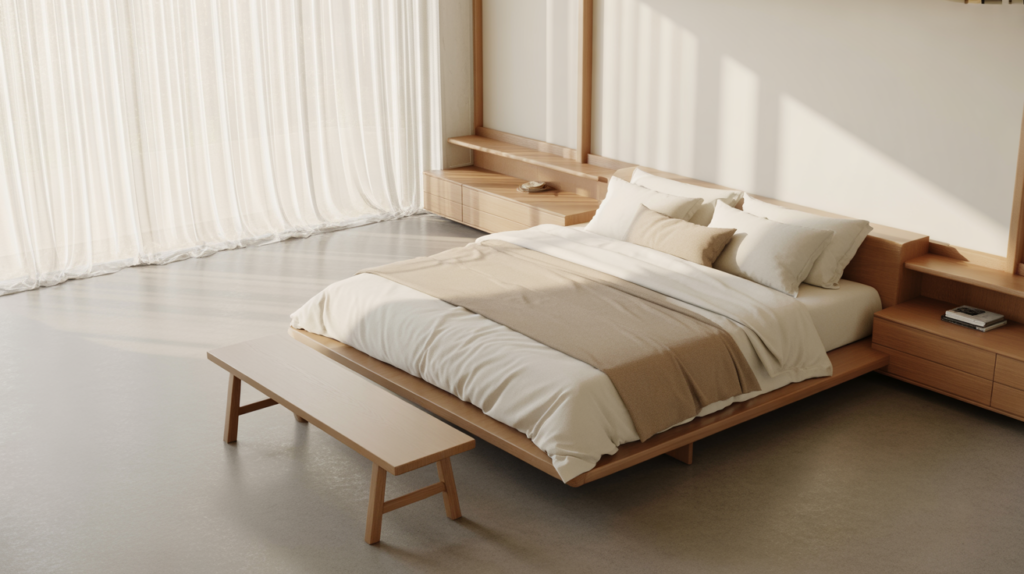
Ever wondered why Japanese beds sit so close to the ground? It’s not just aesthetics (though they do look incredibly sleek). Low platform beds connect you more closely to the earth, which aligns with principles of grounding and stability in Japanese design philosophy.
Platform beds eliminate the need for box springs and bed frames, creating clean, horizontal lines that make your room feel more spacious and less cluttered. Plus, there’s something psychologically calming about sleeping closer to the ground—it feels more secure, more rooted.
I switched to a low platform bed about two years ago, and the difference in how my bedroom feels is wild. The ceiling seems higher, the room feels bigger, and there’s this overall sense of openness that wasn’t there before. It’s like my bedroom grew by 20% without changing the actual square footage.
You can find platform beds in solid wood (my personal favorite), upholstered versions, or even DIY options if you’re handy. The key features to look for:
- Clean, simple lines without ornate headboards or footboards
- Solid construction that sits 6-12 inches off the ground
- Built-in storage underneath if you need it (keeps things minimal up top)
- Natural materials like wood, linen, or cotton
4. Neutral Tone Japanese Aesthetic Bedroom
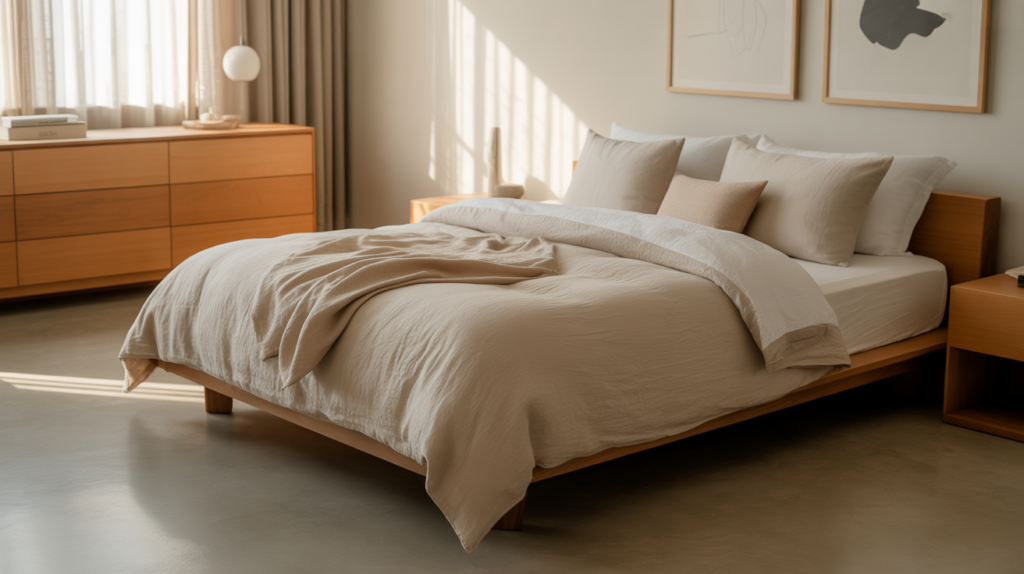
Japanese color palettes are like a warm hug in visual form—soft, muted, and incredibly soothing. We’re talking warm whites, soft beiges, gentle greys, natural wood tones, and the occasional pop of deeper earth tones like charcoal or forest green.
The neutral palette isn’t about being boring—it’s about creating visual harmony that doesn’t compete for your attention. When everything works together tonally, your brain can actually relax instead of processing a bunch of contrasting visual information.
I know what you’re thinking: “But won’t my room look bland?” Nope. The secret is layering different textures and materials within that neutral range. Mix smooth plaster walls with rough linen bedding, add some woven baskets, include natural wood with visible grain, maybe a stone accent piece. Suddenly, your “neutral” room has incredible depth and interest.
The practical benefit of neutral tones? They’re timeless. You won’t wake up in three years thinking your bedroom looks dated or trendy in a bad way. Plus, neutral backgrounds let you swap in seasonal accents easily—a different throw pillow here, some fresh flowers there—without needing to redecorate entirely.
5. Small Japanese Bedroom Space Saving Ideas
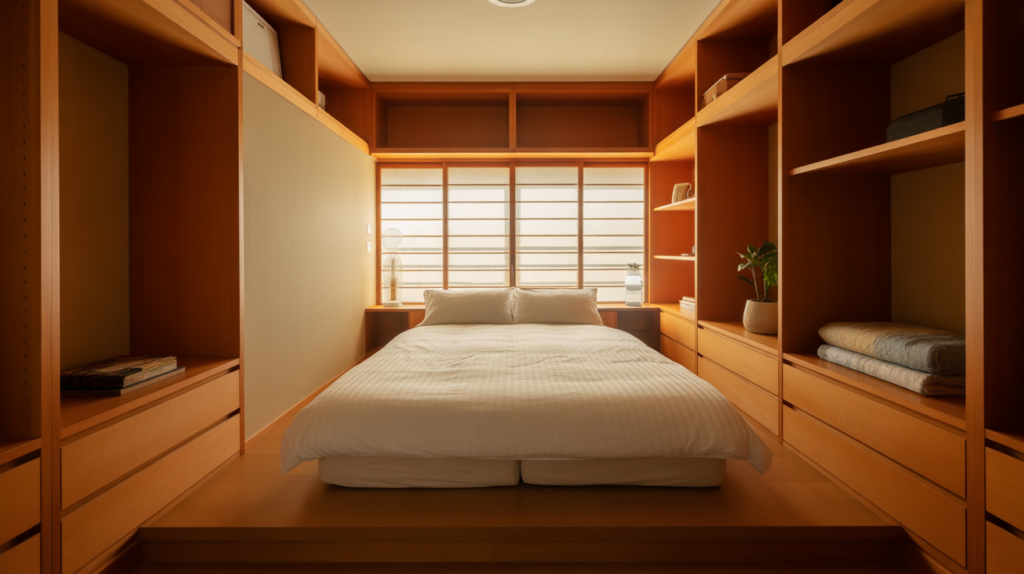
Japanese design literally evolved in response to limited space (have you seen Tokyo apartments?), so if you’re working with a small bedroom, you’re actually in the perfect position to embrace authentic Japanese principles.
The Japanese approach to small spaces is about multi-functionality and hidden storage. Every element serves multiple purposes, and nothing takes up visual or physical space unnecessarily. It’s efficient without feeling cold or utilitarian.
Here are some genius space-saving strategies straight from Japanese design:
- Use vertical space with floor-to-ceiling storage that blends into walls
- Choose furniture that folds or tucks away when not in use
- Install sliding doors instead of swing doors (saves tons of clearance space)
- Go for built-in storage under platforms and beds
- Keep surfaces clear by having designated homes for everything
I implemented the “clear surface” rule in my small bedroom, and it’s probably the single most impactful change I made. When my nightstand, dresser, and desk are clear of random stuff, the room feels twice as big. Everything has a home (usually hidden), and the visual simplicity is chef’s kiss.
One more tip: in small Japanese bedrooms, you’ll often see storage that goes all the way to the ceiling. Western design tends to leave that top foot or two empty, but Japanese design uses every inch. Just keep the daily-use stuff at accessible heights and store seasonal items up top.
6. Modern Japanese Minimalist Bedroom Look
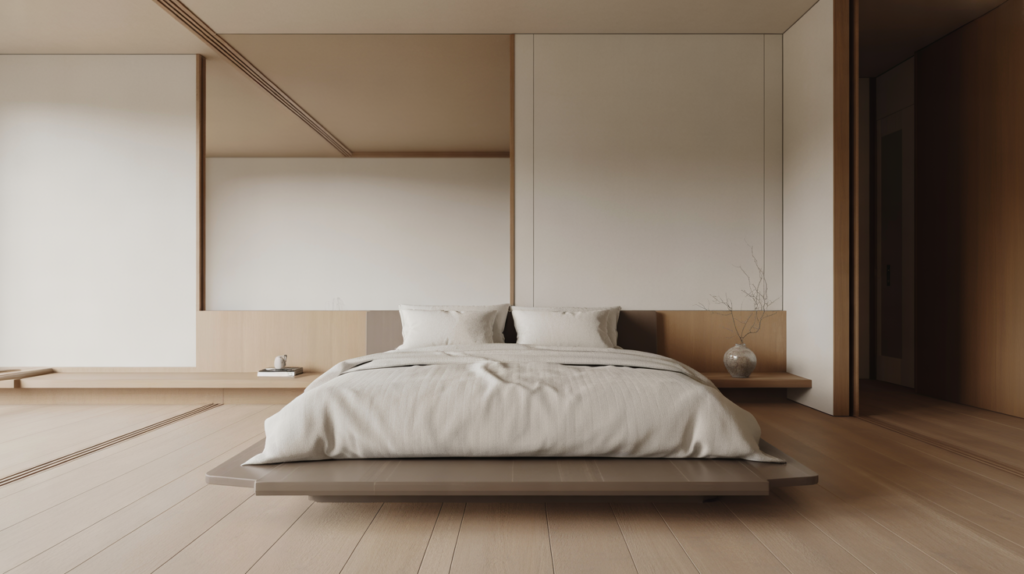
Modern Japanese minimalism takes traditional principles and updates them with contemporary materials and a slightly more global aesthetic. Think of it as Japanese design meeting modern Scandinavian influences—clean, functional, beautiful, and livable.
This style embraces technology and modern conveniences while maintaining that essential Japanese quality of mindfulness and intentionality. You might see smart lighting systems, but they’re integrated seamlessly. Maybe there’s a TV, but it’s hidden behind a sliding panel when not in use.
The modern approach also tends to be a bit more flexible with color. While still predominantly neutral, you might introduce touches of sage green, soft terracotta, or muted blues. The key is keeping the overall palette cohesive and calming—no neon pink accent walls here.
What I love about modern Japanese minimalism is that it doesn’t require you to live like a monk (unless that’s your thing—no judgment). You can have your tech, your creature comforts, and your modern amenities. The difference is in how you integrate and display them. Everything has a place, nothing feels chaotic, and the overall effect is still deeply calming.
7. Traditional Futon Style Bedroom Setup
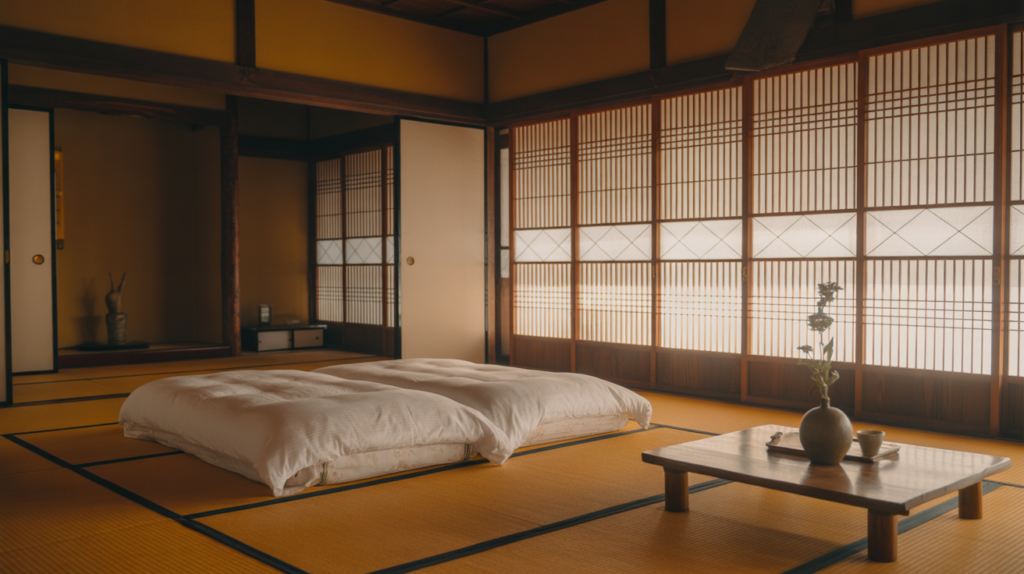
Okay, before you start having flashbacks to that terrible futon couch in your college apartment, let me clarify: traditional Japanese futons are nothing like those Western fold-out contraptions. They’re proper bedding systems that you roll out at night and store during the day.
A traditional futon setup includes a shikibuton (the mattress you sleep on), a kakebuton (the comforter), and a buckwheat hull pillow. You lay this directly on tatami mats, and honestly? It’s surprisingly comfortable once you adjust. Plus, you can literally fold up your entire bedroom during the day and use that space for other activities.
The benefits of the futon approach are pretty compelling:
- Complete space flexibility throughout the day
- Better for your back (according to many people—though this is debatable)
- Easy to air out and maintain compared to bulky mattresses
- Authentic Japanese experience if that’s what you’re after
Now, real talk: this isn’t for everyone. If you have mobility issues, getting up from floor level might be challenging. If you’re attached to your plush mattress, a futon might feel too firm. I tried the futon life for a few months, and while I appreciated the space flexibility, I eventually went back to a low platform bed. But I know people who swear by futons and will never go back to Western beds.
8. Japandi Style Cozy Bedroom Inspiration
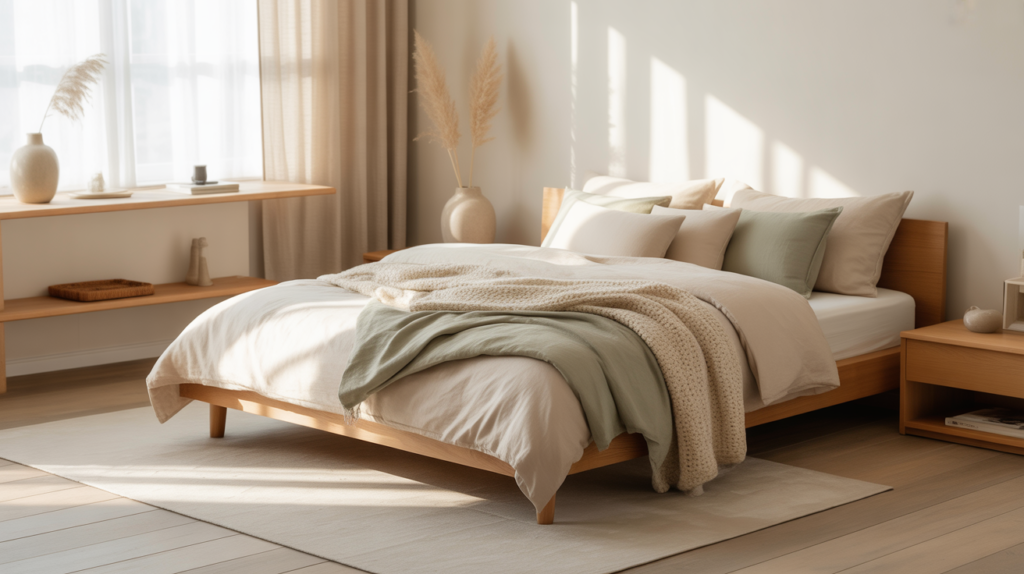
Japandi is this beautiful hybrid of Japanese and Scandinavian design, and IMO, it’s perfect for bedrooms. You get the minimalism and natural materials from Japanese design mixed with the hygge coziness and slightly warmer approach of Scandinavian style.
Japandi bedrooms feel lived-in and welcoming while still maintaining that clean, uncluttered aesthetic. You might see more textiles than in purely Japanese spaces—chunky knit throws, sheepskin rugs, multiple pillows. But everything is still curated and intentional.
The color palette expands slightly in Japandi spaces. Yes, you’ve still got those neutral bases, but you might introduce warmer woods, soft blush tones, or deeper charcoals. The overall effect is cozy without being cluttered, minimal without being cold.
I absolutely love Japandi for bedrooms because it feels more approachable than strict Japanese minimalism. You can have your cozy reading chair, your stack of books, your collection of candles—as long as everything is chosen intentionally and arranged thoughtfully. It’s minimalism for people who actually live in their spaces, you know?
9. Serene Japanese Bedroom with Natural Light
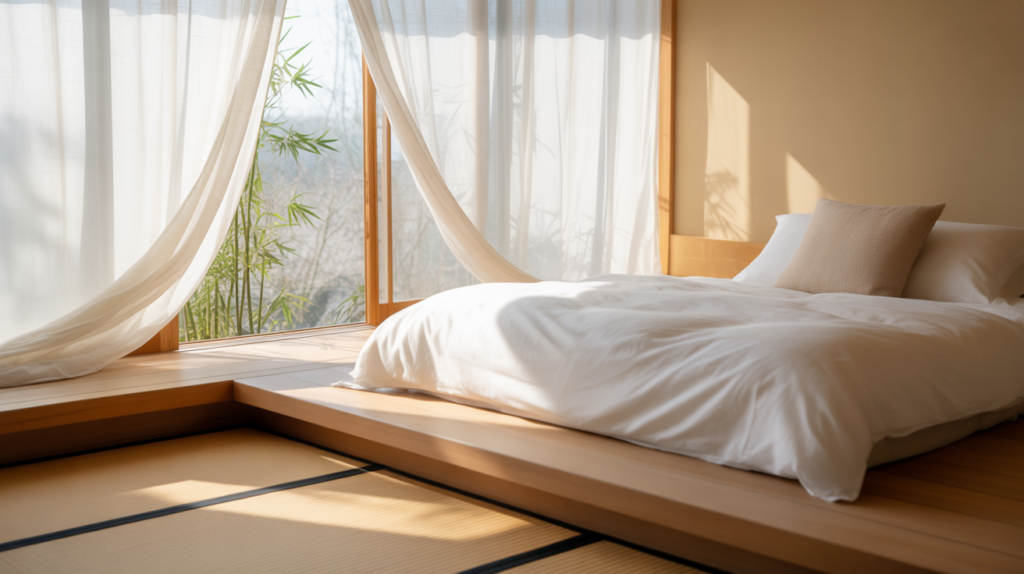
Japanese design has this incredible relationship with natural light—it’s celebrated, controlled, and used to create atmosphere throughout the day. The goal is soft, diffused light rather than harsh direct sunlight or artificial brightness.
Shoji screens are the traditional solution for light control. These translucent paper panels filter sunlight into a soft, ambient glow that changes throughout the day. Modern alternatives include linen curtains, rice paper blinds, or frosted window films that give you the same diffused quality.
I installed some shoji-style sliding panels in my bedroom, and the way they transform harsh morning light into this gentle, peaceful glow is absolutely magical. It’s like having a permanent Instagram filter on your bedroom (but, like, in a good way that doesn’t look fake).
Position your bed to take advantage of natural light without getting hit directly in the face at sunrise. East-facing windows are traditional in Japanese bedrooms because they align with natural wake cycles, but work with what you’ve got. The key is controlling and softening that light rather than blocking it entirely.
Also, consider how light moves through your space during different times of day. Japanese design is all about appreciating subtle changes and impermanence. The way afternoon light hits your wall differently than morning light? That’s not a problem to solve—it’s a feature to appreciate.
10. Simple Wooden Japanese Bedroom Decor
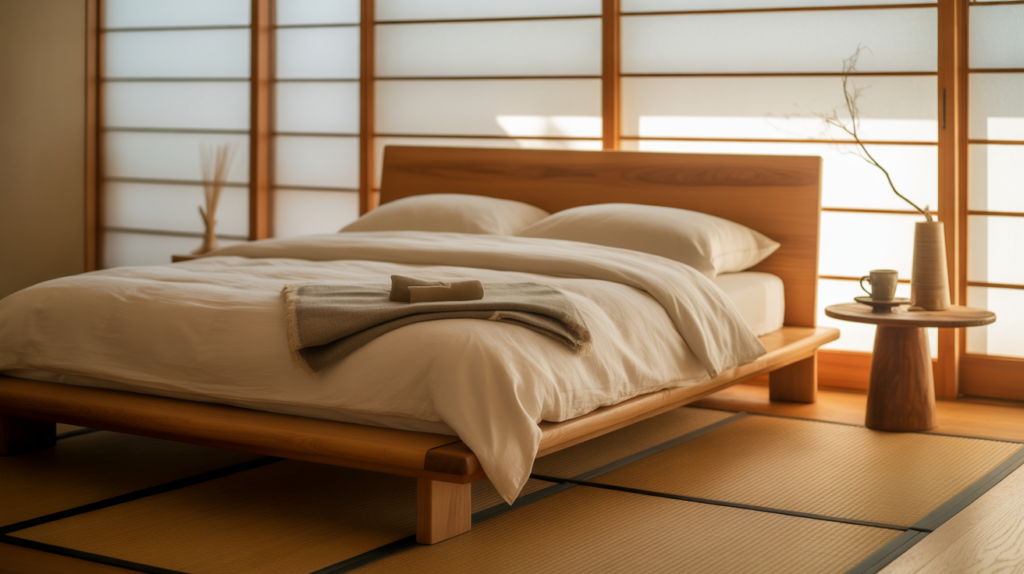
Wood is the soul of Japanese bedroom design. Not just any wood—we’re talking natural, unfinished or minimally finished wood that shows the grain, knots, and unique characteristics of each piece.
The Japanese concept of “wabi-sabi” celebrates imperfection and natural beauty, which is why you’ll see wood with visible grain patterns, slight irregularities, and natural coloring rather than heavily stained or painted pieces. This creates warmth and texture while maintaining simplicity.
Common wood elements in Japanese bedrooms include:
- Platform beds in natural oak, walnut, or cedar
- Simple wooden side tables with clean lines
- Exposed beam ceilings (if your architecture allows)
- Wooden storage boxes for organizing smaller items
- Natural wood flooring or wood-look alternatives
I’m personally obsessed with the warmth that natural wood brings to a space. My platform bed is solid white oak with this gorgeous grain pattern, and it’s literally my favorite piece of furniture. Every time I look at it, I feel grounded and calm—which is exactly what you want from bedroom furniture.
One tip: mix different wood tones thoughtfully. Japanese design often combines lighter and darker woods in the same space, but they’re chosen to complement rather than clash. The overall effect should feel cohesive and natural, not like you randomly grabbed furniture from different stores (even if you did).
11. Japanese Bedroom with Shoji Screen Style
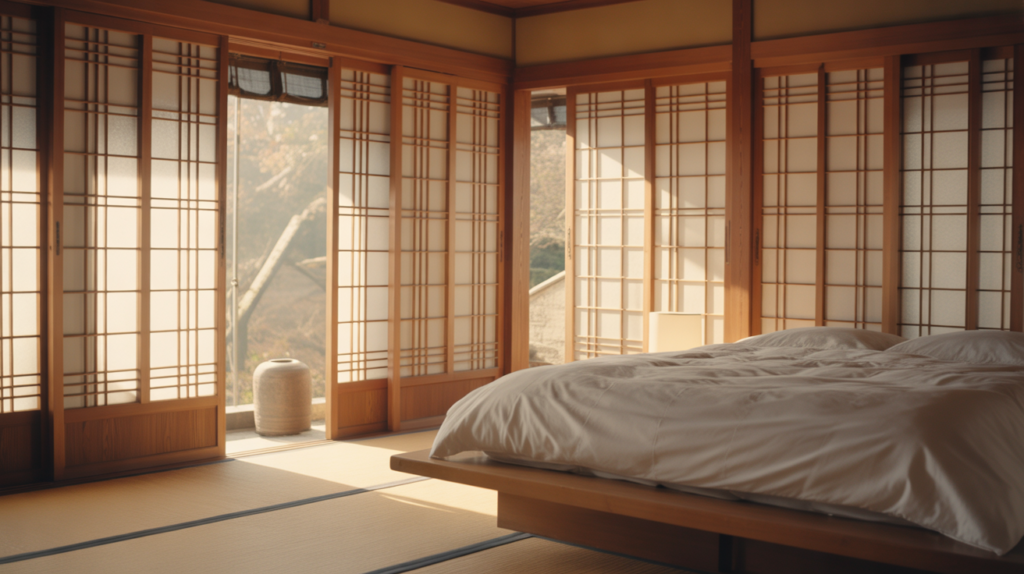
Shoji screens deserve their own deep examination because they’re so central to Japanese bedroom aesthetics. These lightweight wooden frames with translucent paper (or modern alternatives) serve multiple functions—privacy, light diffusion, space division, and beautiful visual interest.
Traditional shoji screens slide on tracks, allowing you to reconfigure your space easily. You can close them for privacy, open them to connect spaces, or position them partially open to control light. It’s architecture that adapts to your needs rather than forcing you into one configuration.
Modern shoji-style options include:
- Authentic wood-and-paper screens (beautiful but require maintenance)
- Wood frames with frosted acrylic panels (durable and easy to clean)
- Shoji-inspired sliding closet doors (functional and aesthetic)
- Freestanding shoji room dividers (moveable and flexible)
I use a shoji-style sliding door for my closet, and it completely transforms the vibe of my bedroom. Instead of a standard closet door that just sits there looking utilitarian, the shoji pattern creates this beautiful interplay of light and shadow. Plus, it’s way more interesting to look at than a flat slab door.
If authentic shoji screens feel too committal, start with a freestanding room divider. You can use it to create a small meditation corner, hide storage areas, or just add that distinctive Japanese architectural element without permanent installation.
12. Clutter Free Japanese Zen Sleep Space
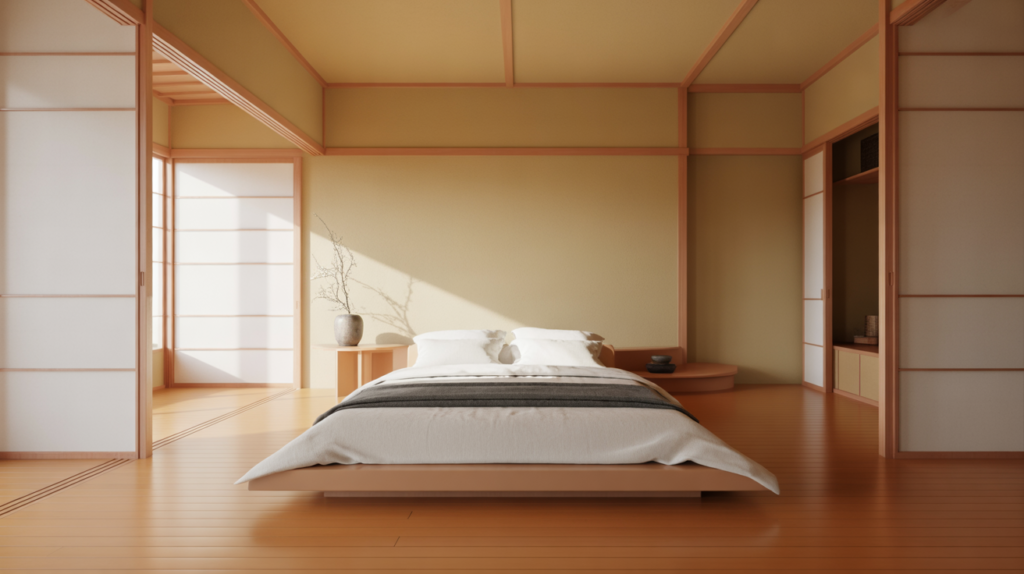
Japanese zen philosophy applied to bedrooms is basically this: if it doesn’t support rest, restoration, or mindfulness, it doesn’t belong in your sleep space. This is minimalism with a purpose, not just minimalism for aesthetics.
Creating a clutter-free zen bedroom requires honest assessment of what you actually need in your sleeping space. That treadmill you haven’t used in six months? Different room. The stack of work papers? Not here. The collection of 47 decorative pillows? Maybe just keep three.
The practical approach to zen bedroom decluttering:
- Remove everything from your bedroom (yes, everything)
- Return only essentials for sleep and rest
- Find homes for everything else in other spaces
- Create systems to maintain the clutter-free state
I know this sounds extreme, but I actually did this reset about a year ago, and it was genuinely life-changing. Turns out, I sleep way better when my bedroom contains only sleep-related things. Who knew? (Probably the Japanese, who’ve been doing this for centuries.)
The zen approach also means hidden storage for anything that does need to live in your bedroom. Baskets with lids, drawers that close, cabinets that conceal. Nothing sits out on surfaces creating visual noise. Your nightstand holds maybe a lamp, a book, and a water glass—that’s it.
13. Soft Lighting Japanese Bedroom Aesthetic
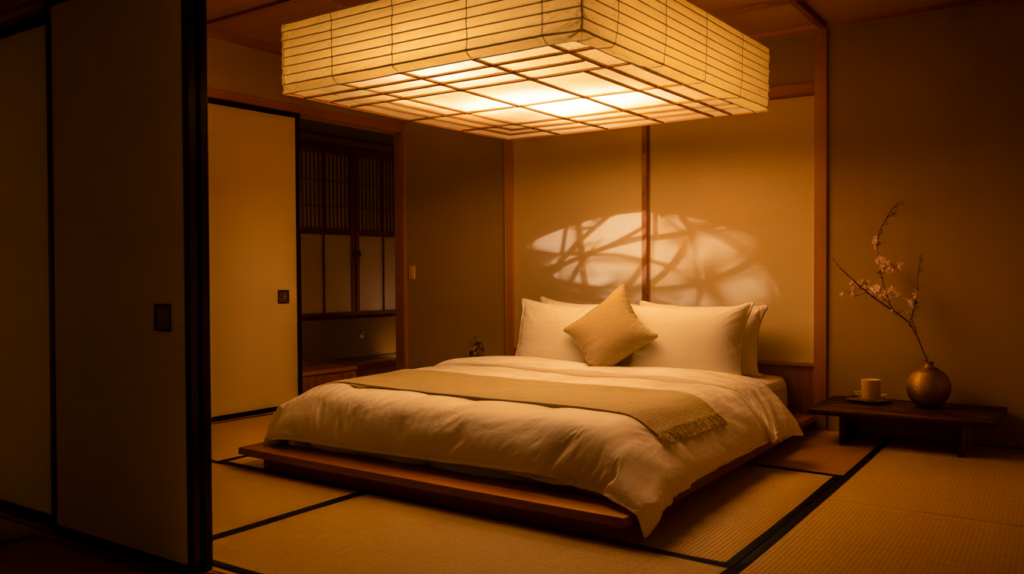
Lighting in Japanese bedrooms is an art form. The goal is creating layers of soft, warm light that you can adjust based on time of day, mood, and activity. Harsh overhead lighting? Not invited to this party.
Japanese lighting philosophy prioritizes low, indirect light sources that create ambiance rather than brightness. Think floor lamps, paper lanterns, wall sconces, and candles. The light should pool in specific areas rather than flooding the entire space uniformly.
My lighting setup includes:
- Dimmable wall sconces beside the bed for reading
- A paper lantern pendant for ambient lighting (on a dimmer)
- Small LED candles on a shelf for evening atmosphere
- Blackout capability for sleeping (because darkness is important too)
The paper lantern thing is key—rice paper or linen lamp shades diffuse light beautifully, creating that soft glow that’s so characteristic of Japanese spaces. You can find these in all sizes and price points, from authentic handmade pieces to affordable modern versions.
Pro tip: install dimmer switches on everything. Being able to adjust your lighting from bright (morning routine) to medium (evening wind-down) to barely-there (nighttime ambiance) makes a huge difference in how your bedroom feels throughout the day. It’s like having multiple rooms in one space.
14. Nature Inspired Japanese Bedroom Design
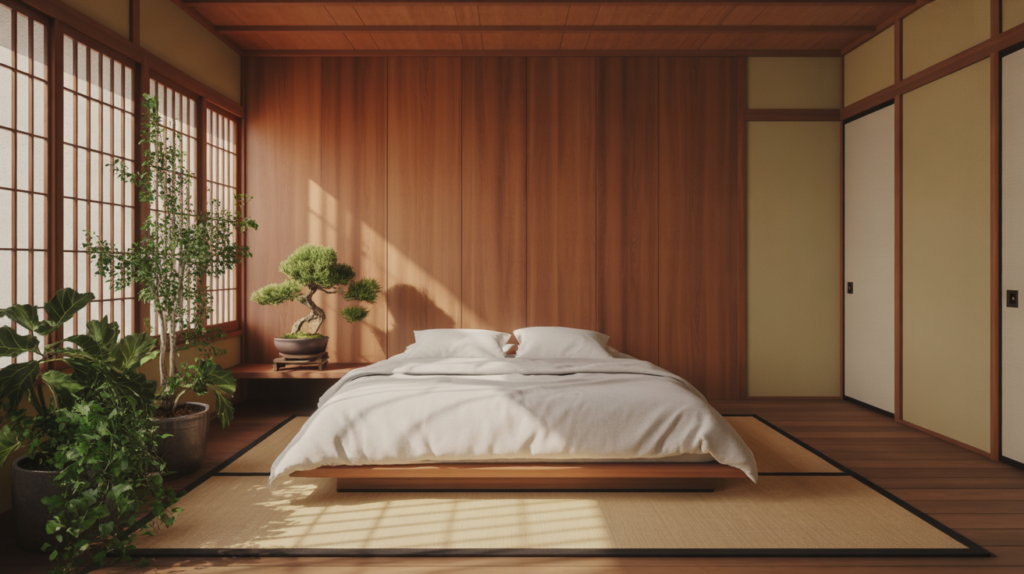
Japanese design has this deep connection to nature—not in a “stick some fake plants everywhere” way, but in a genuinely respectful, intentional way. The concept is bringing natural elements indoors to create harmony and connection with the outside world.
Nature-inspired Japanese bedrooms incorporate organic materials, natural colors, and sometimes actual plants. But it’s done thoughtfully. One beautiful bonsai tree or ikebana arrangement has more impact than 15 random plants scattered around.
Ways to bring nature into your Japanese-style bedroom:
- Live plants in simple, beautiful containers (bonsai, bamboo, peace lilies)
- Natural fiber textiles like cotton, linen, jute, or hemp
- Stone elements like a small rock garden or decorative stones
- Wood in various forms (furniture, decorative objects, flooring)
- Natural color palettes inspired by earth, sky, and water
FYI, you don’t need to become a plant expert to pull this off. Japanese design often features just one or two carefully chosen plants rather than a jungle. Quality over quantity applies to greenery too. I have a single beautiful jade plant in my bedroom, and it brings way more zen energy than the plant collection I tried (and killed) before I understood this concept.
Another nature-inspired element is incorporating views of the outdoors. If you have a window with a nice view, frame it intentionally and keep window treatments minimal so you can appreciate the natural scenery. Your window becomes living artwork that changes with seasons and weather.
15. Elegant Minimal Japanese Bedroom Setup
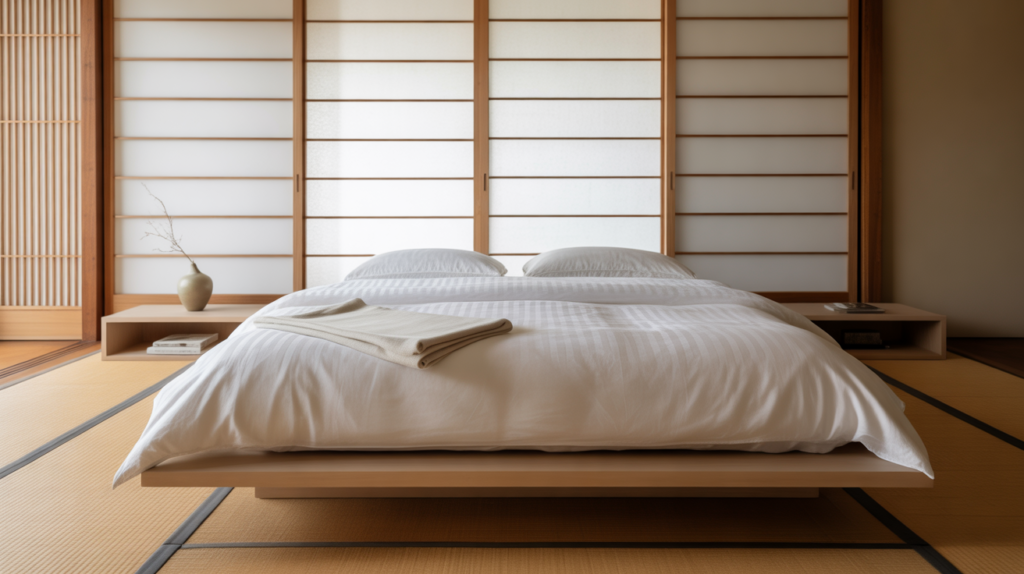
Let’s bring it all together with the elegant minimal approach—this is Japanese bedroom design firing on all cylinders. It combines the best elements we’ve discussed: minimalism, natural materials, soft lighting, neutral tones, and thoughtful curation.
An elegant minimal Japanese bedroom isn’t about deprivation—it’s about refinement. Every element present is there for a reason and chosen with care. The bed is comfortable and beautiful. The lighting creates perfect ambiance. The few decorative objects are meaningful or beautiful (ideally both).
This approach requires patience and thoughtfulness. You can’t rush out and buy everything at once. Instead, you slowly collect pieces that genuinely speak to you, that fit perfectly in your space, that serve your needs. It’s the opposite of fast furniture and impulse decorating.
The elements of an elegant minimal setup typically include:
- A quality low platform bed with beautiful bedding
- Minimal, well-chosen furniture (maybe a low dresser and one side table)
- Thoughtful lighting with multiple dimmable sources
- One or two meaningful decorative elements (not 50)
- Hidden storage that keeps clutter completely out of sight
- Natural materials throughout for warmth and texture
I’ve been working toward this elegant minimal aesthetic for about three years now, and I’m still not “done” (and maybe that’s the point). Each year, I upgrade one element—better bedding, a more beautiful lamp, a piece of art that actually means something to me. The bedroom keeps evolving, but it always maintains that core quality of intentional simplicity.
The beautiful thing about Japanese bedroom aesthetics is that it actually gets easier with time. Once you’ve established the foundation, maintenance is simple because there’s less stuff to manage, clean, and organize. Your bedroom becomes this effortless sanctuary rather than another space requiring constant attention.
Bringing Calm Vibes Home
Look, you don’t need to implement all 15 of these ideas tomorrow (please don’t—that would be exhausting and kind of miss the point). Japanese design is about mindfulness and intentionality, which means taking your time and making thoughtful choices.
Start with what resonates most with you. Maybe it’s clearing clutter and embracing minimalism. Maybe it’s investing in a low platform bed. Maybe it’s just swapping your harsh overhead light for some soft paper lanterns. Any step toward a more Japanese-inspired bedroom is a step toward better sleep and more peace.
The goal isn’t perfection or some Instagram-worthy showroom that nobody actually lives in. It’s creating a space that genuinely helps you relax, sleep better, and start each day feeling more centered. That’s the real magic of Japanese bedroom design—it’s not just pretty (though it definitely is), it’s functionally better for your wellbeing.
So take a look around your current bedroom. What’s one thing you could change this week to bring in more of that calm, zen energy? Maybe it’s clearing off your nightstand, or picking up some linen bedding, or finally getting rid of that clutter pile in the corner. Start there. Your future self will thank you 🙂
Now go create your peaceful sanctuary. You deserve a bedroom that actually helps you rest, and these Japanese-inspired ideas are your roadmap. Sweet dreams!