15 Stunning White Kitchen Designs and Cozy Modern Touches
- Kitchen Decor Idea
Admin
- 0
- 46 minutes read
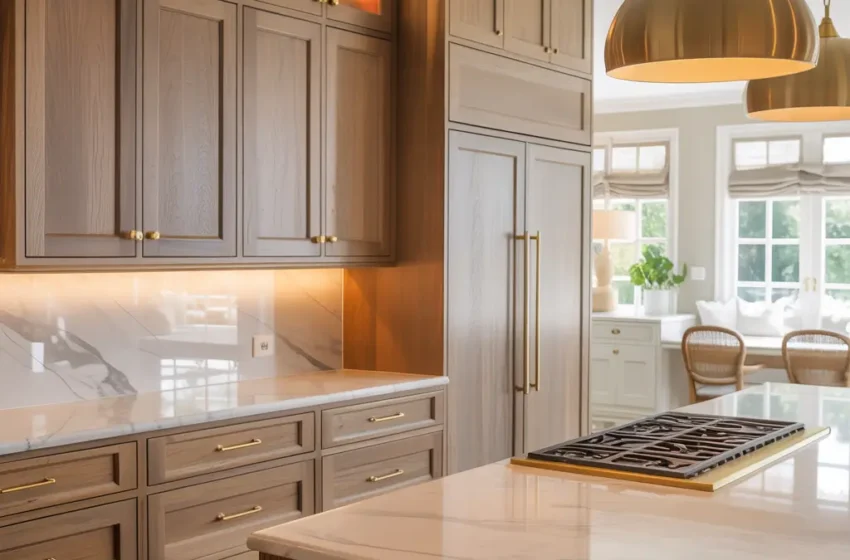
Look, I get it. You’re scrolling through Pinterest at 2 AM (again), dreaming about that perfect white kitchen that doesn’t look like a sterile hospital room. You want something that screams “I have my life together” while also whispering “but I’m still approachable and fun.” White kitchens have this weird reputation for being either boring or high-maintenance, but honestly? They’re the chameleons of kitchen design. And I’m about to show you 15 ways to make white work harder than your morning coffee.
I’ve spent an embarrassing amount of time obsessing over kitchen designs—partly because I’ve renovated three kitchens (yes, three), and partly because I genuinely believe your kitchen should make you happy every single day. So grab your favorite drink, get comfortable, and let’s talk about white kitchens that actually have personality.
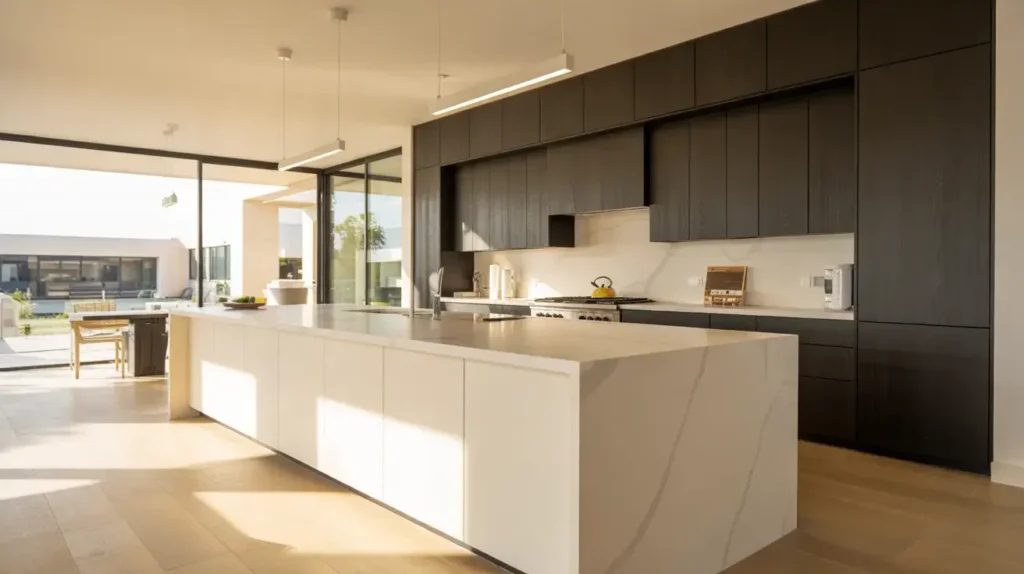
1. Modern Minimalist White Kitchen
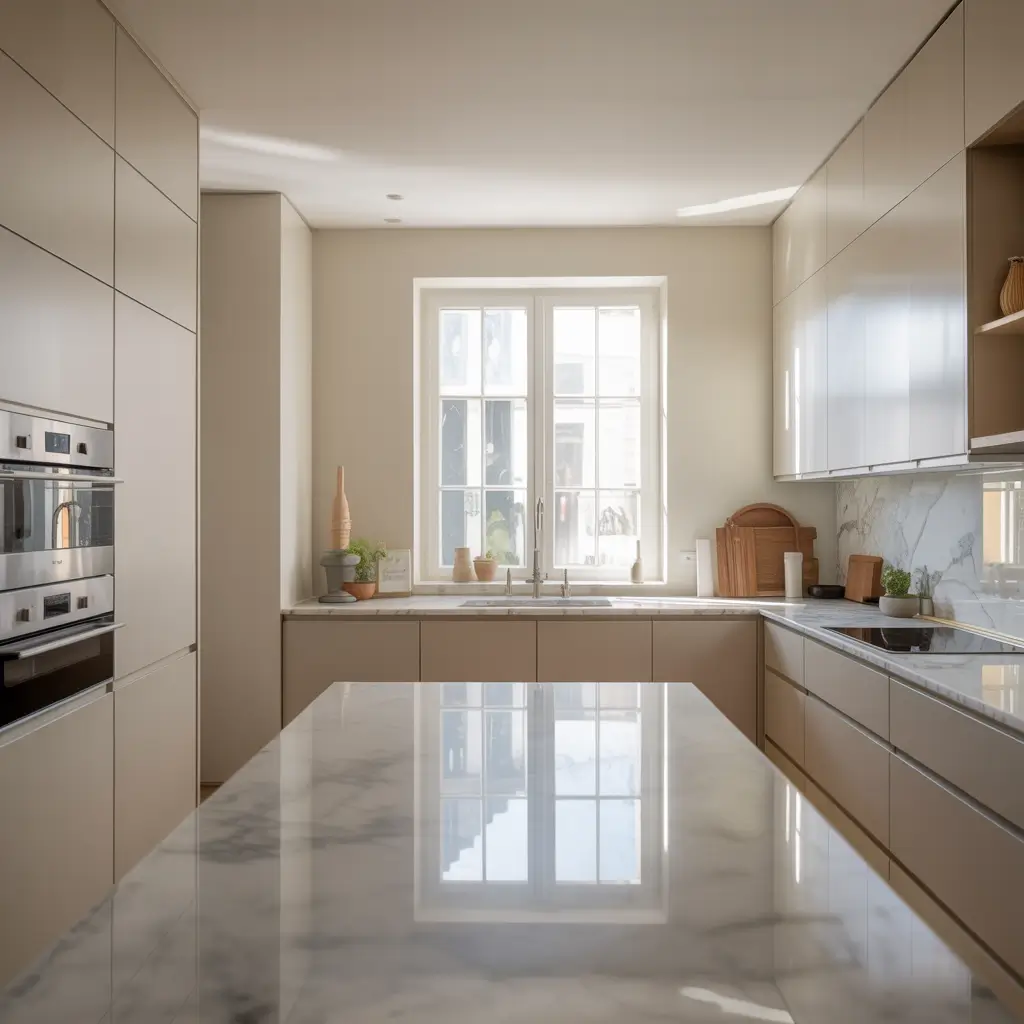
Ever walked into a space so clean and organized that you actually felt your shoulders relax? That’s the magic of a modern minimalist white kitchen. This design strips away all the unnecessary clutter and leaves you with pure, functional beauty.
The key elements here are handleless cabinets, integrated appliances, and absolutely zero counter clutter. I’m talking about cabinets that open with a gentle push, sleek white surfaces that stretch for miles, and everything—and I mean everything—tucked away behind those pristine doors. The look is sophisticated without trying too hard.
What makes this style work is the play on different white tones and textures. You’re not just slapping one coat of white paint everywhere and calling it a day. Mix matte white cabinets with glossy white backsplash tiles. Add in some white quartz countertops with subtle veining. The monochromatic palette creates depth without introducing actual color.
Here’s what you need to nail this look:
- Flat-panel, handleless cabinets in pure white
- Integrated appliances (that fridge should disappear into the cabinetry)
- Minimal or no hardware
- Clean-lined faucets in chrome or brushed nickel
- Hidden storage solutions
- Under-cabinet lighting to eliminate shadows
The downside? You’ll become obsessed with wiping down surfaces. Fingerprints show up like they’re personally attacking your design choices. But IMO, the clean aesthetic is worth the extra five minutes of daily maintenance.
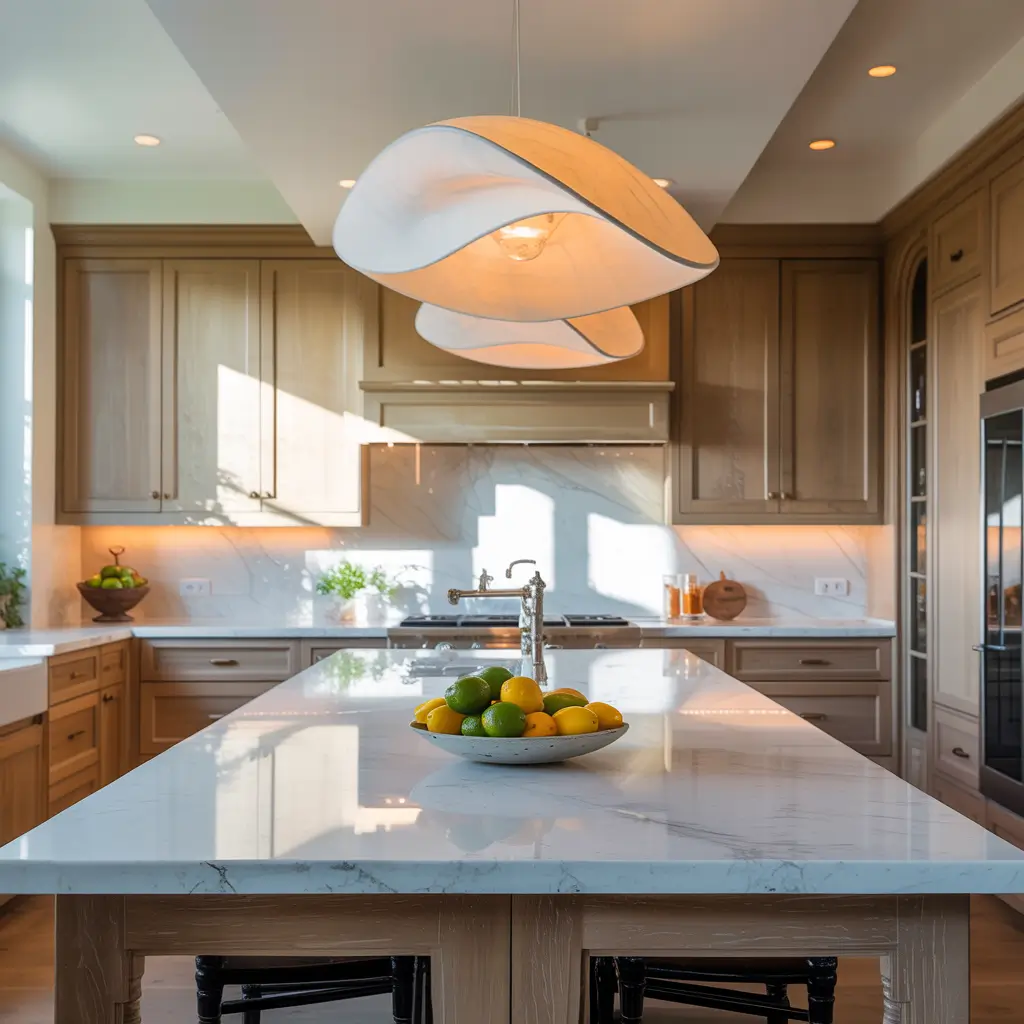
2. Warm White Kitchen with Wood Accents
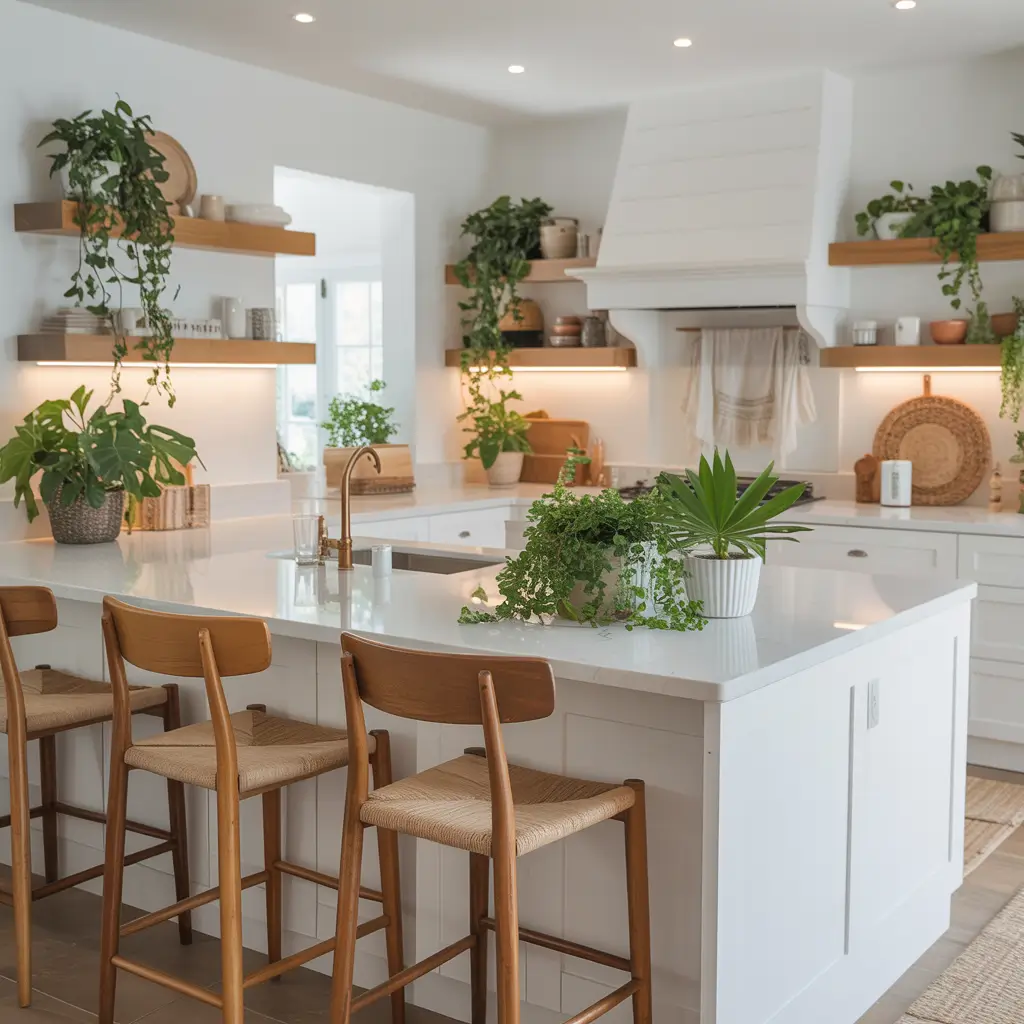
Now, if the minimalist approach feels too cold for you (and honestly, I totally understand), let me introduce you to the warm white kitchen with wood accents. This is where white kitchens stop being intimidating and start feeling like home.
Wood changes everything. It softens the crispness of white and adds organic warmth that makes you want to actually spend time cooking instead of just admiring your kitchen from afar. I’ve seen people transform sterile white boxes into cozy gathering spaces just by introducing the right wood elements.
Think open wooden shelving instead of upper cabinets, a wooden range hood that becomes the focal point, or even wooden bar stools pulled up to your white island. The wood doesn’t have to match perfectly—actually, it’s better if it doesn’t. Natural variations add character.
My favorite combo? White shaker cabinets with medium-toned oak or walnut floating shelves. The contrast is chef’s kiss, and it gives you a chance to display your pretty dishes (you know, the ones you bought but never use because they’re “too nice”).
Consider these wood accent ideas:
- Butcher block countertops on an island
- Wooden beam accents on the ceiling
- Natural wood flooring in oak or maple
- Open wooden shelving for displaying dishes
- Wooden cutting boards displayed as art
- Wood-toned bar stools or dining chairs
The warmth from wood tones prevents that dreaded “too white” syndrome while keeping the bright, airy feeling intact. Plus, wood ages beautifully. Unlike that trendy tile you might regret in five years, wood just gets better with time.
3. Luxury White Kitchen with Gold Hardware
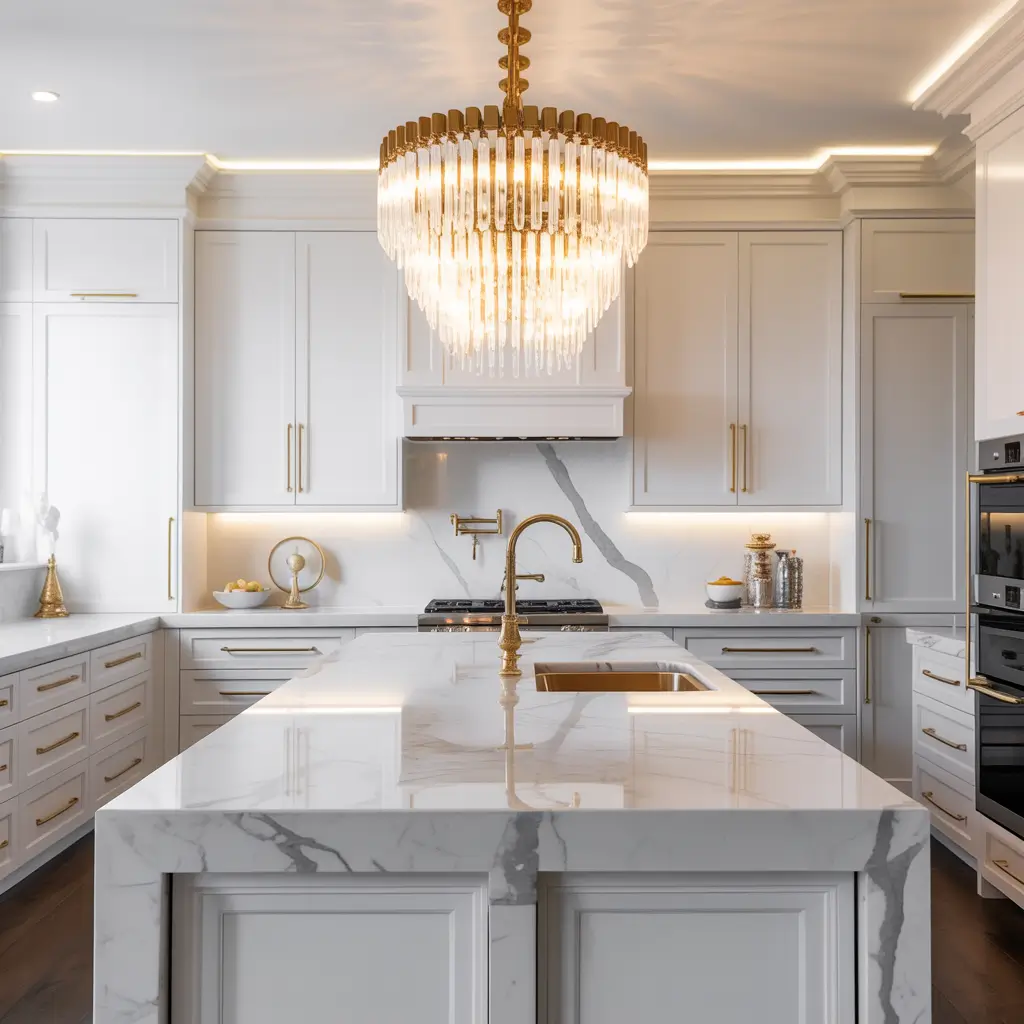
Want to know a secret? Gold hardware is basically jewelry for your kitchen. And when you pair it with an all-white kitchen, you’re creating something that looks expensive even if you DIY’d half of it.
I’m not talking about that brassy gold from the ’80s that your grandmother refuses to update. We’re talking brushed gold, champagne bronze, or even rose gold finishes that add sophisticated warmth without screaming for attention. These metallics catch the light differently than silver-toned hardware, creating visual interest in subtle ways.
The luxury vibe comes from layering these gold accents throughout the space. Gold cabinet pulls and knobs, a gold faucet, gold light fixtures, maybe even gold bar stool legs. When you repeat the finish, it looks intentional and designed—not like you just grabbed whatever was on sale.
Here’s where you can incorporate gold hardware:
- Cabinet knobs and drawer pulls (obviously)
- Faucet and pot filler
- Pendant light fixtures
- Range hood trim or rivets
- Open shelving brackets
- Toe kick plates (if you’re feeling fancy)
- Decorative hardware on appliances
Pair these gold accents with marble countertops and a white subway tile backsplash, and suddenly your kitchen looks like it belongs in a design magazine. The best part? Hardware is relatively inexpensive to swap out, so if the trend changes, you haven’t committed to a $50,000 decision.
Just FYI, gold hardware does require regular cleaning to maintain that shine. Water spots are real, people.
4. Small White Kitchen Space-Saving Design
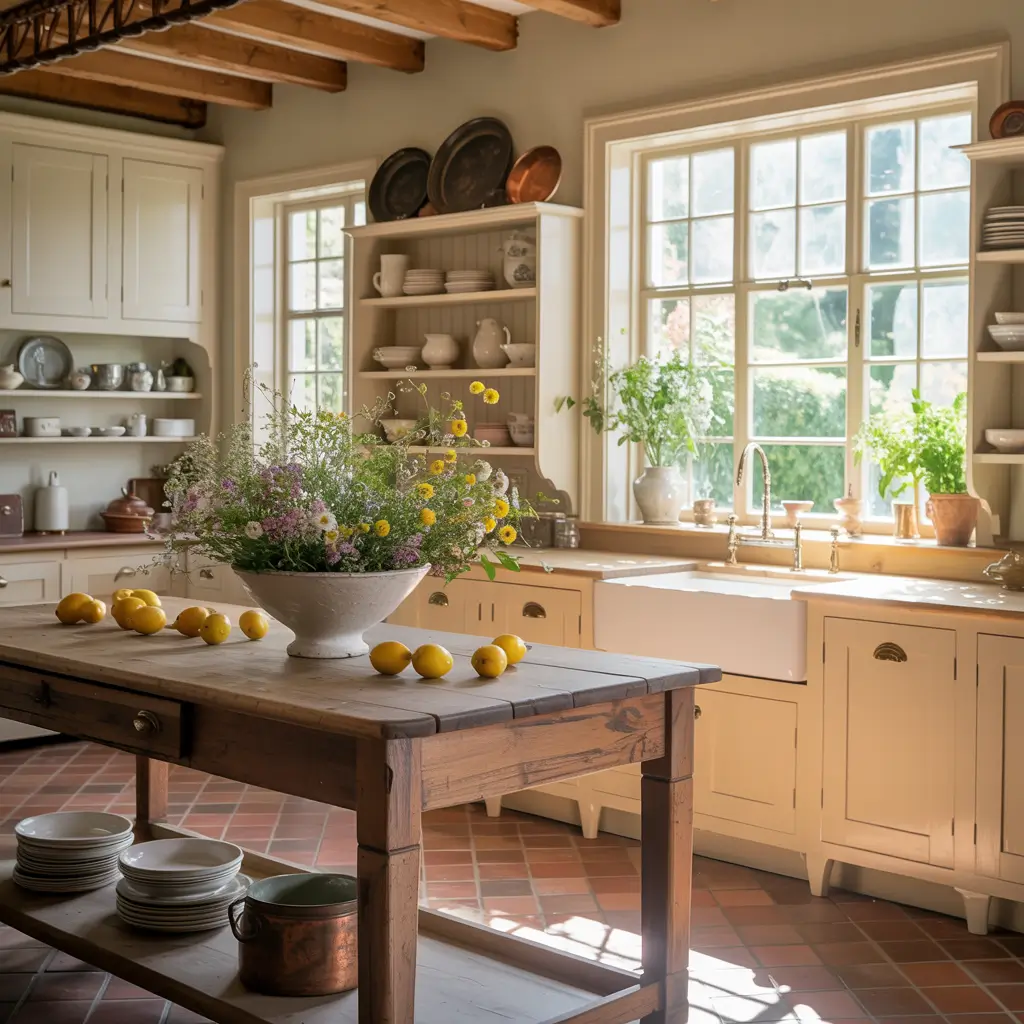
Small kitchens get a bad rap, but honestly? Some of the most functional kitchens I’ve worked with have been tiny. White is your best friend when you’re working with limited square footage because it makes spaces feel larger and brighter than they actually are.
The trick is maximizing every single inch without making it feel cramped. This means getting creative with storage, choosing scaled-down appliances, and being ruthless about what you actually need versus what you think you need.
I’ve seen 60-square-foot kitchens that function better than sprawling 300-square-foot spaces because every element serves multiple purposes. Your island? It’s also your dining table and prep station. Your cabinet doors? They hold organizers on the inside. Your walls? They’re working overtime with magnetic knife strips and hanging pot racks.
Space-saving strategies that actually work:
- Slim pull-out pantry cabinets (like 6 inches wide)
- Wall-mounted fold-down tables for dining or extra prep
- Drawer organizers that utilize every inch
- Ceiling-height cabinets that go all the way up
- Compact appliances (24-inch dishwashers, apartment-sized fridges)
- Open shelving to avoid the boxed-in feeling
- Light-colored floors to enhance the sense of space
The all-white color scheme prevents visual clutter. When everything blends together, your eye isn’t jumping from color to color, which makes the space feel calmer and, weirdly enough, bigger. You’re essentially creating an optical illusion, and it works.
5. White Kitchen with Marble Countertops
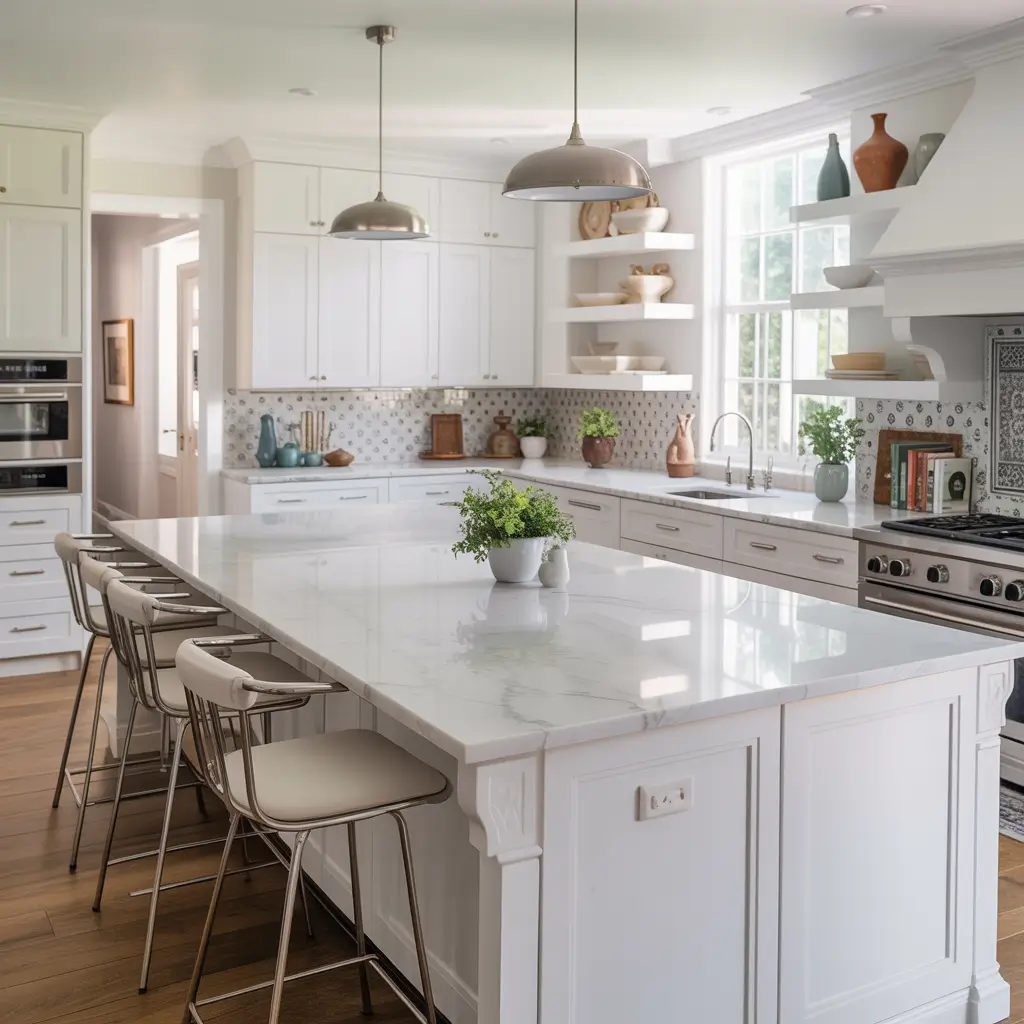
Let’s talk about marble for a second. Yes, it’s high-maintenance. Yes, it can stain. Yes, it etches if you so much as look at it wrong with a lemon in your hand. But also? It’s absolutely gorgeous and makes your kitchen look like a million bucks.
Marble countertops on white cabinetry create this luxurious, timeless look that never goes out of style. The natural veining in marble adds movement and interest to an otherwise simple color palette. Each slab is unique, which means your kitchen becomes genuinely one-of-a-kind.
I always recommend Carrara marble for people who want the look without the absolute highest price tag. It’s got those classic gray veins running through white, and it’s been used in kitchens for literally centuries. If you want something more dramatic, Calacatta has bolder veining. Statuary marble sits somewhere in between.
Here’s the real talk about marble:
- It will etch from acidic substances (wine, citrus, vinegar)
- It can stain if you don’t seal it regularly
- It develops a patina over time (some people love this, others hate it)
- It’s cooler to the touch, which is perfect for pastry work
- It’s a natural material with environmental benefits
- The veining creates visual interest without adding color
If you’re terrified of maintenance, consider using marble only on your island while choosing quartz for your perimeter counters. You get the glamorous marble moment without committing fully to the upkeep. No judgment here—I did exactly that in my second kitchen renovation 🙂
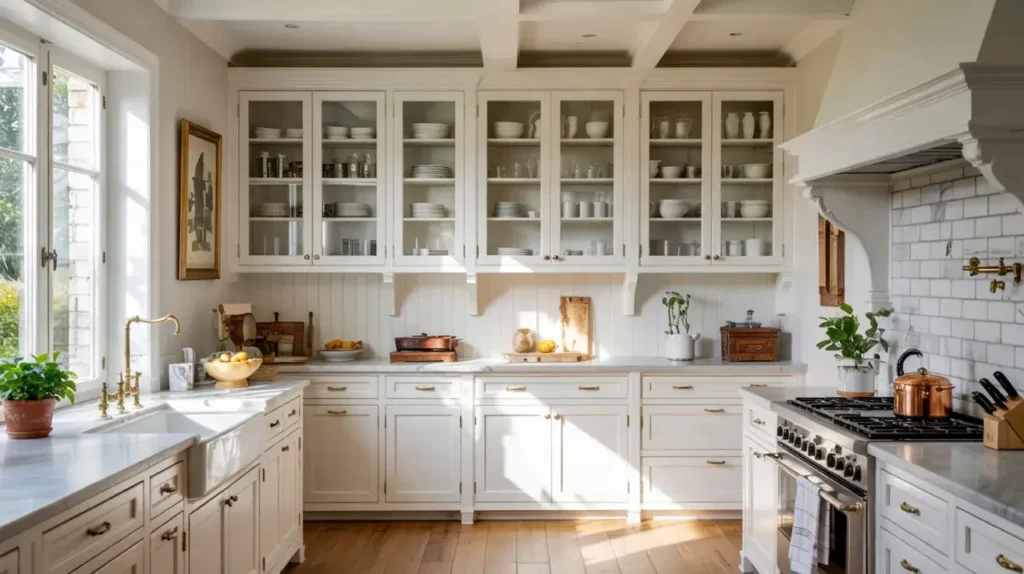
6. Farmhouse Style White Kitchen
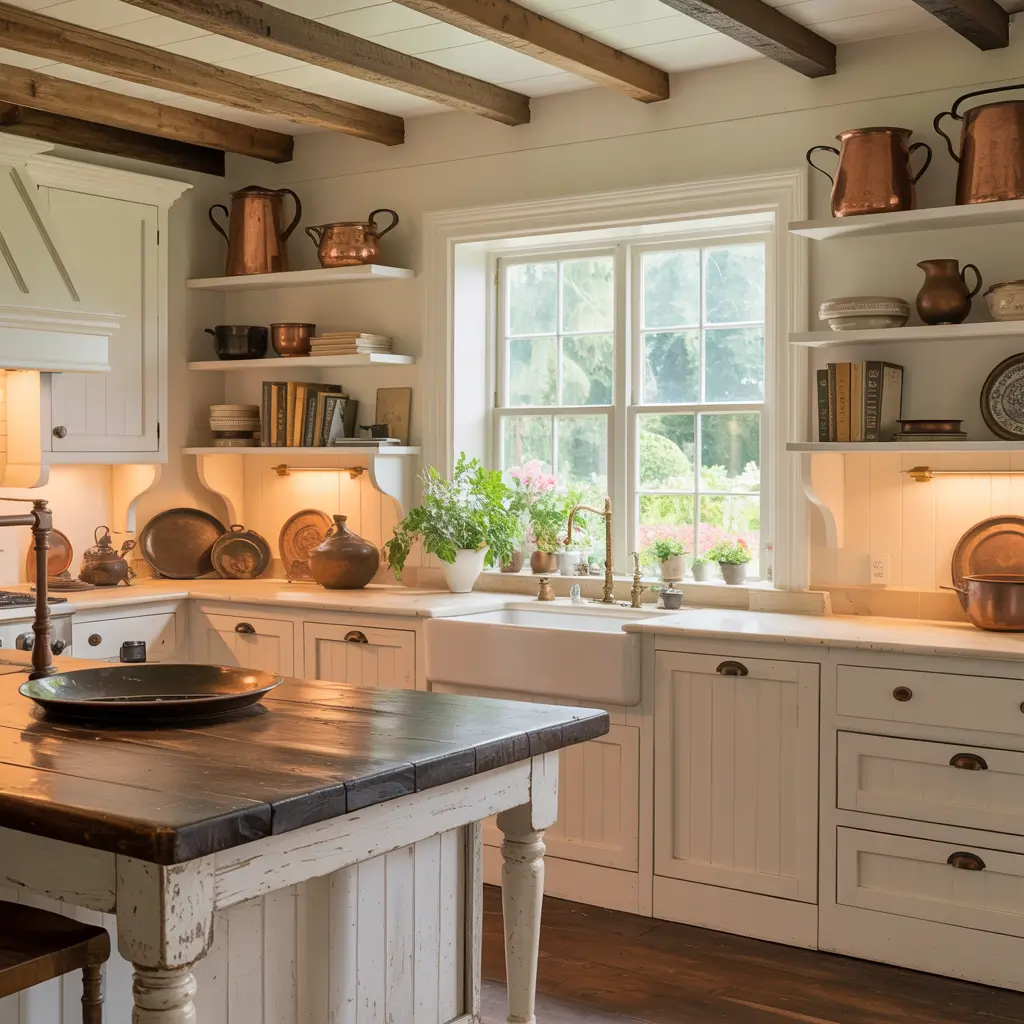
Farmhouse kitchens have been having a moment for… well, for the last decade, honestly. And they’re not going anywhere because they combine practicality with comfort in a way that just works.
A white farmhouse kitchen is all about mixing old and new, rough and refined, functional and decorative. You’re pulling inspiration from actual working farm kitchens but updating them for modern life. Think deep apron-front sinks, open shelving with vintage dishes, and lots of natural materials.
The beauty of farmhouse style is its forgiving nature. It’s supposed to look a little lived-in. A little imperfect. That chip in your sink? Character. Those mismatched chairs around your table? Curated. That slightly uneven bead board? Authentic.
Essential farmhouse elements:
- White shaker cabinets (they’re farmhouse royalty)
- Apron-front farmhouse sink
- Wood countertops or butcher block islands
- Exposed ceiling beams
- Vintage-inspired lighting (think wire pendants or mason jar fixtures)
- Open shelving with brackets
- Subway tile backsplash in white
- Painted brick or shiplap accent walls
Layer in some vintage finds from flea markets—old crocks, wooden cutting boards, vintage scales—and you’ve got yourself an Instagram-worthy farmhouse kitchen. The white base keeps everything bright and clean while the accessories add personality and warmth.
7. Scandinavian White Kitchen Design
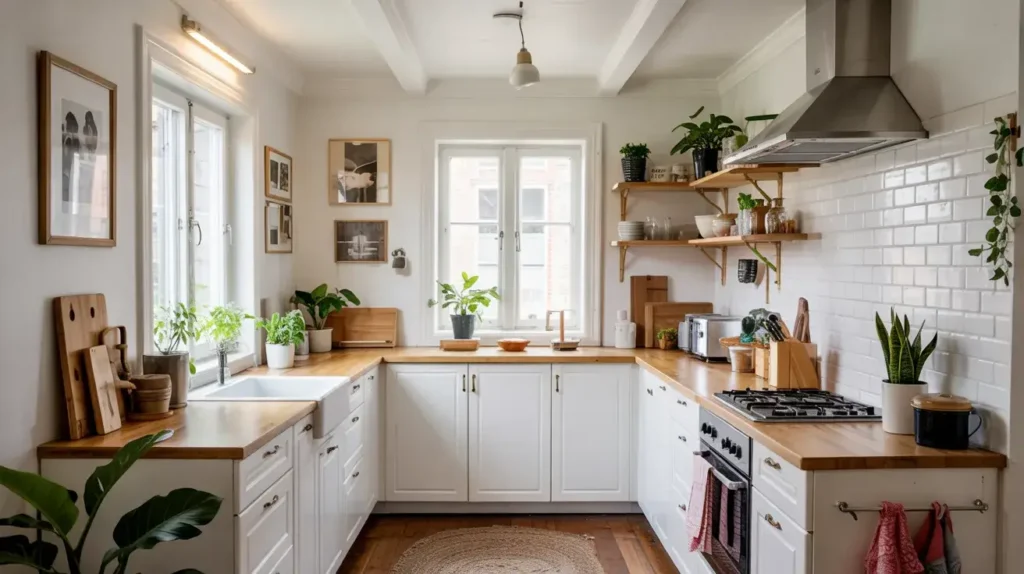
Scandinavian design has this reputation for being minimalist and cold, but that’s completely missing the point. It’s actually about creating warm, functional spaces that prioritize both beauty and practicality. The Scandinavians basically invented hygge, after all.
A Scandi white kitchen combines clean lines with organic materials and plenty of light. These kitchens feel calm and uncluttered without being sterile. They incorporate natural wood, plants, and textured textiles to add warmth to the predominantly white palette.
What I love about Scandinavian kitchen design is the focus on quality over quantity. You’re choosing fewer, better things instead of cramming every available surface with stuff. Every item earns its place by being either beautiful or functional—ideally both.
Key Scandinavian design principles:
- White or very light gray cabinets with minimal hardware
- Light wood accents (birch, ash, or light oak)
- Plenty of natural light (or really good artificial lighting)
- Indoor plants for bringing nature inside
- Textured textiles like linen dishtowels or woven baskets
- Simple, functional design with no unnecessary ornament
- Quality craftsmanship in materials and fixtures
- A connection to nature through materials and views
The palette sticks mainly to white, gray, and natural wood tones with occasional black accents for contrast. It’s sophisticated without trying too hard, and it creates spaces that genuinely support your daily life instead of just looking pretty.
8. White Kitchen with Black Contrast Details
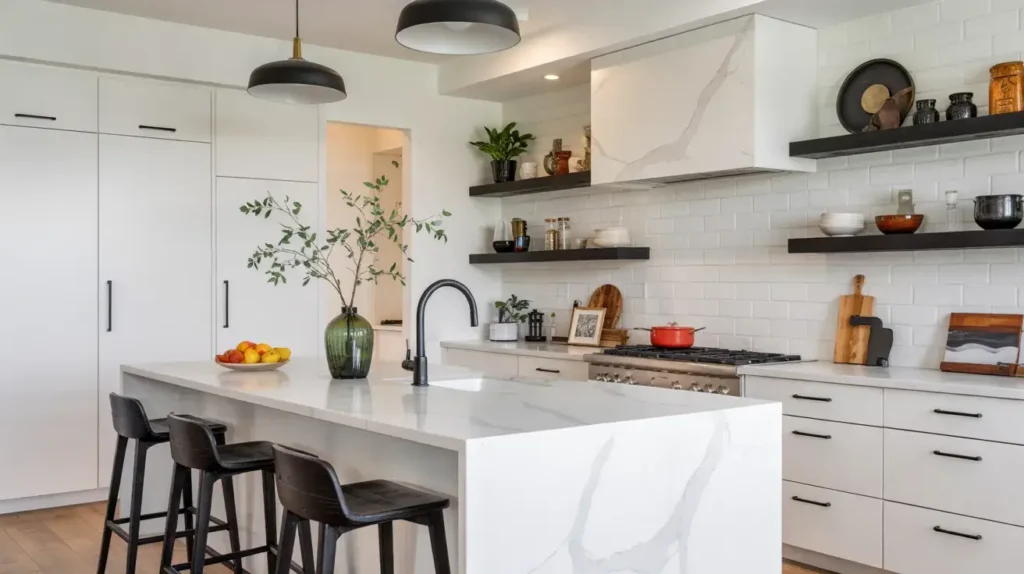
If you’ve ever heard the phrase “design 101,” it probably involved someone talking about black and white. And yeah, it might seem basic, but there’s a reason this combination has lasted through every design trend imaginable. It just works.
Black details against white cabinetry create instant visual impact and architectural interest. You’re essentially creating shadows and highlights that give your kitchen depth and dimension. The contrast makes both colors look better—the white appears crisper, the black appears richer.
I’ve used this approach in my own kitchen, and the transformation from all-white to white-with-black-accents was dramatic. Suddenly the space had definition. The eye had places to land. The whole room felt more intentional and designed.
Where to add black contrast:
- Black hardware on white cabinets (classic and timeless)
- Black window frames and trim
- Black pendant lights or chandeliers
- Black bar stools or dining chairs
- Black faucet and fixtures
- Black-framed glass cabinet doors
- Black tile backsplash or black grout with white tile
- Black range or hood
The ratio matters here. You’re not going for 50/50 black and white—that can feel too stark. Instead, aim for about 80% white and 20% black accents. This gives you drama without overwhelming the space.
And here’s a bonus: black hardware shows way fewer fingerprints than stainless steel. You’re welcome.
9. Open Concept White Kitchen Layout
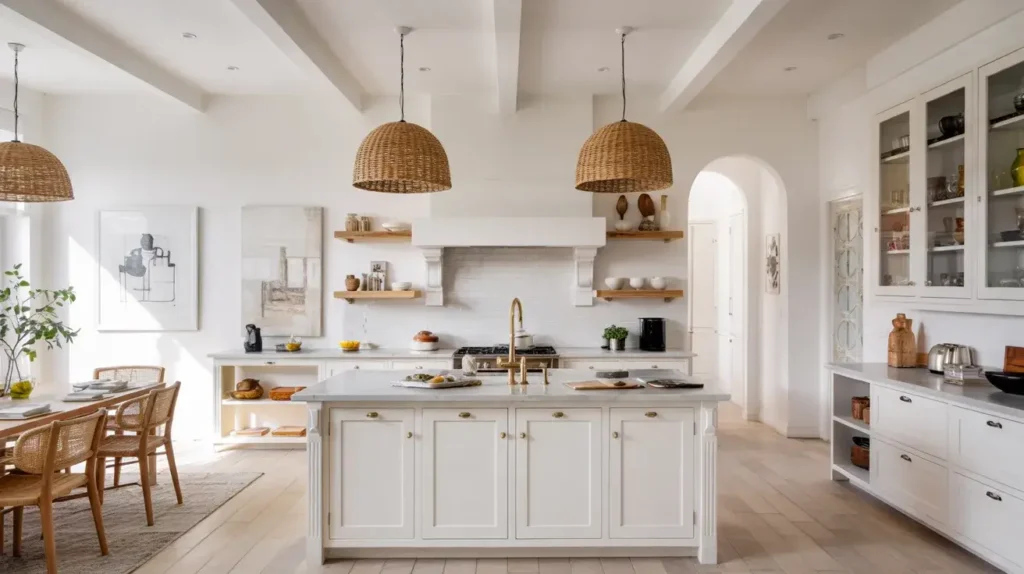
Open concept layouts have basically taken over modern home design, and for good reason. Who actually wants to be isolated in the kitchen while everyone else hangs out in the living room? Not me.
An open concept white kitchen flows seamlessly into your living and dining areas, creating one large, cohesive space. The white color scheme helps unify the different zones without creating hard visual boundaries. Everything feels connected and airy.
The challenge with open concept is making sure your kitchen doesn’t look cluttered from the living room. When there’s no wall to hide the mess, you need smart storage solutions and a commitment to tidying up. The white palette helps because it creates visual continuity—your eye doesn’t stop abruptly at a color change.
Design considerations for open layouts:
- Consistent flooring throughout the space
- Similar or complementary color palettes in all zones
- Strategic use of islands to define the kitchen zone
- Consideration of sightlines (what you see from the couch matters)
- Cohesive lighting design across the entire space
- Range hoods that are attractive from all angles
- Storage that keeps clutter hidden
I always recommend creating subtle zones within the open space using rugs, lighting, and furniture arrangement. Your kitchen should feel connected to the rest of the house but still have its own identity. The white cabinetry provides a clean backdrop that doesn’t compete with your living room furniture or decor.
10. White Kitchen with Statement Lighting
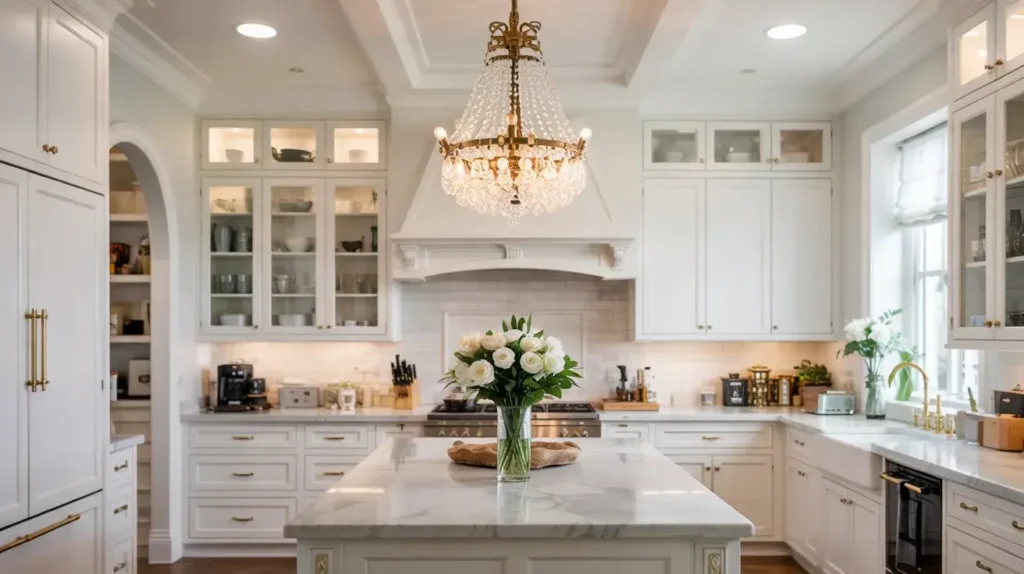
Ever notice how the right lighting can completely transform a space? Your kitchen is basically begging for statement lighting to add personality and function simultaneously.
Statement lighting in a white kitchen serves as both art and illumination. When you keep your cabinets, walls, and counters neutral, you create the perfect backdrop for eye-catching light fixtures that become the focal point. It’s like jewelry for your ceiling.
I’m obsessed with oversized pendants hung over islands or peninsula seating. They draw the eye upward, create visual interest, and provide task lighting exactly where you need it. The scale is important—too small and they look like afterthoughts, too large and they overwhelm the space.
Statement lighting options to consider:
- Oversized globe pendants in glass or metal
- Industrial-style cage lights
- Modern geometric fixtures in matte black or brass
- Crystal chandeliers for traditional elegance
- Sculptural pieces that double as art
- Clustered pendants at varying heights
- Linear suspension lights over islands
- Vintage-inspired Edison bulb fixtures
The lighting you choose tells people about your style. Sleek and minimal? Modern geometric pendants. Warm and traditional? Lantern-style fixtures. Edgy and industrial? Wire cage pendants with exposed bulbs.
Just remember that statement lighting works best when it’s actually the statement. Don’t compete with busy backsplashes or colorful cabinets—let your lights shine (pun absolutely intended).
11. Coastal Inspired White Kitchen
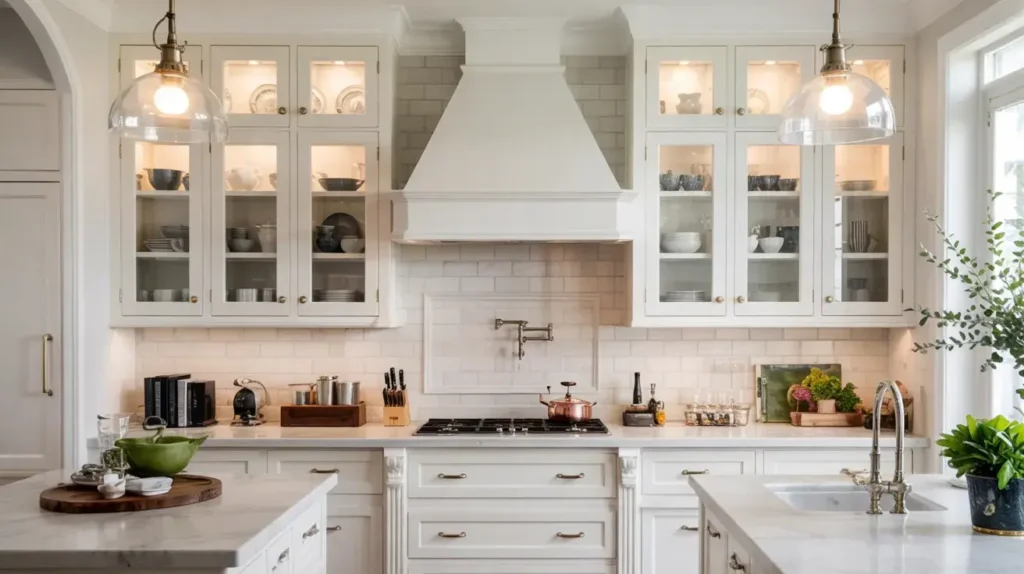
Coastal design isn’t just for beach houses anymore. The relaxed, breezy vibe of coastal style translates beautifully to kitchens regardless of your zip code. Living in landlocked suburbia? You can still channel those beach house vibes.
A coastal white kitchen combines crisp white with soft blues, natural textures, and materials that reference the ocean. Think weathered wood, sea glass colors, rope details, and lots of natural light. The overall effect is casual, comfortable, and effortlessly elegant.
The key to coastal style is keeping it light and avoiding anything too formal or fussy. This isn’t stuffy beachfront mansion energy—it’s relaxed weekend cottage vibes. Every element should feel approachable and livable.
Coastal kitchen elements:
- White or soft blue-gray cabinets
- Glass tile backsplash in aqua, seafoam, or white
- Natural fiber elements (jute, rattan, seagrass)
- Driftwood-style or weathered wood accents
- Nautical-inspired lighting (lanterns, rope details)
- Open shelving displaying white dishware or blue pottery
- Marble or quartz counters with subtle veining
- Large windows with minimal window treatments
Add in some coastal accessories—shells in glass jars, blue and white ceramics, woven baskets—and you’ve created a space that feels like a permanent vacation. The white base keeps everything bright and airy, just like an actual beach house with ocean views.
12. White Kitchen with Glass Cabinet Doors
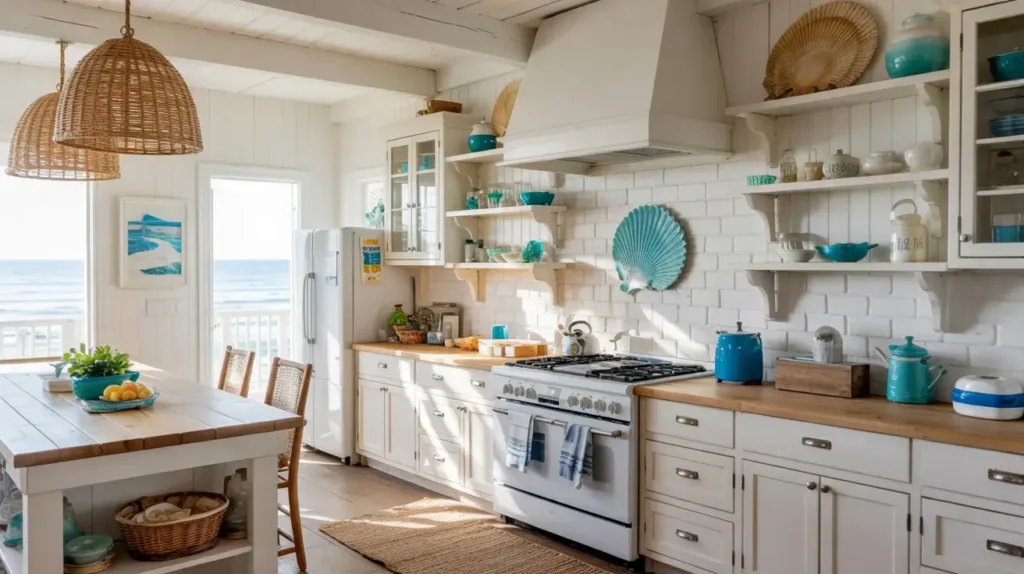
Glass cabinet doors are one of those features that either excite people or terrify them. I get both reactions. The thought of everyone seeing inside your cabinets is… stressful. But when done right? Absolutely stunning.
Glass-front cabinets in a white kitchen create visual depth and interest while showcasing your dishware and glassware. They break up the solid wall of white cabinets and create opportunities for display. Plus, they can make a kitchen feel more open and less boxy.
The secret is being strategic about where you use glass doors and what you put behind them. You don’t need to swap every cabinet door for glass—that’s overkill. Instead, choose a few upper cabinets (flanking a window, on either side of the range, or above a sink) to highlight.
Glass cabinet door strategies:
- Use glass uppers with solid lowers for balance
- Choose seeded or frosted glass if you want to obscure contents slightly
- Keep displayed items color-coordinated (all white dishes look amazing)
- Install interior cabinet lighting to highlight displays
- Organize contents carefully (everyone will see inside)
- Mix glass doors with solid doors for visual interest
- Consider glass only in less-used cabinets to minimize clutter stress
I’ve installed glass cabinets in my current kitchen, and honestly? They force me to keep things organized, which isn’t the worst thing. Plus, I actually use my nice dishes now because they’re on display. What’s the point of owning beautiful things if they’re hidden behind solid doors forever?
13. High-Gloss Contemporary White Kitchen
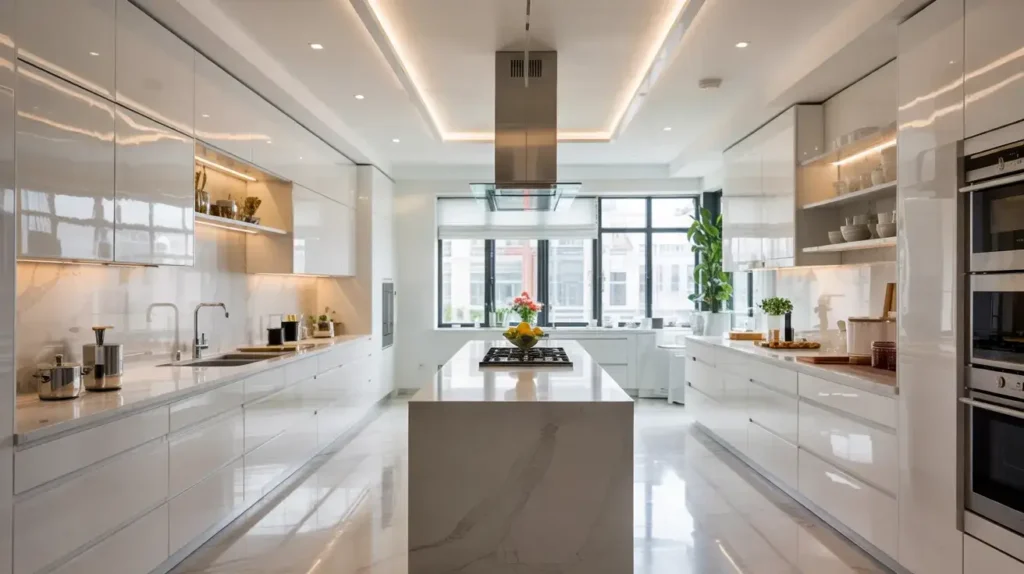
High-gloss finishes are basically the love-it-or-hate-it element of kitchen design. There’s very little middle ground. But for people who love contemporary, cutting-edge design, high-gloss white cabinets are the ultimate statement.
High-gloss white cabinets reflect light like mirrors, making your kitchen feel larger and brighter than matte finishes ever could. They’re sleek, modern, and undeniably sophisticated. The reflective surface creates this almost ethereal quality that screams contemporary design.
The downside everyone immediately brings up? Fingerprints and smudges are VERY visible on glossy surfaces. But honestly, if you’re choosing high-gloss, you’re already committed to maintenance. You’re not going for easy—you’re going for impact.
What makes high-gloss work:
- Handleless cabinets to maintain clean lines
- Integrated appliances that blend seamlessly
- Minimal hardware (if any)
- Clean, geometric design with no ornate details
- Bold lighting that reflects off the glossy surfaces
- High-quality cabinet construction (cheap gloss looks… cheap)
- Consistent commitment to cleaning and maintenance
Pair high-gloss white cabinets with equally contemporary elements—waterfall countertops, backlit panels, high-tech appliances—and you’ve created a kitchen that looks like it belongs in a design museum. It’s not for everyone (my mom saw mine and said it looked “too modern” which I took as a compliment), but for contemporary design lovers, it’s perfection.
14. Classic White Shaker Kitchen Design
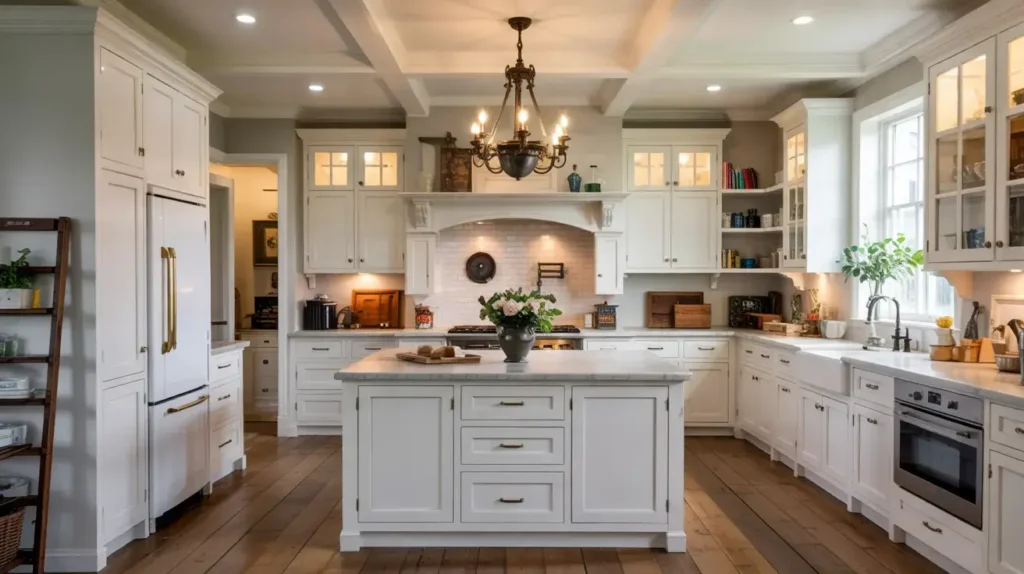
If white kitchens were a royal family, shaker cabinets would be the crown. They’re classic, timeless, and somehow work with virtually every design style. Traditional? Yes. Farmhouse? Absolutely. Contemporary? You bet.
White shaker cabinets feature a simple five-piece door with a recessed center panel. That’s it. No elaborate carving, no ornate details, just clean lines and functional design. The simplicity is exactly what makes them so versatile and enduring.
I’ve recommended shaker cabinets to probably 80% of the people I’ve helped with kitchen renovations, and I’ve never had anyone regret the choice. They’re like the little black dress of kitchen cabinetry—appropriate for any occasion and never out of style.
Why shaker cabinets remain popular:
- The clean design works with any style from traditional to modern
- They’re widely available and often more affordable than custom styles
- The simple design won’t feel dated in ten years
- They work with any hardware style you choose
- The recessed panel adds subtle visual interest
- They’re easy to clean (no elaborate grooves to collect gunk)
- Available in every imaginable quality level and price point
You can dress shaker cabinets up with brass hardware and marble counters for a luxurious look, or keep them casual with simple pulls and butcher block. They’re the chameleons of cabinet styles, adapting to whatever vibe you’re creating.
The only people who shouldn’t choose shaker cabinets? Those who want something ultra-modern and sleek or those who love ornate, traditional detailing. Otherwise, shakers are pretty much a safe bet.
15. White Kitchen with Two-Tone Island
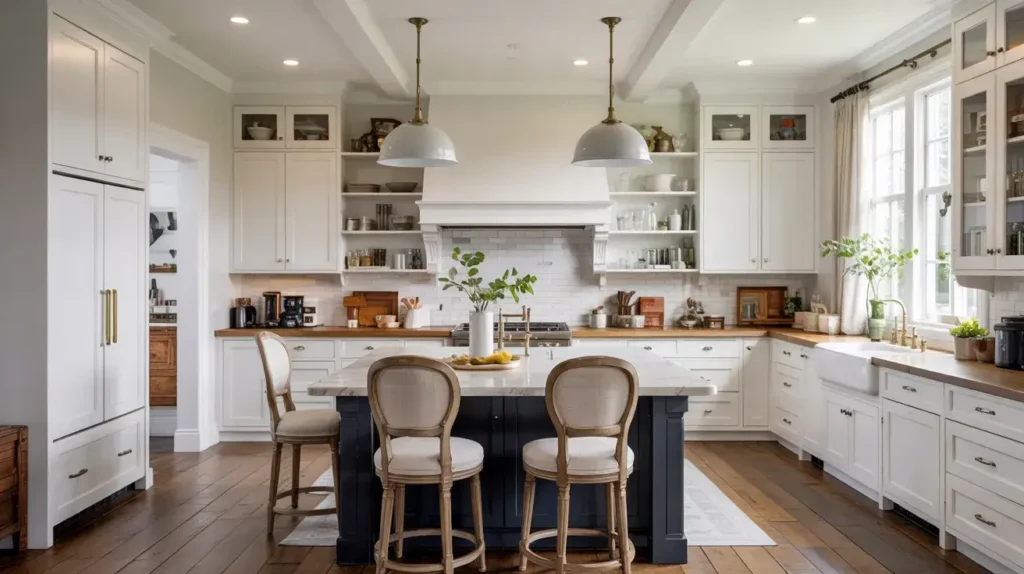
Here’s where things get interesting. Two-tone kitchens have exploded in popularity because they add visual interest without introducing actual color (if you stick to neutrals). The island is the perfect opportunity to introduce contrast.
A contrasting island creates a focal point and breaks up the sea of white in a way that feels intentional and designed. Your island essentially becomes a piece of furniture rather than just more cabinetry. It anchors the space and draws the eye.
The most popular approach is white perimeter cabinets with a navy, gray, or even black island. But you could also go with a natural wood tone island, a soft gray-blue, or even a bold color if you’re feeling adventurous (though that’s outside our white kitchen focus here).
Two-tone island considerations:
- Choose a color that complements your white cabinets
- Consider how the island color works with flooring and countertops
- Maintain consistency in cabinet door style (usually both shaker or both flat-panel)
- Use the same hardware finish on both colors for cohesion
- Think about whether the island color will date itself
- Test large samples in your actual lighting
- Consider matching your island color to other elements (like a painted range hood)
I painted my island a moody charcoal gray while keeping perimeter cabinets white, and the difference was remarkable. Suddenly the kitchen had layers and depth instead of being a white box. The island became the star of the room, exactly as intended.
The beauty of this approach is that you can always repaint if you get tired of the island color. Unlike replacing all your cabinets, repainting one island is a manageable weekend project. Low commitment, high impact—my favorite kind of design decision.
So there you have it—15 white kitchen designs that prove white doesn’t have to be boring, sterile, or high-maintenance (okay, maybe a little high-maintenance, but worth it). The beauty of starting with a white foundation is the endless ways you can customize and personalize the space to match your exact style and needs.
Whether you’re drawn to the clean simplicity of Scandinavian design, the warmth of farmhouse style, or the drama of high-gloss contemporary, white serves as the perfect canvas. It’s forgiving, bright, and somehow both timeless and trendy simultaneously—a rare combination in the design world.
Your kitchen should make you happy every single day. Not just when you’re showing it off to guests, but when you’re making Tuesday night dinner for the third time this week or grabbing coffee before work at 6 AM. The right design creates that happiness, and clearly, white kitchens offer plenty of paths to get there.
Now stop reading about kitchens and go start planning yours. Those Pinterest boards won’t organize themselves 🙂