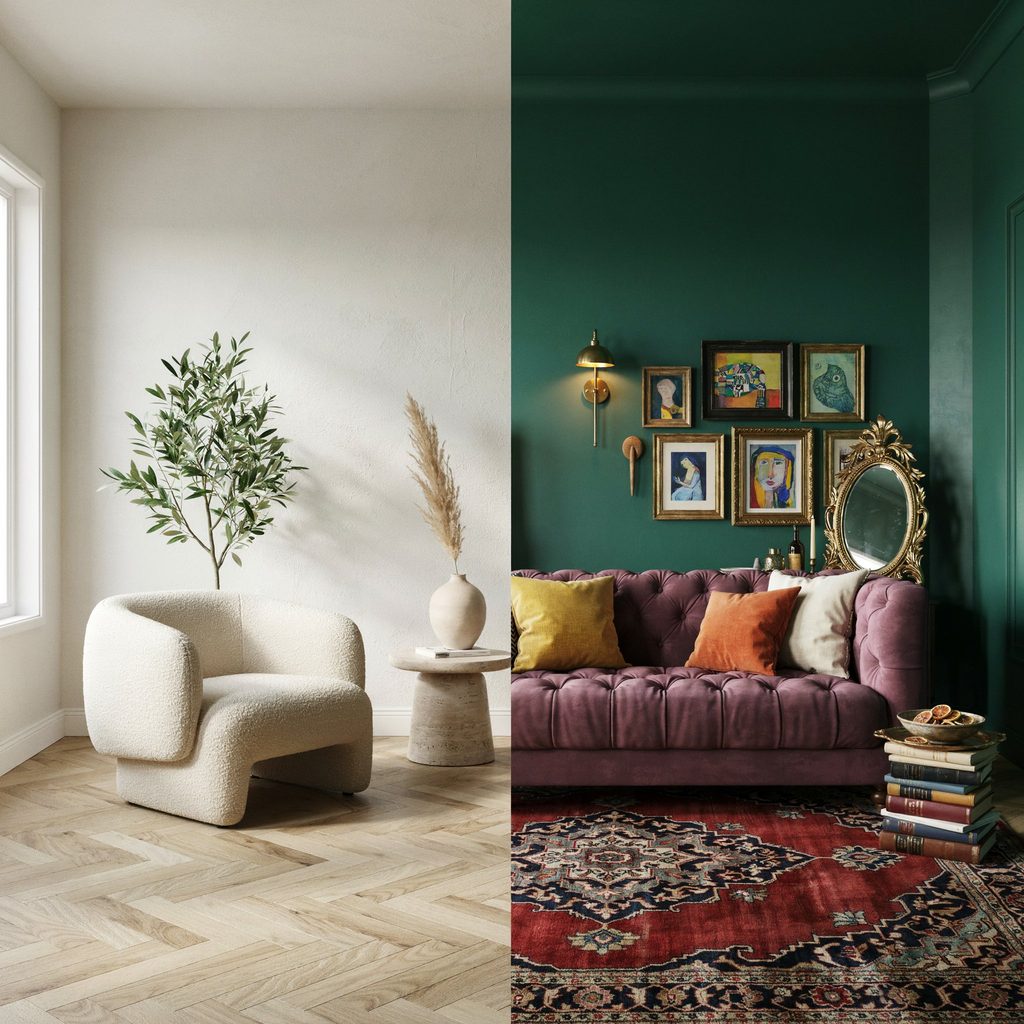
Picture this: You walk into a room painted in soft, creamy whites, featuring a single sculptural lounge chair, a thriving olive tree, and expansive, unadorned windows. You instantly exhale. The visual quiet feels like a deep, restorative breath.
Now, picture stepping into a completely different room—one wrapped in moody emerald green, layered with vintage Persian rugs, stacked art books, vibrant botanical prints, and collected ceramics from your travels. You feel instantly energized, inspired, and wrapped in a vibrant narrative.
Which scenario feels more like “home” to you?
When decorating our spaces, the ultimate debate often boils down to maximalism vs minimalism. But choosing your interior design style isn’t about blindly following the latest fads; it’s about creating a home that supports how you live, relax, entertain, work, and express yourself. As we look at interior design trends 2026, we are seeing a fascinating cultural shift. While expressive, collected interiors are having a major moment, the desire for calm, livable, and organized spaces remains incredibly strong. Let’s explore which approach best matches your lifestyle, budget, and emotional needs.
What Is Minimalism in Interior Design?
At its core, minimalist home decor is defined by intentional editing, clean architectural lines, highly functional furniture, restrained color palettes, and abundant visual breathing room.
However, a common misconception is that minimalism equates to emptiness, blandness, or a sterile, museum-like environment. True minimalism is simply about keeping only what is useful, beautiful, or deeply meaningful. It is an exercise in removing distractions so that the things you truly love can stand out. For many, embracing a minimalist lifestyle means stripping away the non-essential to focus on mental clarity and physical ease.
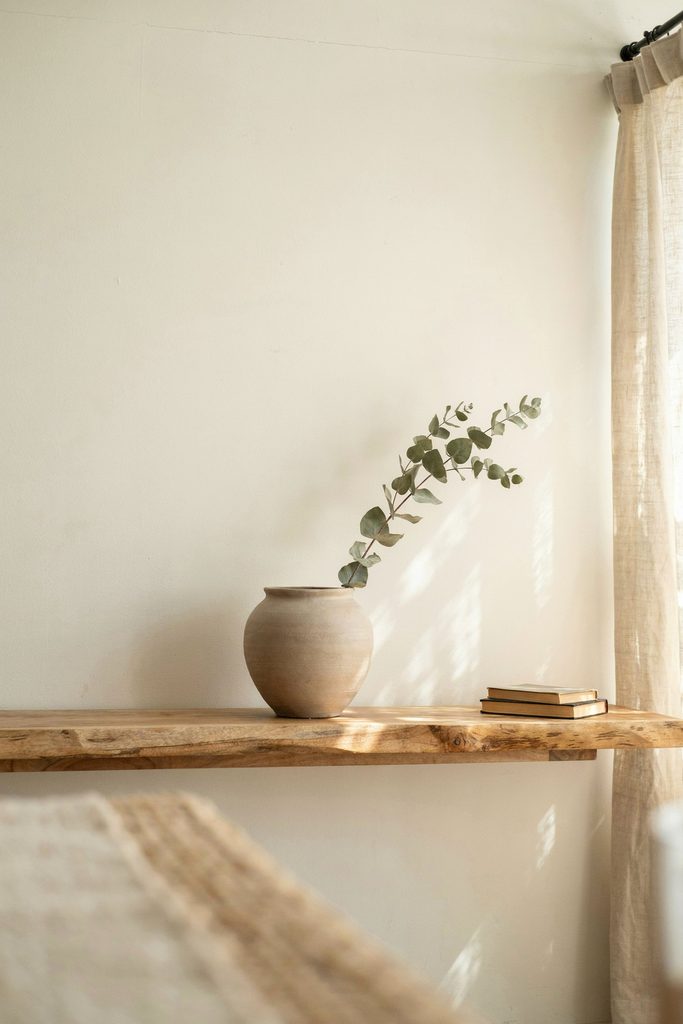
If stark white walls and ultra-modern, uncomfortable furniture feel a bit too cold, you aren’t alone. This is where warm minimalism steps in—a softer, more personal evolution of the style that is dominating current design preferences. Warm minimalism relies heavily on natural textures like raw wood, bouclé, linen, travertine, and unlacquered brass. It utilizes soft, diffused lighting and muted earth tones to create a sanctuary that feels inviting, grounded, and highly livable, rather than stark and empty.
What Is Maximalism in Interior Design?
On the other end of the spectrum is maximalist interior design. This approach celebrates layered color, mixed patterns, varied tactile textures, abundant art, vintage finds, trailing plants, and meaningful collections.
It is crucial to clarify that maximalism is not merely clutter, messiness, or careless excess. When executed well, it takes the form of curated maximalism, where every single object, textile, and piece of art has a distinct purpose, a specific placement, or a personal story to tell.
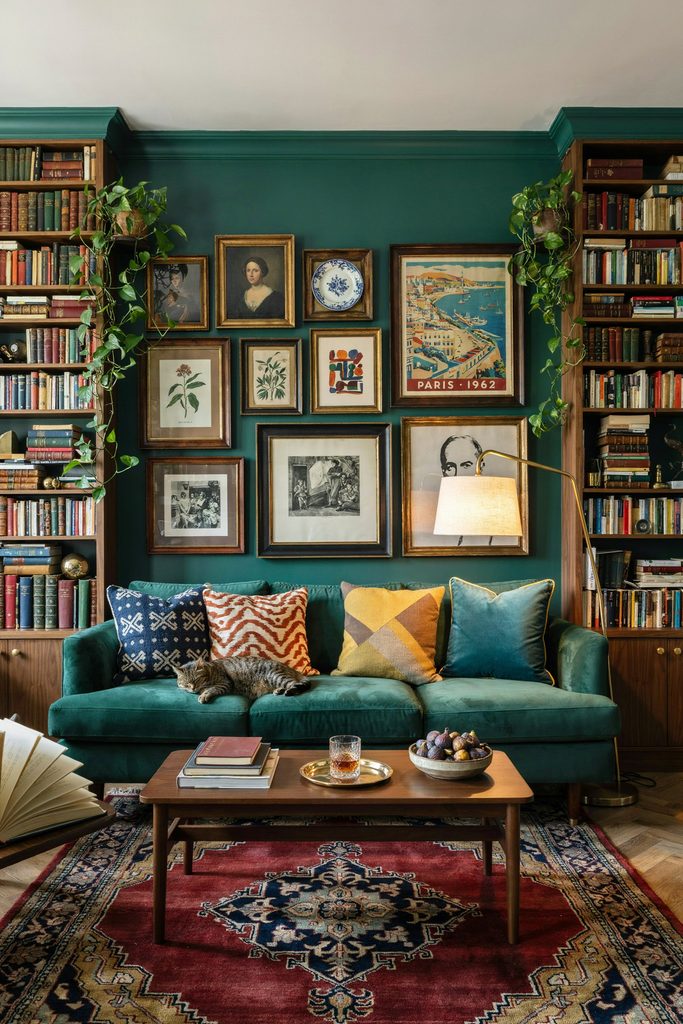
This aligns perfectly with the current cultural mood. According to recent design forecasts, eclectic interior design and vintage-inspired spaces are leading the charge in 2026. People are moving away from “fast furniture” and cookie-cutter, gray-and-white showrooms. They favor instead a layered look that reflects their unique histories. Bold home decor is no longer just a passing trend; it is a form of personal storytelling, allowing homeowners to showcase their passions, travels, and artistic tastes in vibrant, unapologetic ways.
Maximalism vs. Minimalism: The Core Differences
To help you visualize how these two approaches function in a real home, here is a breakdown of the primary distinctions between the two styles.
| Feature | Minimalism | Maximalism |
|---|---|---|
| Visual feeling | Calm, airy, orderly, and serene. | Energetic, cozy, dynamic, and stimulating. |
| Color palette | Restrained; neutrals, monochromatic, or muted earth tones. | Rich, layered, and saturated; often mixes jewel tones or high contrast. |
| Furniture and layout | Streamlined, functional, with plenty of negative space around pieces. | Varied silhouettes, layered seating, and tightly curated furniture groupings. |
| Decor approach | “Less is more.” One or two statement pieces rather than many small accessories. | “More is more.” Gallery walls, stacked books, grouped collections, and layered textiles. |
| Maintenance level | High daily upkeep to maintain visual order; requires strict editing. | High organizational upkeep; requires dusting and styling, but hides daily wear easily. |
| Best for | People who feel overwhelmed by visual noise and need a quiet retreat. | Creatives, collectors, and those who draw inspiration from their surroundings. |
| Potential challenges | Can feel cold, sterile, or unwelcoming if texture and warmth are ignored. | Can easily cross the line into stressful clutter without intentional editing and storage. |
Which Interior Design Style Matches Your Personality?
Understanding your home decor personality is the first step toward designing a space you actually want to spend time in. Let’s look at a personality-based interior design guide to see where you fit.
- The Calm Organizer: You thrive on order, routines, and quiet. Visual clutter makes you anxious, and you view your home primarily as a sanctuary for decompression. You likely suit minimalism or warm minimalism.
- The Creative Collector: You love art, travel souvenirs, books, and color. Your home is a living museum of your life and interests. You are a natural maximalist.
- The Practical Minimalist: You value high function, easy cleaning, and multipurpose furniture. You view your home as a streamlined machine for living and prioritize efficiency over ornate decor.
- The Expressive Maximalist: You enjoy experimenting with bold wallpapers, statement lighting, and pattern mixing. Your home is a vibrant playground that sparks joy and conversation.
- The Balanced Decorator: You want personality without chaos. You likely suit “midimalism”—a hybrid approach combining a minimalist, uncluttered foundation with highly intentional maximalist accents.
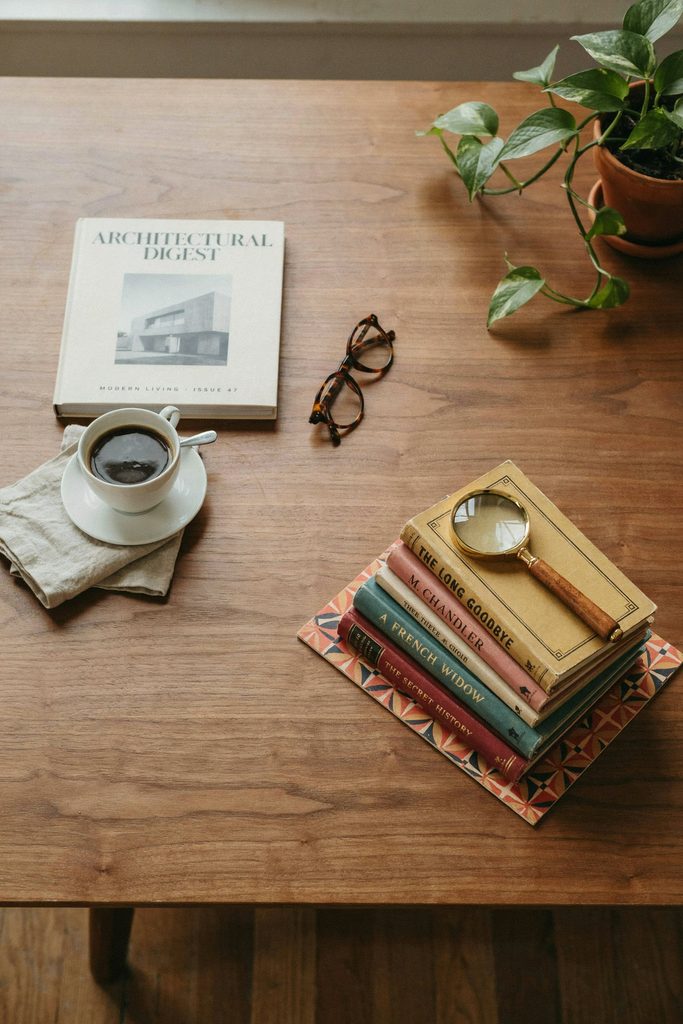
Quick Self-Assessment Quiz
Answer these questions to pinpoint your personal style at home:
- Do you feel more relaxed in an empty, orderly room or a room full of art and collected objects?
- Do you prefer one statement color or several coordinated, contrasting colors?
- Do you enjoy rearranging shelves and displaying collections, or do you prefer clear, empty surfaces?
- Does visual clutter make you feel anxious or energized?
- Do you prefer buying fewer, higher-quality items or collecting unique, eclectic pieces over time?
- When you travel, do you bring back physical souvenirs, or do you prefer to leave space in your suitcase?
- Do your kitchen countertops feature a few essential appliances, or an array of colorful tools, crockery, and ingredients?
- If a friend described your home in one word, would it be “serene” or “fascinating”?
Mostly Serene/Clear answers? Lean toward minimalism. Mostly Fascinating/Collected answers? Lean toward maximalism.
Lifestyle Factors That Matter More Than Trends
While exploring different interior design styles is fun, practical lifestyle factors should ultimately dictate your choices. Consider your household size, pets, children, work-from-home needs, and daily cleaning habits.
For busy households with toddlers or shedding pets, a minimalist home might seem appealing because it’s easier to wipe down surfaces. However, a minimalist home shows every stray Lego brick or dog hair immediately. Conversely, a maximalist home can easily hide everyday wear and tear, provided you have thoughtful, hidden storage to corral the actual mess.
Budget also plays a significant role. A minimalist aesthetic often requires investing in fewer, but significantly higher-quality, architectural furniture pieces that can stand alone as design statements. Maximalism can actually be highly budget-friendly; it thrives on thrifted vintage finds, inherited hand-me-downs, flea market treasures, and DIY projects collected slowly over time.
What about renters and small space decor? Many assume small apartments demand minimalism to avoid feeling cramped. While minimalism can certainly make compact rooms feel larger and airier, curated maximalism can actually work wonders in small spaces. A “jewel-box” room—think a small dining nook wrapped in dark, moody wallpaper and layered with eclectic art—adds immense character and coziness without requiring a major renovation or knocking down walls.
How to Create a Minimalist Home That Still Feels Warm
If you lean toward a quieter aesthetic, here are actionable tips to ensure your space feels like a welcoming home, not a sterile gallery.
- Choose a warm base palette: Utilize color psychology in home decor by selecting warm neutrals like creamy off-whites, soft taupes, and warm beiges instead of stark, blue-toned hospital whites.
- Invest in quality: Buy fewer, better-quality furniture pieces with beautiful craftsmanship, organic shapes, and high-quality natural materials.
- Rely on texture: Use texture instead of excess decor. Layer a nubby wool rug, a bouclé throw, linen curtains, and raw wood accents to create depth and visual interest without adding physical clutter.
- Meaningful objects: Add one or two deeply personal objects—like a hand-thrown ceramic vase or a single piece of heirloom art—rather than many small, mass-produced accessories.
- Prioritize hidden storage: Utilize built-ins and concealed storage so your daily clutter (mail, keys, chargers) doesn’t disrupt the visual calm.
- Layered lighting: Use warm, dimmable lighting from multiple sources (floor lamps, sconces, table lamps) to create pools of cozy light rather than relying on harsh overhead fixtures.
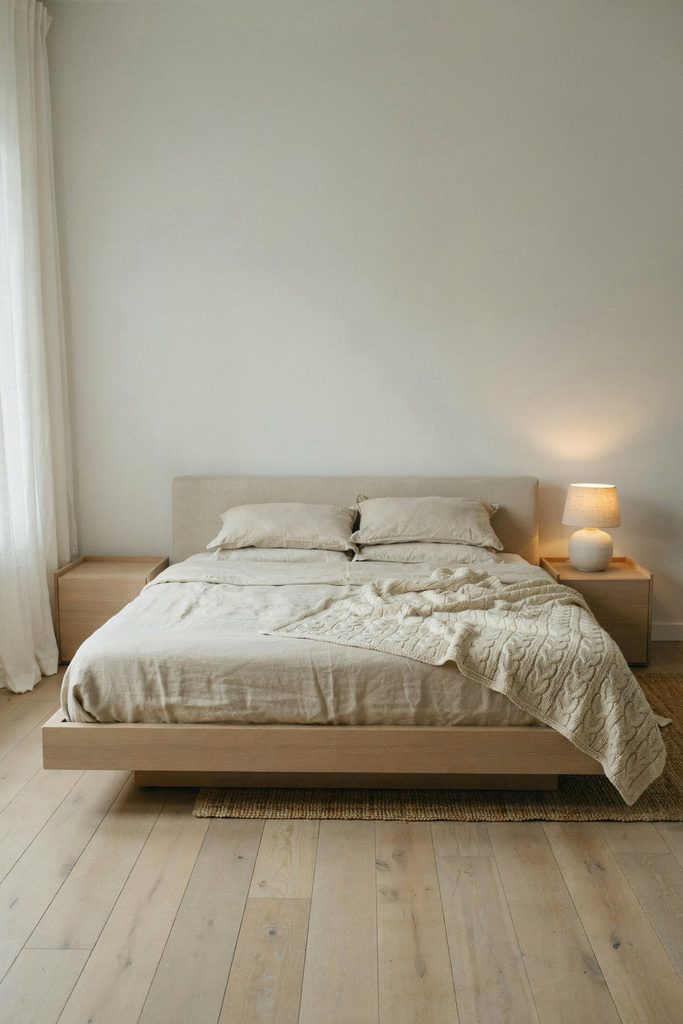
Practical Example – The Bedroom: Swap out a bulky, ornate headboard for a streamlined, upholstered platform bed in a warm oatmeal linen. Keep nightstands clear except for a single reading lamp and a carafe of water, but add warmth through a heavily textured chunky knit throw blanket at the foot of the bed.
How to Do Maximalism Without Creating Clutter
Maximalism requires just as much discipline and editing as minimalism. Here is how to achieve a collected look without crossing into stressful chaos.
- Establish a color story: Start with a foundation of three to five coordinating colors. This ensures that even when patterns clash, the room feels cohesive and intentional.
- Mix patterns intentionally: Mix different scales of patterns (like a large floral with a thin stripe or a geometric ikat) through a common color thread.
- Display collections deliberately: Group similar items together on a single shelf or in a shadow box rather than scattering them across every available flat surface.
- Balance the bold: If you have heavily patterned walls or vibrant textiles, balance them with calmer, solid-colored upholstery or streamlined furniture silhouettes to give the eye a place to rest.
- Incorporate life and history: Use trailing plants, stacked vintage books, and meaningful art to add organic layers and personal history to the room.
- Edit seasonally: Utilize decluttering tips like seasonal editing. Rotate your art, textiles, and collections every few months so the room remains curated, fresh, and never overcrowded.
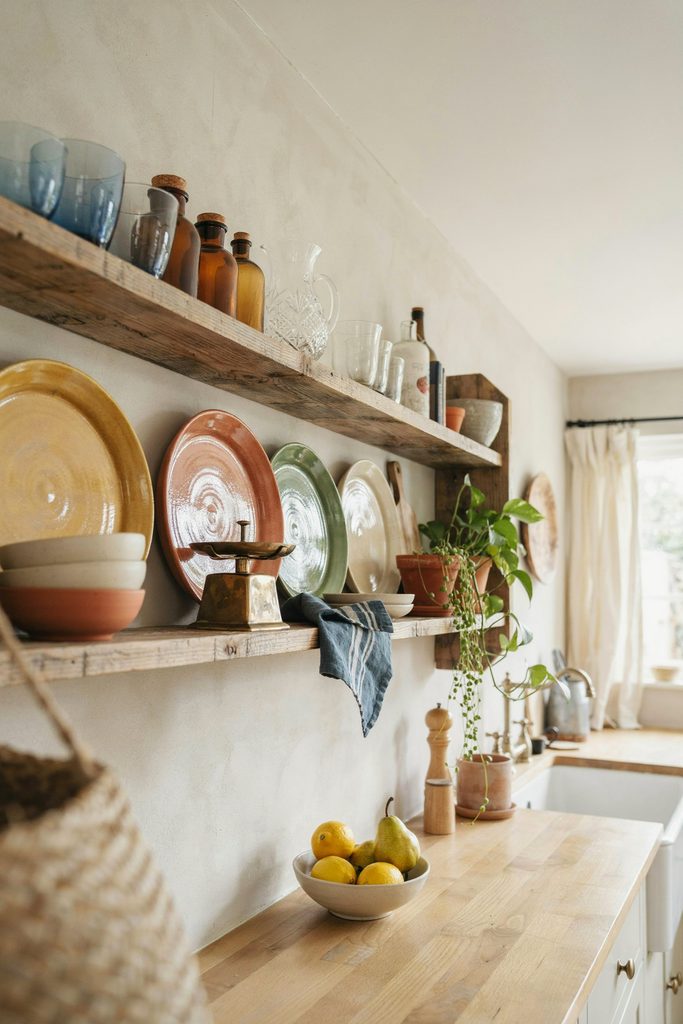
Practical Example – The Kitchen: Instead of hiding everything behind closed doors, install reclaimed wood open shelving. Style it intentionally with a mix of everyday ceramic plates, colorful vintage glassware, and trailing pothos plants. Keep the actual cooking surfaces clear, but let the walls and shelves tell a vibrant story.
Can You Mix Maximalism and Minimalism?
Absolutely. In fact, some of the most beautiful, well-designed homes refuse to choose a side. Hybrid approaches like warm minimalism, “midimalism,” and curated maximalism are incredibly popular among top designers.
The goal is balance, not a rigid label. You can easily blend the two aesthetics room by room, or even within the same space. For example:
- The Living Room: A neutral, minimalist living room featuring a single, highly curated, oversized gallery wall of collected art and travel photography.
- The Bedroom: A colorful, maximalist bedroom with bold botanical wallpaper and layered textiles, anchored by streamlined, built-in minimalist closet storage that keeps clothing completely out of sight.
- The Small Apartment: An open-concept studio where the kitchen and sleeping areas are kept strictly minimalist to maximize the feeling of space, while the living area is designated as a cozy, maximalist lounge zone for entertaining and relaxing.
By blending the two, you get the visual breathing room and ease of minimalism alongside the soul, warmth, and storytelling of maximalism.
Common Mistakes to Avoid
When navigating the maximalism vs minimalism spectrum, beware of these common pitfalls that can derail your design efforts:
- Minimalism Mistakes: Making a home feel cold and uninviting, sacrificing physical comfort for the sake of sleek aesthetics, over-purging meaningful items you later regret losing, or copying sterile showroom environments that don’t reflect your actual, messy human life.
- Maximalism Mistakes: Buying decor without a cohesive plan, mixing too many unrelated colors that create visual fatigue, confusing literal clutter (like unpaid bills, junk mail, and laundry) with curation, and ignoring traffic flow and practical storage needs in favor of filling every corner.
FAQ Section
Is maximalism out of style in 2026?
Not at all. In fact, interior design trends 2026 heavily favor eclectic, personality-driven spaces. Maximalism has evolved from the chaotic “cluttercore” of the early 2020s into a more refined, curated, and vintage-inspired aesthetic that celebrates personal history.
Is minimalism still popular?
Yes, but it has evolved significantly. The stark, sterile, “hospital” minimalism of the 2010s has been largely replaced by “warm minimalism,” which focuses on coziness, natural materials, and high livability while maintaining visual order and calm.
Can maximalism work in a small apartment?
Yes! Small spaces are perfect for “jewel-box” maximalism. Wrapping a small powder room, reading nook, or studio apartment in bold colors, rich patterns, and layered art can make the space feel incredibly cozy, intentional, and custom, rather than cramped.
Which style is easier to maintain?
It depends on your definition of maintenance. Minimalism requires strict daily habits to keep surfaces clear and organized. Maximalism requires more time to dust and organize collections, but it is much better at hiding everyday household messes, pet hair, and wear-and-tear.
Can I be both minimalist and maximalist?
Definitely. Many people are “minimalists in the kitchen, maximalists in the living room.” You can also adopt a midimalist approach, using a minimalist foundation (like clean-lined furniture and neutral walls) layered with maximalist accessories (like bold art and colorful textiles).
How do I know my interior design personality?
Pay close attention to your emotional and physical responses. Notice which environments—boutique hotels, local restaurants, or friends’ homes—make you feel the most relaxed, inspired, and at ease. Your visceral emotional reaction is the best indicator of your true home decor personality.
Conclusion
Ultimately, the debate of maximalism vs minimalism is not about finding a universal “right” answer or declaring one style objectively superior to the other. The best interior design style is simply the one that makes you feel comfortable, capable, and authentically at home.
Whether you find your peace in the quiet negative space and warm woods of a minimalist living room, or you draw daily inspiration from the layered, colorful collections and vintage finds of a maximalist sanctuary, your home should be a direct reflection of your unique rhythm of life.
Ready to transform your space? Take the personality quiz above, choose one room to test your style, and start with a single shelf, corner, or accent wall. Your perfect home is waiting to be curated.