There’s a particular feeling you get when you step into a kitchen that’s been loved for decades. The wood is softened where hands have gripped it. The paint wears thin at the edges of cabinet doors. Brass pulls glow with the warmth of a thousand dinners prepared. Nothing matches perfectly, and yet everything belongs.
That’s the soul of a Vintage Farmhouse Kitchen—a space that blends patina, practicality, and comfort to create a room that feels lived-in and welcoming from the very first morning you make coffee in it. This design philosophy favors honest materials: wood, stone, porcelain, and metal, all paired with handcrafted details sturdy enough to survive daily use. Soft paint colors, substantial cabinets, apron-front sinks, and timeworn finishes keep the space grounded while modern conveniences stay quietly integrated behind the scenes.
Whether you’re renovating a century-old farmhouse or building new construction with old bones, these sixteen ideas will help you shape a kitchen that looks lovingly collected over generations yet functions beautifully for contemporary cooking, entertaining, and everyday gathering.
1. Distressed Wood Cabinetry with Honest Patina

Nothing anchors a Vintage Farmhouse Kitchen quite like cabinetry that carries visible history. Distressed wood—softly worn edges, layered paint revealing glimpses of color beneath, exposed grain that catches afternoon light—makes even a brand-new kitchen feel storied and settled.
The secret is choosing solid or reclaimed wood and finishing it by hand. A hand-rubbed oil or wax finish lets natural imperfections read as charm rather than damage. Knots, mineral streaks, and subtle color variations become features, not flaws. Balance that visual richness with simple, uncluttered countertops and classic bin pulls so the overall impression stays calm and cohesive. You want the eye to linger on the wood’s character, not feel overwhelmed by competing textures.
Pro tip: If you’re working with new cabinets, lightly sand edges and corners before the final coat of paint, then rub a candle along high-wear areas before painting again. The result mimics decades of gentle use.
2. Classic Shaker Doors in Creamy Paint
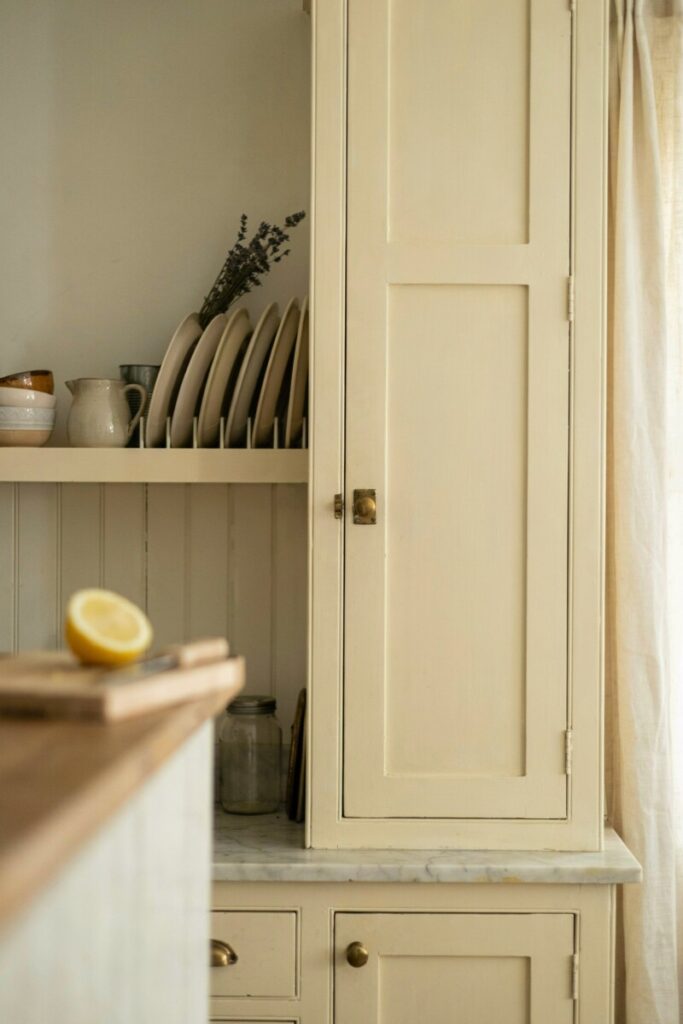
Shaker cabinets are the quiet workhorse of farmhouse design, and for good reason. Their clean rails and recessed panels deliver timeless structure without demanding attention. Finished in warm whites—think Swiss Coffee or Navajo White—or buttery creams like Benjamin Moore’s Hawthorne Yellow, they provide a serene backdrop that lets every other element in the room shine.
What elevates Shaker doors from builder-grade to vintage-inspired is the paint application. A brush-stroked finish, where you can still see the direction of the bristles, introduces subtle handmade character that spray-painted surfaces simply can’t replicate. Pair with cup pulls and latches in aged brass or blackened iron for instant vintage credibility. For an extra layer of tradition, glaze the corners lightly with a diluted umber wash or add a slim bead molding at the crown. These small gestures whisper heritage without shouting it.
3. Apron-Front Farmhouse Sink with Custom Skirt
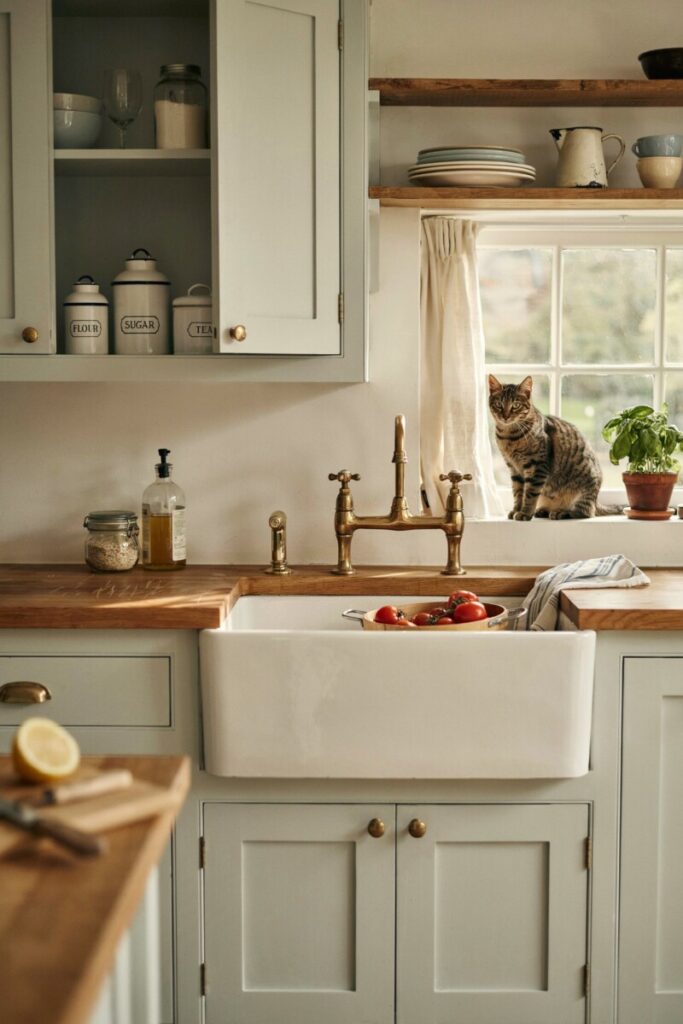
If any single element defines the Vintage Farmhouse Kitchen, it’s the apron-front sink. Generous in depth and wide enough to swallow a sheet pan or a bushel of garden tomatoes, this sink is as practical as it is beautiful. Choose durable fireclay for its glossy, easy-clean surface, or enamel-coated cast iron for that heavier, old-world heft.
Frame the sink with simple inset cabinets, then consider adding a custom skirt or paneled apron to soften the base. This is where texture enters the conversation: striped ticking fabric, classic gingham, or rumpled linen instantly add pattern and softness. Above the sink, install a bridge faucet in unlacquered brass. Over months and years, the brass will develop a living finish—darkening in the crevices, polishing where your hands touch it most—aging gracefully alongside the rest of the room.
4. Beadboard Backsplash and Wainscot Details
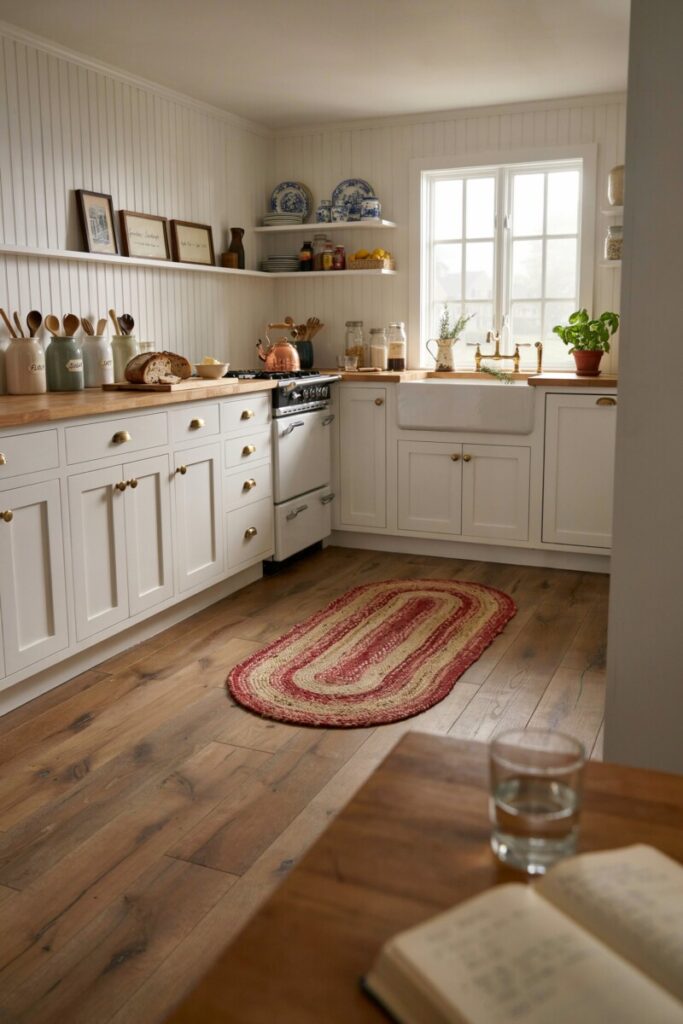
Beadboard is one of those materials that instantly says “cottage” without trying too hard. Its rhythmic vertical lines lift the eye, add gentle texture, and complement simple cabinet fronts beautifully. In a Vintage Farmhouse Kitchen, beadboard works as a backsplash behind the range, a full-height wainscot along exterior walls, or even as a ceiling treatment for cozy envelopment.
Paint it in satin white for maximum brightness, or try a muted sage or soft gray-green for a heritage color that feels pulled from an old general store. Cap the beadboard with a slim plate rail or ledge—just deep enough for a row of crockery jars, a few framed recipe cards, or a small potted herb. Near the range and sink, choose a semi-gloss finish for easy wipe-down maintenance so beauty never comes at the cost of practicality.
5. Reclaimed Wood Open Shelving with Iron Brackets

Open shelving made from reclaimed boards celebrates the collected, unhurried spirit of a farmhouse kitchen. The irregular grain, old nail holes, faint water stains, and subtle warping all add authenticity that new lumber simply cannot fake. Every shelf carries a previous life—a barn wall, a factory floor, a shipping crate—and that history becomes part of your kitchen’s story.
Mount the boards on sturdy iron brackets for contrast and a hint of industrial edge. The open format encourages edited displays rather than over-stuffed cupboards: a neat stack of white plates, clear glass jars filled with flour and sugar, a single copper bowl catching the light. Resist the urge to fill every inch. Negative space lets each object breathe and keeps the shelves looking intentional rather than cluttered.
6. Glass-Front Hutches for Curated Displays

A glass-front hutch transforms storage into display and brings furniture-like grace to the kitchen. In a Vintage Farmhouse Kitchen, this piece functions as both cabinet and curio, showcasing the dishes and objects you genuinely love.
Choose wavy or seeded glass for the upper panels to mimic the imperfect panes found in antique furniture. Line the interior backs with beadboard, soft floral wallpaper, or a muted paint color to add depth behind your collections. Arrange ironstone pitchers, blue-and-white transferware, and vintage mixing bowls by color and scale so the cabinet reads calm and curated rather than crowded. Keep the lower doors solid to hide less photogenic essentials—plastic containers, appliance manuals, the junk drawer’s overflow—while the uppers put your favorites on parade.
7. Butcher Block and Soapstone Countertops
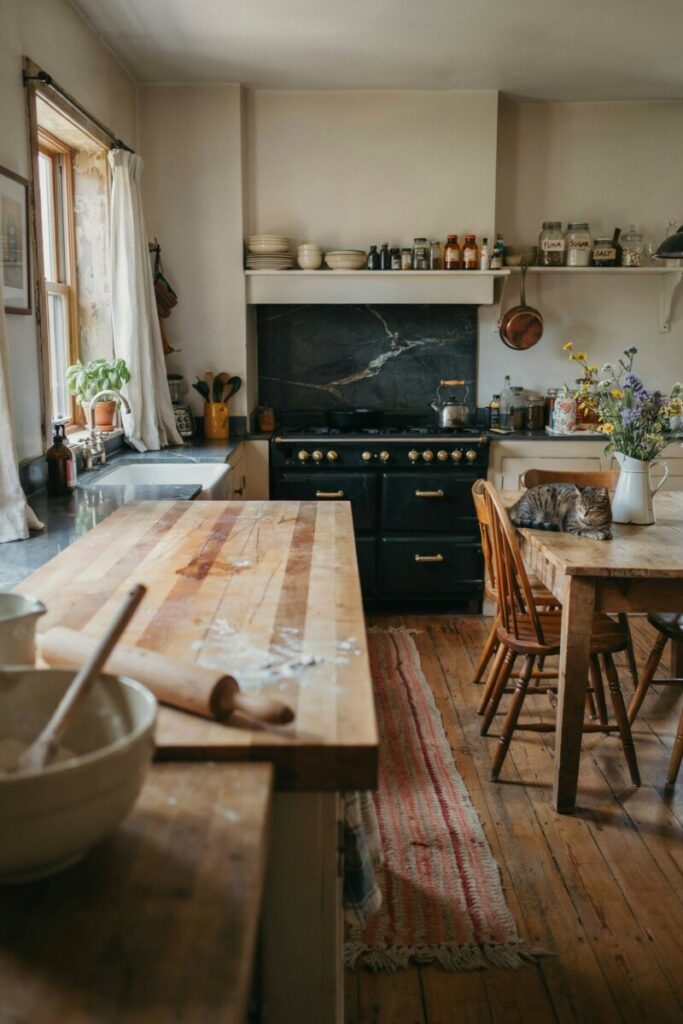
Countertop materials define both the touch and the tone of a kitchen, and in a Vintage Farmhouse setting, butcher block and soapstone are classics that improve with age rather than deteriorating. Butcher block invites daily use—rolling dough, chopping herbs, setting down a hot pot—and can be sanded and re-oiled endlessly. Soapstone offers a silky, non-precious surface that patinas from pale gray to deep charcoal over years of use, requiring nothing more than occasional mineral oil.
Use them together for the best of both worlds: butcher block at a dedicated baking station or island, soapstone along the range run and sink area. This combination delivers warmth and durability without visual heaviness, and neither material will make you anxious about a stray knife mark or a forgotten lemon wedge.
8. Schoolhouse and Barn-Style Pendants

Lighting sets the emotional temperature of a room, and schoolhouse globes or barn-style pendants suit a Vintage Farmhouse Kitchen with their simple, period-appropriate silhouettes. Think milk glass domes, ribbed enamel shades, or galvanized metal cones—forms that recall one-room schoolhouses and agricultural outbuildings.
Specify aged brass, rubbed bronze, or galvanized fittings rather than polished chrome or brushed nickel. Hang pendants low over the island, roughly thirty to thirty-six inches above the countertop, to create a warm pool of light for prep and conversation. In the main working zone, a classic semi-flush mount keeps the ceiling line clean while layering task and ambient illumination without the harsh glare of recessed cans.
9. Checkerboard or Brick-Look Floors

Flooring grounds the entire palette and can introduce instant heritage with minimal effort. A soft two-tone checkerboard—painted directly onto wood subfloor in ivory and warm gray, or installed as tile—adds visual movement and a nod to old dairy kitchens and country stores. Alternatively, clay-look brick in herringbone or running bond provides rustic texture underfoot and pairs naturally with wood cabinets and stone counters.
Keep grout tones warm and subtle; stark white grout can feel clinical against vintage materials. Layer a washable cotton or jute runner in front of the sink and range for comfort where you stand the longest. The slight imperfection of a hand-laid brick pattern or a painted checkerboard with visible brushwork only adds to the charm.
10. Vintage-Style Ranges and Paneled Vent Hoods

The range and hood form the visual heart of any Vintage Farmhouse Kitchen, and choosing them well pays dividends every single day. Look for ranges with rounded corners, simple rotary knobs, and enamel or matte finishes in cream, sage, or soft blue. Brands like Lacanche, Aga, and Elmira Stove Works specialize in these retro silhouettes, but even modern ranges can be dressed up with a paneled hood surround.
Clad the hood in wood with subtle trim, shiplap, or beadboard, and add a narrow shelf across the top for copper pans, spice tins, or a small collection of vintage salt cellars. Keep the surrounding tile or wall treatment understated so the hood’s silhouette remains the focal point. The goal is a cooking zone that looks collected and functional, as though it grew organically over years of family meals.
11. Plate Racks, Drying Shelves, and Rail Systems

Wall-mounted plate racks, dowel drying shelves, and simple rail systems recall the utilitarian kitchens of a century ago, when every tool had a visible, reachable home. In a Vintage Farmhouse Kitchen, these solutions free valuable cabinet space, add layers of texture to empty walls, and encourage you to choose beautiful, thoughtful tools over disposable clutter.
Install a simple wood rail with S-hooks near the range for ladles, whisks, and sieves. Mount a dowel drying rack beside the sink to display cutting boards and freshly laundered linens. A plate rack above the counter turns everyday dinnerware into a decorative element. The philosophy is simple: if it’s useful and lovely, let it be seen.
12. Larder and Pantry Cupboards with Old-World Fittings

A freestanding larder cupboard feels like a treasured piece of furniture rather than built-in cabinetry, and that distinction matters in a Vintage Farmhouse Kitchen. Tall doors with surface-mounted hinges, magnetic or roller catches, and interior spice racks keep staples orderly while looking charmingly old-fashioned.
Paint the exterior in a muted heritage color—dusty blue, tobacco brown, or deep sage—and finish the interiors in clear-sealed wood to highlight the grain. Stock the shelves with labeled glass jars of grains, flours, and dried beans for a market-style pantry that looks as good as it functions. The larder becomes both storage and sculpture, a vertical anchor that grounds one wall of the kitchen.
13. Unlacquered Brass and Hand-Forged Hardware
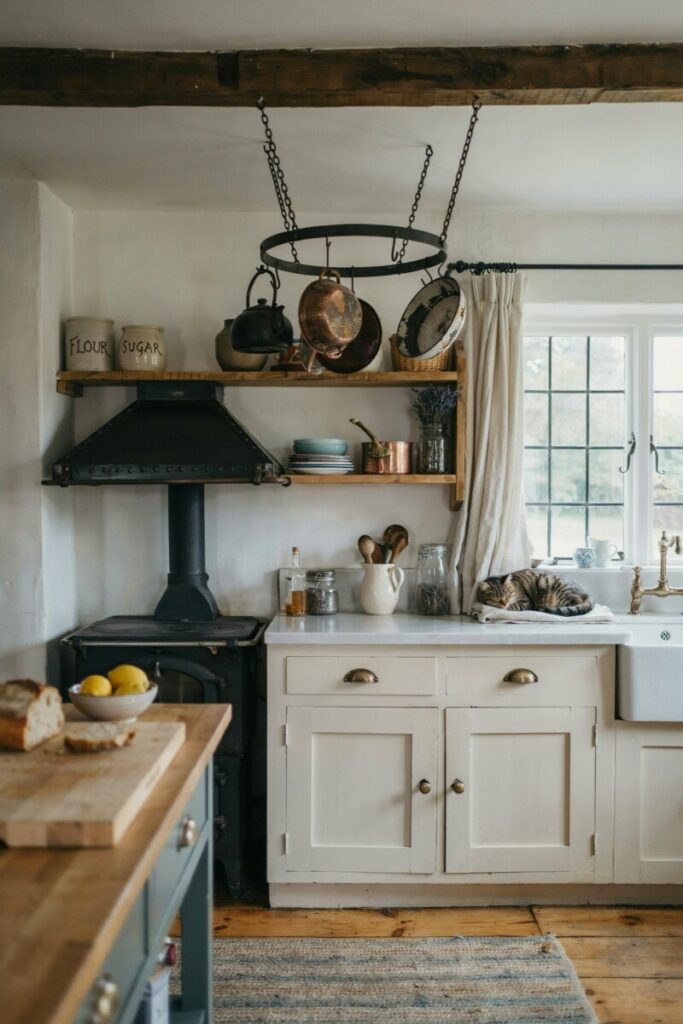
Hardware is the jewelry of a Vintage Farmhouse Kitchen, and choosing unlacquered brass or hand-forged iron means your cabinets will age alongside you. Cup pulls, latches, and offset hinges develop a natural patina—darkening in recesses, burnishing where thumbs press daily—that tells the story of everyday use in a way no distressed finish can replicate.
Mix finishes thoughtfully to avoid a flat, catalog-perfect look. Brass cup pulls on drawers, iron knobs on doors, a forged iron rail beside the range—these small variations reinforce the collected-over-time aesthetic. Visit salvage yards, estate sales, and artisan blacksmiths for one-of-a-kind pieces that no big-box store can match.
14. Skirted Bases and Curtains Instead of Doors
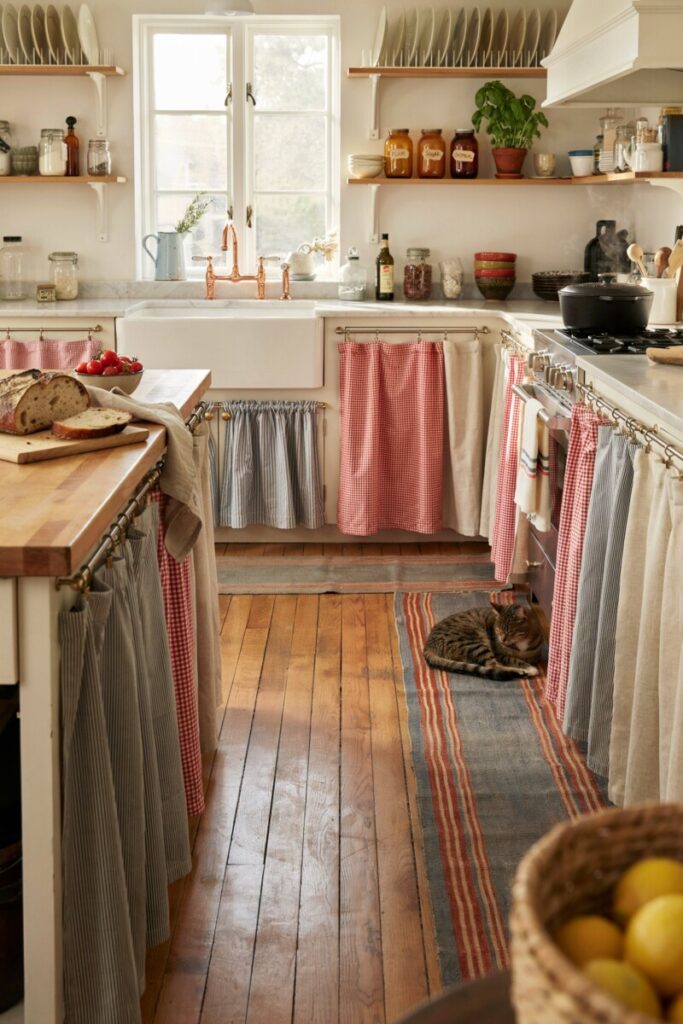
Replacing lower cabinet doors with fabric skirts brings softness, flexibility, and a dash of whimsy to a Vintage Farmhouse Kitchen. Striped ticking, gingham, or natural linen introduces subtle pattern while allowing easy access to cleaning supplies, recycling bins, or overflow cookware.
Install a simple tension rod or clip-ring system so skirts can be removed for laundering or swapped seasonally—crisp white cotton in summer, deeper plaid wool in winter. This approach works especially well beneath the sink, at a kitchen island’s open end, or on a sideboard that doubles as a serving station. The fabric softens hard edges and makes the room feel less like a showroom, more like a home.
15. Copper, Ironstone, and Everyday Collectibles
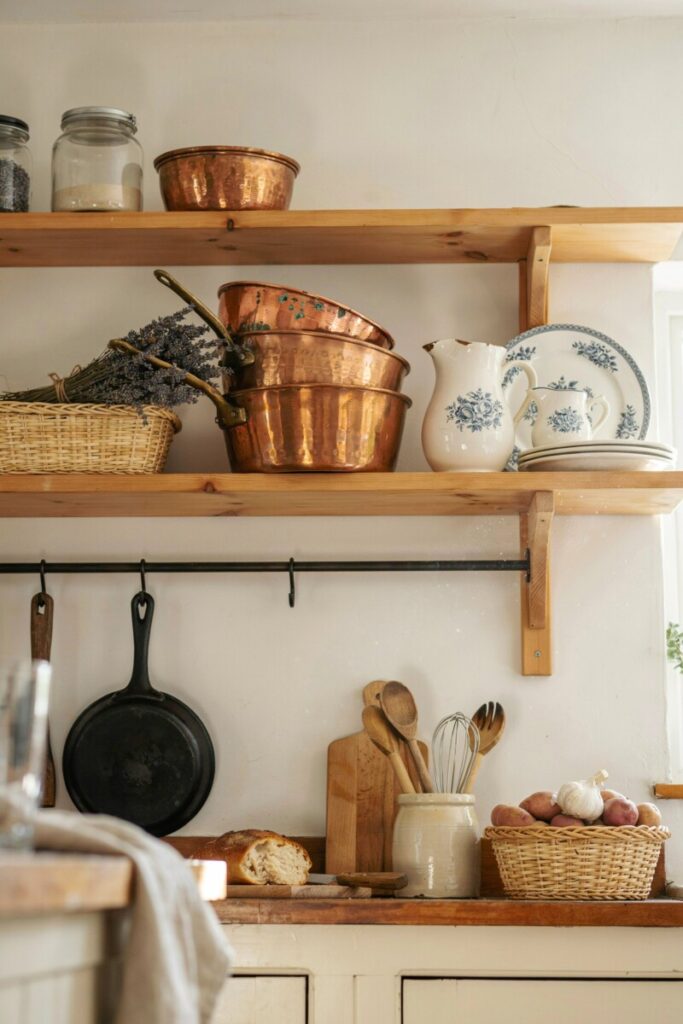
The final layer of a Vintage Farmhouse Kitchen is the collection of objects that make it feel inhabited. Mixing copper pots, white ironstone pitchers, and utilitarian wicker baskets keeps the mood authentic and warm without veering into preciousness.
Limit your display palette to three or four materials so shelves read calm rather than chaotic. Let copper show its patina—those green-tinged spots and hammered dents are part of its beauty. Keep ironstone bright and chipped-edge charming. Use wicker for warmth and hidden storage. Rotate pieces with the seasons: dried lavender bundles in summer, dried corn and gourds in autumn, a single evergreen bough in winter. The room stays alive, evolving, personal.
16. Muted, Heritage Paint Colors and Limewashed Walls

Color is the thread that ties every element together, and muted heritage hues suit a Vintage Farmhouse Kitchen beautifully. Think creamy whites with yellow undertones, warm grays that lean taupe, tobacco and ochre accents, butter yellow, or dusty sage—tones that flatter wood grain, complement brass, and let natural stone glow.
For walls, consider limewash or ultra-matte mineral paint. These finishes soften and diffuse light, highlight the subtle texture of plaster or drywall, and create a velvety depth that flat latex simply cannot achieve. Paint cabinets in a gentle contrasting shade—perhaps the walls are warm white while the island wears a muted blue-gray—to prevent the room from feeling flat or overly matched. The goal is a palette that feels sun-faded and settled, as though the colors were chosen decades ago and have mellowed beautifully ever since.
Bringing It All Together
A Vintage Farmhouse Kitchen isn’t built in a weekend, and it shouldn’t be. The most convincing spaces are those assembled slowly—salvaged here, inherited there, handcrafted over a long winter afternoon. Start with the bones: cabinetry, sink, countertops, flooring. Layer in lighting, hardware, and open storage. Then let the collectibles, textiles, and color accents accumulate naturally as your life unfolds in the space.
The beauty of this style is its forgiveness. A scuff on the butcher block, a water ring on soapstone, a chip in the enamel sink—these aren’t flaws. They’re proof that the kitchen is being used, loved, and lived in. And that, ultimately, is the whole point.
So pour yourself a cup of coffee, set it on that worn wooden counter, and enjoy the room you’ve built. It was always meant to feel like this: warm, imperfect, and entirely yours.